Medically reviewed by Dr. Reina Punj, MBBS, PG Diploma in Endocrinology (University of South Wales), Lead Physician, Excelgenics Clinical Panel.
Sustained energy depends on the mitochondria, the structures within cells that convert nutrients into usable energy. A key part of that process is Coenzyme Q10 (CoQ10), a vitamin-like, fat-soluble compound that the body makes itself and also obtains in small amounts from food.
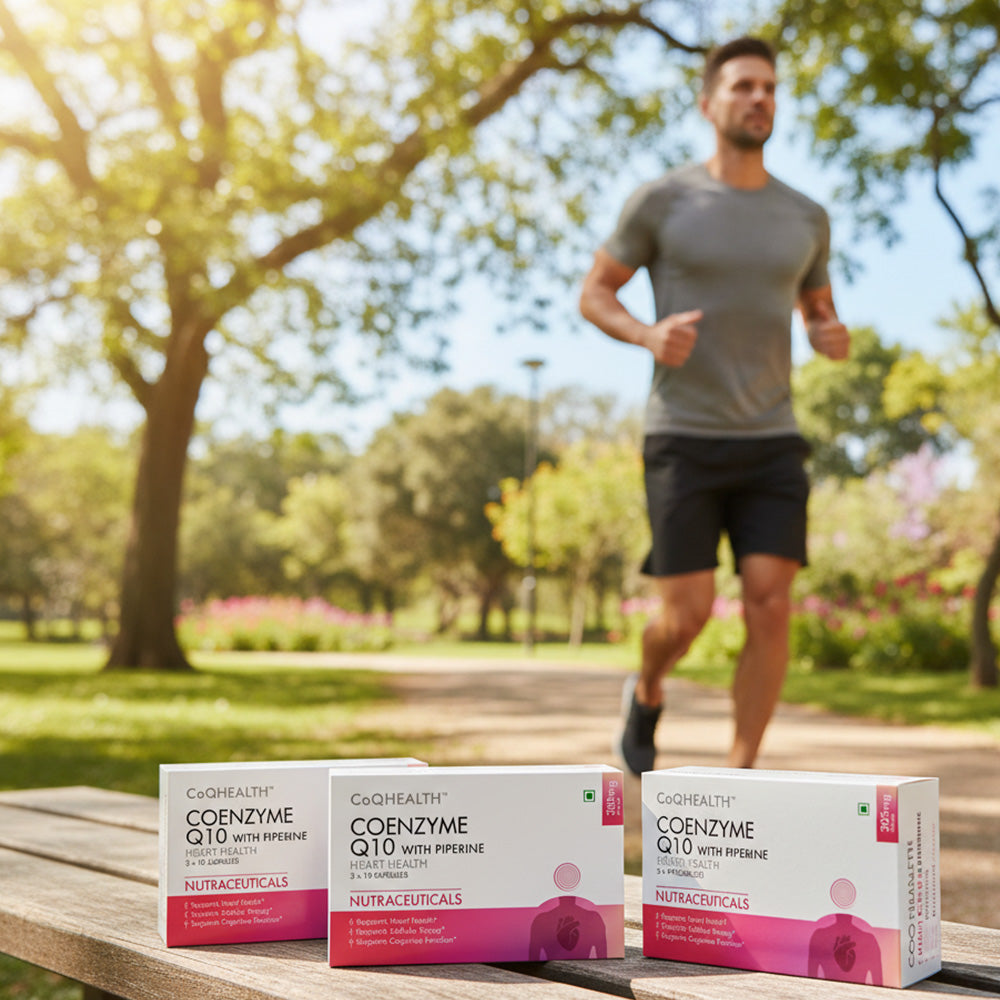
CoQHealth by Excelgenics
CoQHealth provides 300 mg coenzyme Q10 (ubiquinone) with 5 mg piperine per plant-based capsule. CoQ10 is a compound the body uses in normal cellular energy production.
How Mitochondrial Energy Production Works

Mitochondria generate adenosine triphosphate (ATP), the body's energy currency, through the electron transport chain in the inner mitochondrial membrane. CoQ10 carries electrons between complexes in that chain, helping to build the proton gradient that drives ATP synthesis (Turunen et al., 2004).
CoQ10 exists in two interconvertible forms, ubiquinone (oxidised) and ubiquinol (reduced), and switches between them as it shuttles electrons. This energy production underpins many processes in the body, from muscle contraction to nerve signalling (Crane, 2001).
CoQ10 is also a fat-soluble antioxidant that helps protect cell and mitochondrial membranes from reactive oxygen species, which are formed as a normal by-product of aerobic metabolism.
Why CoQ10 Levels Decline
The body makes CoQ10 through the mevalonate pathway. Post-mortem studies have found lower CoQ10 levels in several human organs in older age groups (Kalén et al., 1989).
Statins, the cholesterol-lowering medicines, act on the same pathway and have been reported to lower blood CoQ10 levels. If you take a statin or any other prescription medication, discuss CoQ10 supplementation with your doctor, and do not stop or change your medicine without medical advice.
Absorption Is the Constraint

CoQ10 is a large, fat-soluble molecule that is poorly absorbed from the gut (Bhagavan and Chopra, 2006). CoQHealth combines 300 mg CoQ10 with 5 mg piperine, a compound from black pepper. In one small study in healthy men, 5 mg piperine with 120 mg CoQ10 daily for 21 days raised plasma CoQ10 by about 30% more than CoQ10 alone (Badmaev et al., 2000). The study was run by a company that sells piperine and has not been independently replicated.
Taking CoQ10 with a meal containing healthy fats also supports uptake.
What CoQHealth Is Formulated to Provide
- CoQ10, which the body uses in normal mitochondrial energy production
- CoQ10, which acts as an antioxidant within cell membranes
- Piperine, included as an absorption aid
- A once-daily capsule: take one with a meal containing healthy fats, in the morning or at lunch
Who Might Consider It
CoQHealth is intended for adults looking for nutritional support for healthy ageing, including people over 40 and physically active adults with high energy demands. It is not a stimulant and is not a substitute for a balanced diet, sleep and activity.
Safety and Interactions
CoQ10 is generally well tolerated, although mild digestive upset and trouble sleeping have been reported. CoQ10 may interact with the blood thinner warfarin and with insulin. Because piperine can change how the body metabolises some medicines, check with your doctor or pharmacist before use if you take any regular medication or have a diagnosed health condition.
In Summary
CoQ10 has a well-established biological role in mitochondrial energy production and antioxidant defence. CoQHealth provides 300 mg CoQ10 with 5 mg piperine and is made under an FSSAI licence.
References
- Turunen M, Olsson J, Dallner G. Metabolism and function of coenzyme Q. Biochimica et Biophysica Acta. 2004;1660(1–2):171–199. PMID: 14757233
- Crane FL. Biochemical functions of coenzyme Q10. Journal of the American College of Nutrition. 2001;20(6):591–598. doi:10.1080/07315724.2001.10719063
- Kalén A, Appelkvist EL, Dallner G. Age-related changes in the lipid compositions of rat and human tissues. Lipids. 1989;24(7):579–584. doi:10.1007/BF02535072
- Bhagavan HN, Chopra RK. Coenzyme Q10: absorption, tissue uptake, metabolism and pharmacokinetics. Free Radical Research. 2006;40(5):445–453. doi:10.1080/10715760600617843
- Badmaev V, Majeed M, Prakash L. Piperine derived from black pepper increases the plasma levels of coenzyme Q10 following oral supplementation. Journal of Nutritional Biochemistry. 2000;11(2):109–113. doi:10.1016/S0955-2863(99)00074-1
This article is for general education and is not medical advice. Food supplements are not intended to diagnose, treat, cure or prevent any disease. Consult a qualified healthcare professional before starting any supplement, particularly if you are pregnant, breastfeeding, have a medical condition or take medication.