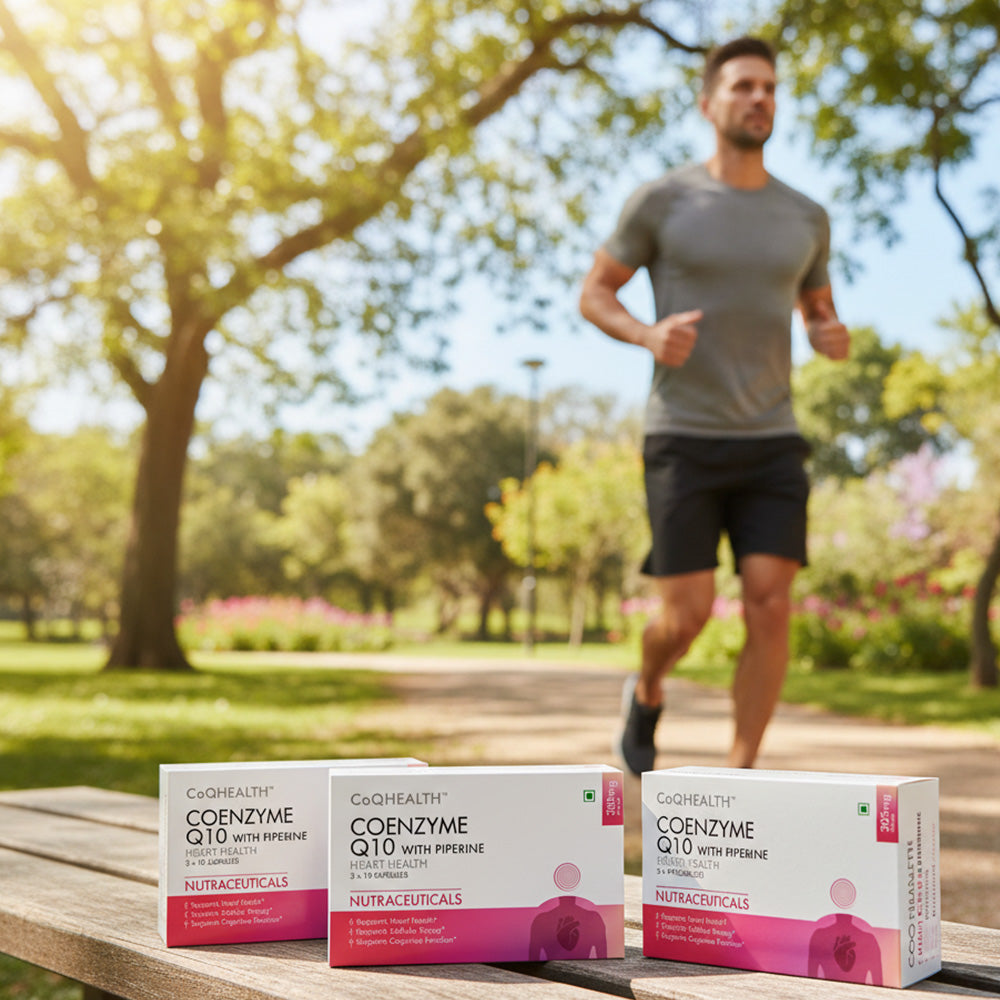
With Coenzyme Q10, the dose on the label is only half the story. What matters is bioavailability — the fraction of the ingested nutrient that actually reaches circulation and the tissues where it is used. CoQ10's poor oral absorption is a well-documented formulation challenge, and it is the problem CoQHealth by Excelgenics is designed around.
Why CoQ10 Is Difficult to Absorb
CoQ10 is a large, lipophilic quinone that dissolves poorly in the aqueous environment of the digestive tract. Published pharmacokinetic work indicates that standard ubiquinone formulations achieve only a small percentage absorption, with most of the dose passing through unabsorbed (Miles MV et al. Eur J Pharm Sci. 2002).
Because it is hydrophobic, CoQ10 must be incorporated into micelles with the help of bile salts before it can be taken up — a process that is less efficient in older adults and in anyone with compromised digestion (Bhagavan HN, Chopra RK. Coenzyme Q10: absorption, tissue uptake, metabolism and pharmacokinetics. Free Radic Res. 2006;40(5):445-53).
This is why many CoQ10 supplements deliver less to the tissues than their label suggests.
How CoQHealth Addresses It
CoQHealth combines two approaches:
- A formulation designed for the solubility requirements of a fat-soluble nutrient
- 5 mg piperine per dose, included specifically to support absorption
Piperine, an alkaloid from black pepper, has been studied for its effect on the absorption and metabolic processing of nutrients in the gut wall and liver. One study examined its effect on plasma CoQ10 levels following oral supplementation (Badmaev V, Majeed M, Prakash L. J Nutr Biochem. 2000;11(2):109-13).
Why This Matters Practically
A well-absorbed 300 mg is worth more than a poorly absorbed 600 mg. Formulating for absorption rather than headline dose is the more useful engineering problem to solve, and it is also cheaper for the consumer.
One habit matters as much as the formulation: take CoQHealth with a meal containing healthy fats, ideally in the morning or at lunch.
What to Look For in Any CoQ10 Supplement
- Whether the formulation addresses solubility, not just dose
- Whether an absorption enhancer is included
- Whether it is third-party tested for potency and purity
- Whether dosing guidance mentions taking it with food
In Summary
CoQHealth provides 300 mg CoQ10 with 5 mg piperine, formulated for absorption, manufactured in a GMP and ISO certified facility, FSSAI licensed and third-party tested for potency and purity.
CoQHealth is a food supplement and is not intended to diagnose, treat, cure or prevent any disease. It is not a substitute for prescribed medication or medical care.