Metabolic Health
Looking for metabolism supplements? The honest answer is that no supplement meaningfully "boosts" your metabolism: food, activity, sleep and regular check-ups matter far more. Berberine has been studied in people with metabolic conditions, and our berberine supplements guide explains the evidence and safety. If you take diabetes medicines, speak to your doctor first, as berberine may add to their effect.
Shop by health goal
Sort by
Medically reviewed by Dr. Reina Punj, MBBS, PG Diploma in Endocrinology (University of South Wales), Lead Physician, Excelgenics Clinical Panel.
What metabolic health means
"Metabolic health" usually refers to a group of measurements: blood sugar, waist size and weight, blood fats (triglycerides and HDL cholesterol) and blood pressure. The US National Heart, Lung, and Blood Institute (NHLBI) explains that having three or more of these risk factors is called metabolic syndrome, which raises the risk of heart disease, diabetes and stroke.
Do metabolism supplements work?
Many metabolism supplements promise to "speed up" metabolism or burn calories. The NIH Office of Dietary Supplements says there is little scientific evidence that weight-loss supplements work, and that the proven approach is healthy eating, fewer calories and regular physical activity. No supplement has been shown to meaningfully boost metabolism.
What actually moves metabolic health
- Eating pattern: a balanced, heart-healthy diet, ideally planned with a doctor or dietitian.
- Activity: the WHO recommends at least 150 minutes of moderate activity a week for adults, and says muscle strengthening benefits everyone.
- Sleep: the NHLBI recommends 7–9 hours a night and lists poor sleep as a risk factor for metabolic syndrome.
- Weight: for people with overweight, the NHLBI notes that losing 3–5% of body weight can help manage risk factors.
- Not smoking and managing stress, plus regular check-ups.
Read more: weight management, done right.
Berberine: what the research shows
Berberine, a plant compound, has been studied mainly in people with metabolic conditions under medical care. A 2025 analysis of 12 placebo-controlled trials (889 participants) found modest reductions in fasting blood glucose, triglycerides and LDL cholesterol, but most trials were small and short. The NCCIH describes the effect on blood glucose in type 2 diabetes as modest. These are research findings, not product claims, and a supplement should not be expected to reproduce them.
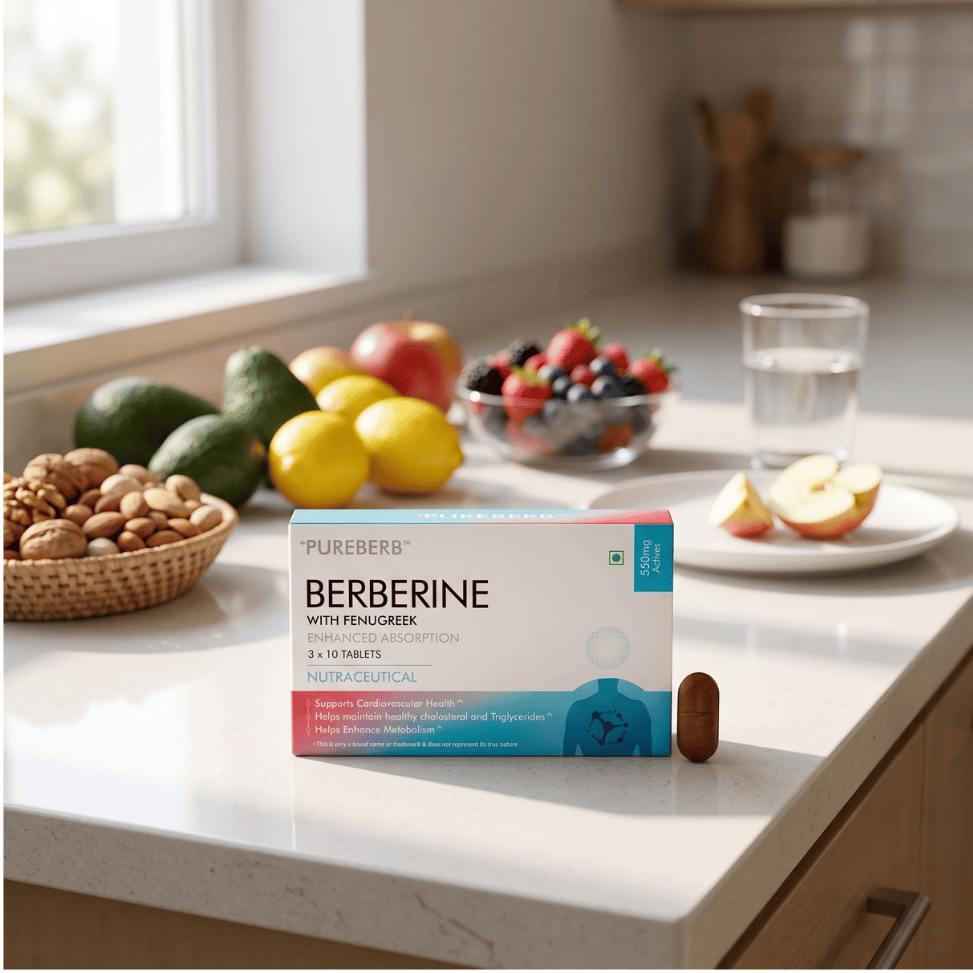
Fenugreek (methi) seed has been studied for blood glucose at 5 g or more a day of whole seed, a very different amount from a small extract. Pureberb provides 500 mg berberine HCl and 50 mg fenugreek seed extract (50% saponins) per tablet. For dosage, side effects and the full evidence, see our berberine supplements guide.
Other metabolism supplements people ask about
| Ingredient | What the evidence says | Safety note |
|---|---|---|
| Berberine | Modest effects on blood glucose and cholesterol in trials in people with metabolic conditions | Digestive side effects; interacts with many medicines; not in pregnancy, breastfeeding or for children |
| Cinnamon | NCCIH: unclear whether it helps with diabetes or weight loss | Cassia cinnamon contains coumarin, which has been linked to liver problems in sensitive people |
| Chromium | NIH ODS: small changes in blood glucose in people with diabetes, of unclear clinical significance; very small effect on weight | May add to diabetes medicines and raise the risk of low blood sugar |
| Green tea extract | NIH ODS: little evidence for weight-loss supplements generally | NIH LiverTox lists it as a well-established cause of rare liver injury; drinking green tea is considered safe |
Who should not take berberine
- People who are pregnant or breastfeeding (the NCCIH advises against it), and babies and children.
- Anyone taking prescription medicines without their doctor's agreement: berberine affects liver enzymes (CYP enzymes) that process many medicines.
- People taking diabetes or blood-pressure medicines, unless their doctor agrees, as berberine may add to their effect; with diabetes medicines this can raise the risk of low blood sugar.
The most common side effects are digestive: abdominal pain, constipation, diarrhoea, nausea and vomiting. Fenugreek can also cause digestive symptoms, and some people are allergic to it.
When to see a doctor
If you are concerned about your blood sugar, weight, cholesterol or blood pressure, or diabetes runs in your family, see your doctor. An HbA1c blood test reflects your average blood sugar over about three months: the US CDC lists below 5.7% as normal, 5.7–6.4% as prediabetes and 6.5% or above as diabetes. Read more in our guide to healthy blood sugar for Indians.
Metabolism supplements: frequently asked questions
Which supplements increase metabolism?
None has been shown to raise metabolism in a meaningful way. The NIH Office of Dietary Supplements notes that caffeine might help with a little weight loss, but the body may get used to it over time. Regular activity, muscle-strengthening exercise, good sleep and a balanced diet are what make a real difference.
Can blood sugar supplements replace diabetes medicine?
No. The NCCIH warns never to replace medical treatment for diabetes with an unproven product, so never stop or change a medicine to take a supplement. Supplements such as berberine and chromium can also interact with diabetes medicines.
Is green tea good for metabolism?
Drinking green tea is considered safe. Concentrated green tea extract in supplements has been linked to rare cases of liver injury, so check with your doctor before taking it.
How should berberine tablets be taken?
Follow the label. Pureberb, made under an FSSAI licence, is taken as 1 tablet twice daily, 15–30 minutes before meals, with water. Check with your doctor first if you take any medicine.
References
- National Heart, Lung, and Blood Institute (NIH). What Is Metabolic Syndrome? nhlbi.nih.gov
- National Heart, Lung, and Blood Institute (NIH). Metabolic Syndrome: Causes and Risk Factors; Treatment. nhlbi.nih.gov/causes; nhlbi.nih.gov/treatment
- NIH Office of Dietary Supplements. Dietary Supplements for Weight Loss (consumer fact sheet). ods.od.nih.gov
- NIH Office of Dietary Supplements. Chromium: Fact Sheet for Health Professionals. ods.od.nih.gov
- World Health Organization. Physical activity fact sheet. who.int
- National Center for Complementary and Integrative Health (NIH). In the News: Berberine. nccih.nih.gov
- National Center for Complementary and Integrative Health (NIH). Diabetes and Dietary Supplements. nccih.nih.gov
- National Center for Complementary and Integrative Health (NIH). Cinnamon. nccih.nih.gov
- LiverTox: Clinical and Research Information on Drug-Induced Liver Injury. Green Tea. National Institute of Diabetes and Digestive and Kidney Diseases. ncbi.nlm.nih.gov
- Centers for Disease Control and Prevention. A1C Test for Diabetes and Prediabetes. cdc.gov
- Liu D, Zhao H, Zhang Y, Hu J, Xu H. Efficacy and safety of berberine on the components of metabolic syndrome: a systematic review and meta-analysis of randomized placebo-controlled trials. Frontiers in Pharmacology. 2025;16:1572197. doi:10.3389/fphar.2025.1572197
- Guo Y, Chen Y, Tan ZR, Klaassen CD, Zhou HH. Repeated administration of berberine inhibits cytochromes P450 in humans. European Journal of Clinical Pharmacology. 2012;68(2):213–217. doi:10.1007/s00228-011-1108-2
- National Center for Complementary and Integrative Health (NIH). Fenugreek. nccih.nih.gov
- Neelakantan N, Narayanan M, de Souza RJ, van Dam RM. Effect of fenugreek (Trigonella foenum-graecum L.) intake on glycemia: a meta-analysis of clinical trials. Nutrition Journal. 2014;13:7. doi:10.1186/1475-2891-13-7
This article is for general education and is not medical advice. Food supplements are not intended to diagnose, treat, cure or prevent any disease. Consult a qualified healthcare professional before starting any supplement, particularly if you are pregnant, breastfeeding, have a medical condition or take medication.