




Omegaco Flaxseed Oil Omega-3 Capsules (Vegetarian ALA)
Plant-Based Omega-3 (ALA) from Cold-Pressed Flaxseed Oil
Omega-3 fats are essential nutrients. For vegetarians, the main source is ALA (alpha-linolenic acid) from plant foods such as flaxseed (alsi), chia and walnuts. ALA is the only omega-3 the body cannot make, so it must come from food.
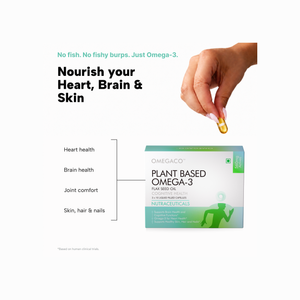
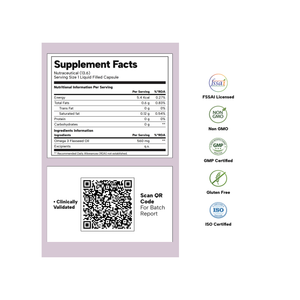
Omegaco provides 560 mg of cold-pressed flaxseed oil per capsule, an estimated ~300 mg of ALA, in a plant-based vegetarian capsule with no fish derivatives and no preservatives. It contains ALA only, not EPA or DHA, and makes it easy to add plant omega-3 to your day alongside ALA-rich foods, with no fishy aftertaste.
Good to know: Speak to your doctor before use if you take blood thinners such as warfarin or aspirin, or any regular medicine. Avoid use during pregnancy or breastfeeding unless your doctor advises it. Food supplements are not intended to diagnose, treat, cure or prevent any disease.
New to plant omega-3? Read our doctor-reviewed Vegan Omega-3 Guide.
KEY BENEFITS

Essential Plant Omega-3 (ALA)

560 mg Cold-Pressed Flaxseed Oil

Plant-Based Vegetarian Capsule

No Fish Derivatives

No Fishy Aftertaste

One Capsule A Day With A Meal
Goes well with
- CoQHealth CoQ10 300mg with Piperine
Regular price Rs. 4,400.00 Sale priceFrom Rs. 2,200.00 - Magneva Magnesium Bisglycinate 350mg + Vitamin B6
Regular price Rs. 1,900.00 Sale priceFrom Rs. 950.00


Omegaco Flaxseed Oil Omega-3 Capsules (Vegetarian ALA)

FSSAI Licensed

Vegetarian

Third Party Tested

Non GMO

GMP Certified

Gluten Free

ISO Certified
FSSAI Licensed
Vegetarian
Third Party Tested
Non GMO
GMP Certified
Gluten Free
ISO Certified


The Formula At A Glance
No Fishy Aftertaste
Flaxseed oil, not fish oil.
Plant-Sourced
From flaxseed, not fish or marine oils.
Vegetarian
Plant-based capsule shell, suitable for vegetarians.
FSSAI Licensed
Made under an FSSAI licence.


30%
36%
*Results based on published clinical studies evaluating the role of Omega-3 fatty acids, including plant-based ALA from flaxseed, in inflammation, cognitive function, and cardiovascular health.
Week 1–2
Week 3–4
Week 5–7
Week 8–10
*General guidance on consistent use, not a promise of results. Individual experience varies.
Our Ingredients
What's Inside Each Capsule
FAQs
Flaxseed oil capsules: what to know before you buy
Medically reviewed by Dr. Reina Punj, MBBS, PG Diploma in Endocrinology (University of South Wales), Lead Physician, Excelgenics Clinical Panel.
Flaxseed oil capsules are a simple way for vegetarians to add plant omega-3 to the day. Here is what Omegaco provides, what it does not, and how it compares with fish oil and algae oil.
At a glance
| Form | Plant-based vegetarian capsule |
|---|---|
| Amount per capsule | 560 mg cold-pressed flaxseed oil (an estimated ~300 mg ALA omega-3) |
| EPA and DHA | None. Omegaco provides ALA only |
| Serving size | 1 capsule a day |
| How to take | With a meal containing healthy fats |
| Other ingredients | No preservatives, no fish derivatives |
| Suitable for | Vegetarians |
| Licence | Made under an FSSAI licence |
How it compares: flaxseed oil vs fish oil vs algae oil
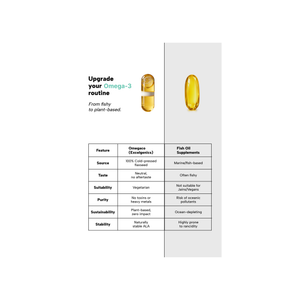
"Omega-3" is a family of fats. Flaxseed oil provides ALA (alpha-linolenic acid), the omega-3 the body cannot make. Fish oil and algae oil provide the longer-chain omega-3s EPA and DHA. The body can turn only a small share of ALA into EPA and DHA, with reported conversion rates of less than 15%, so a flaxseed oil capsule is not a like-for-like swap for fish oil.
| Option | Omega-3 it provides | Suitable for vegetarians? | Good to know |
|---|---|---|---|
| Flaxseed oil capsules (Omegaco) | ALA | Yes | No EPA or DHA; no fishy aftertaste |
| Fish oil capsules | EPA and DHA | No | Most omega-3 supplement trials used EPA and DHA, so their findings do not automatically apply to ALA |
| Algae (algal) oil capsules | DHA, and EPA in some products | Yes | Algal oil supplements usually provide about 100–300 mg DHA. Excelgenics does not sell an algae oil |
| Ground flaxseed (alsi), chia, walnuts | ALA, plus fibre | Yes | Food sources that can supply most of your ALA |
How to take it and when
- Dose: 1 capsule a day. Do not exceed the recommended daily dose.
- With food: take it with a meal that contains some healthy fat.
- Time of day: research has not established a best time to take flaxseed oil capsules. Morning or evening is fine; the most useful habit is taking it at the same meal each day so you do not forget.
- Let food do most of the work: the US adequate intake for ALA is 1.1 g a day for women and 1.6 g for men. One capsule gives roughly a fifth to just over a quarter of that, so keep ALA-rich foods in your meals too.
- How long: Omegaco is a daily nutrient top-up, not a quick-acting product. The US NCCIH notes that flaxseed oil in limited amounts may be safe for short-term use of up to 6 months; review longer-term use with your doctor.
Who should check with a doctor first
- People taking blood thinners such as warfarin or aspirin, or anyone due to have surgery. There are theoretical reasons to think flaxseed oil might interact with anticoagulant or antiplatelet medicines.
- Pregnant or breastfeeding women: little is known about the safety of flaxseed oil supplements at these times, so avoid use unless your doctor advises it. Ask your doctor whether you need EPA and DHA instead.
- Anyone who takes regular medicine or has a diagnosed health condition: check with your doctor or pharmacist before starting any supplement.
Flaxseed oil is generally well tolerated. Higher doses can cause bloating, a feeling of fullness or diarrhoea.
Questions buyers ask
Flaxseed oil or omega-3: which should I choose?
Flaxseed oil is itself an omega-3 source, but of ALA rather than EPA and DHA. If you are vegetarian and want a fish-free way to add ALA, flaxseed oil capsules fit. If your doctor has advised EPA and DHA specifically, flaxseed oil is not a substitute; algae oil is the main vegetarian source of those.
What are the benefits of flaxseed oil pills?
The main reason to take them is to add ALA, the only omega-3 the body cannot make, to your diet. One capsule provides an estimated 300 mg of ALA, part of the daily adequate intake. For other uses, the evidence for flaxseed oil is limited, and research on fish-oil omega-3s (EPA and DHA) does not automatically apply to ALA.
What is the best time to take flaxseed oil capsules?
With a meal that contains some fat, at whichever meal you are most likely to remember. No study has shown that morning or night works better.
Are there omega-3 capsules for vegetarians other than flaxseed oil?
Yes. People looking for a vegan omega-3 supplement have two main plant options: flaxseed oil for ALA, and algae oil capsules, which provide DHA, and sometimes EPA, without fish. Many standard omega-3 softgels use fish oil or a gelatin shell, so check the label if you are vegetarian. Omegaco uses a plant-based vegetarian capsule.
Is one capsule enough on its own?
For most adults, no. One capsule gives part of the daily ALA adequate intake, and food can easily make up the rest: a tablespoon of flaxseed provides about 2.3 g of ALA, and a small handful (28 g) of walnuts about 2.6 g.
Read more
- Vegan Omega-3 Guide: ALA, EPA and DHA explained in depth
- Flaxseed oil benefits: what the research shows
- Flaxseed oil vs fish oil: the nutritional differences
- Can you take omega-3 at night?
- Browse related supplements
Sources
- NIH Office of Dietary Supplements. Omega-3 Fatty Acids: Fact Sheet for Health Professionals (ALA adequate intake, conversion, algal oil DHA, food sources).
- NIH National Center for Complementary and Integrative Health. Flaxseed and Flaxseed Oil (safety, side effects, interactions, pregnancy).
This section is for general information and is not medical advice. Food supplements are not intended to diagnose, treat, cure or prevent any disease.