Heart Health
No supplement replaces a heart-healthy diet, regular activity, not smoking and regular blood pressure and cholesterol checks. Heart health supplements such as omega-3s and CoQ10 can be part of a routine, but the evidence is mixed and depends on the ingredient. Read our guide below, or see our CoQ10 Supplements Guide.
Shop by health goal
Sort by

Medically reviewed by Dr. Reina Punj, MBBS, PG Diploma in Endocrinology (University of South Wales), Lead Physician, Excelgenics Clinical Panel.
Before heart health supplements: the basics come first
For a healthy heart, the American Heart Association's Life's Essential 8 lists eating better, being more active, quitting tobacco, healthy sleep, managing weight, and controlling cholesterol, blood sugar and blood pressure. For adults that means about 150 minutes of moderate activity a week and 7–9 hours of sleep a night.
Ask your doctor how often to check your blood pressure, cholesterol and blood sugar, and keep taking any medicine you have been prescribed. Supplements are not a substitute.
Chest pain, breathlessness, fainting or a racing or irregular heartbeat need urgent medical care. Do not wait to see whether a supplement helps.
Supplements for heart health: what the evidence shows
Fish oil supplements for heart health (EPA and DHA)
Most omega-3 heart research has used fish oil or other products that supply EPA and DHA. A 2020 Cochrane review of 86 trials (more than 160,000 people) found that increasing EPA and DHA has little or no effect on deaths or cardiovascular events (high-certainty evidence), may slightly reduce coronary heart disease events (low certainty) and lowers blood triglycerides by about 15%.
The American Heart Association suggests about 1 g a day of EPA plus DHA for people who already have coronary heart disease, preferably from oily fish, with supplements considered under a doctor's direction. It does not recommend omega-3 supplements for people who are not at high cardiovascular risk.
Plant omega-3 (ALA)
Flaxseed, chia and walnuts provide ALA, a different omega-3. The body converts less than 15% of ALA into EPA and DHA, so fish oil research should not be applied to ALA. In the same Cochrane review, more ALA probably made little or no difference to deaths and may slightly reduce cardiovascular events (moderate- to low-certainty evidence).
In Europe, ALA may be described as contributing to the maintenance of normal blood cholesterol levels, with the beneficial effect obtained from 2 g of ALA a day. Omegaco Flaxseed Oil Omega-3 Capsules provide 560 mg flaxseed oil per capsule (an estimated ~300 mg ALA), well below 2 g, so most ALA would need to come from food. Omegaco contains no EPA or DHA. See our Vegan Omega-3 Guide.
CoQ10
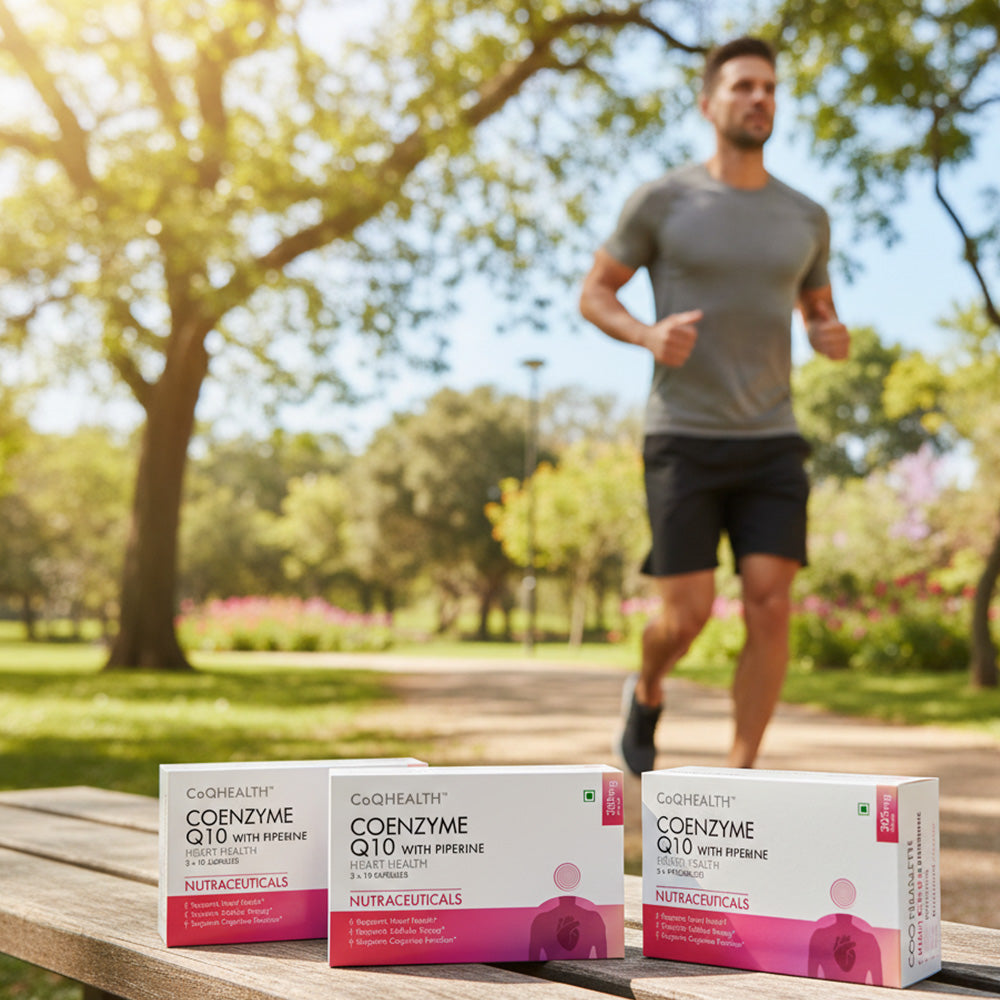
CoQ10's best-known heart research is in people with chronic heart failure under specialist care. In the Q-SYMBIO trial, 420 patients took 300 mg a day or placebo alongside their usual treatment for two years; major cardiovascular events occurred in 15% of the CoQ10 group and 26% on placebo. A 2021 Cochrane review of 11 trials found moderate-quality evidence that CoQ10 probably reduces deaths and heart-failure hospital admissions, but the finding on deaths came from a single trial, and the authors said further trials are needed. These are findings in patients, not evidence that any supplement prevents heart disease or can replace heart medicines. CoQHealth provides 300 mg CoQ10 (ubiquinone) with 5 mg piperine per capsule; see our CoQ10 Supplements Guide.
Fibre: psyllium and oats
A 2018 meta-analysis of 28 trials found that psyllium (isabgol), at a median of about 10 g a day, lowered LDL cholesterol by 0.33 mmol/L (about 13 mg/dL). In Europe, oat beta-glucan may be described as having been shown to lower blood cholesterol, with the effect obtained from 3 g a day.
Plant sterols and stanols
Usually added to fortified foods, plant sterols have an EU-authorised claim: they have been shown to lower blood cholesterol, by 7–10% within 2–3 weeks at 1.5–2.4 g a day. EU labelling rules say people on cholesterol-lowering medicine should use them only under medical supervision, and that more than 3 g a day should be avoided.
Heart health supplements compared
| Ingredient | What research shows | Vegetarian? |
|---|---|---|
| Fish oil (EPA and DHA) | Little or no effect on deaths or cardiovascular events overall; lowers triglycerides | No |
| Algae oil (DHA, some EPA) | EPA and DHA without fish; most omega-3 trials used fish oil or similar products | Yes |
| Flaxseed oil (ALA) | Probably little or no effect on deaths; EU cholesterol claim needs 2 g ALA a day | Yes |
| CoQ10 | Studied mainly in heart failure patients under medical care, and in statin users; findings mixed | Plant-based capsules available |
| Psyllium, oat beta-glucan | Modest LDL cholesterol lowering in trials | Yes |
| Plant sterols and stanols | EU-authorised blood cholesterol lowering at 1.5–3 g a day | Yes |
Vegetarian supplements for heart health
Vegetarian options include ALA from flaxseed, chia, walnuts or a flaxseed oil capsule; algae oil for EPA and DHA; psyllium and oats for fibre; and plant-based CoQ10 capsules. Read more in Flaxseed oil benefits: what the research really shows.
Statins and CoQ10
Statins block an enzyme in the pathway the body uses to make both cholesterol and CoQ10, and a 2018 meta-analysis of 12 trials confirmed that statins lower blood CoQ10. Trials of CoQ10 for statin-related muscle aches have given mixed results, and the National Center for Complementary and Integrative Health concludes that, overall, the evidence does not support it. Keep taking your statin, report unexplained muscle pain or weakness to your doctor, and agree any CoQ10 use with them first. See CoQ10 and statins: what the research says.
Who should be careful
- Blood thinners: CoQ10 may reduce the effect of warfarin, fish oil might prolong clotting time with warfarin (so INR may need monitoring), and flaxseed oil might add to the effect of anticoagulant or antiplatelet medicines.
- Diabetes medicines: CoQ10 can interact with insulin.
- Any regular medicine, including statins: piperine inhibits CYP3A4 and P-glycoprotein, so it can change how some medicines are processed.
- Heart rhythm: in two large trials, 4 g a day of omega-3s slightly increased the risk of atrial fibrillation in people with or at high risk of heart disease.
- Pregnancy and breastfeeding: speak to your doctor first. Avoid CoQ10 while breastfeeding, and flaxseed oil supplements in pregnancy or breastfeeding unless your doctor advises them.
Frequently asked questions
What are the best supplements for heart health?
There is no single best one, and lifestyle and prescribed treatment matter far more. Soluble fibre and plant sterols have the clearest effect on LDL cholesterol; omega-3s and CoQ10 have more mixed evidence.
Are omega-3 supplements good for heart health?
Large reviews found little or no effect of EPA and DHA supplements on deaths or cardiovascular events overall, though they lower triglycerides. Ask your doctor whether one suits you.
Is flaxseed oil as good as fish oil for the heart?
They are not interchangeable. Flaxseed oil provides ALA; fish oil provides EPA and DHA, which most heart trials used.
Can I take CoQ10 with statins?
Many people do, but only with their doctor's agreement, and without stopping the statin.
Can supplements replace blood pressure or cholesterol medicine?
No. Food supplements are not intended to treat or prevent disease. Tell your doctor about any supplement you take.
References
- American Heart Association. Life's Essential 8. heart.org
- National Institutes of Health, Office of Dietary Supplements. Omega-3 Fatty Acids: Fact Sheet for Health Professionals. ods.od.nih.gov
- Abdelhamid AS, Brown TJ, Brainard JS, et al. Omega-3 fatty acids for the primary and secondary prevention of cardiovascular disease. Cochrane Database of Systematic Reviews. 2020;3:CD003177. doi:10.1002/14651858.CD003177.pub5
- Commission Regulation (EU) No 432/2012, list of permitted health claims (alpha-linolenic acid). eur-lex.europa.eu
- Mortensen SA, Rosenfeldt F, Kumar A, et al. The effect of coenzyme Q10 on morbidity and mortality in chronic heart failure: results from Q-SYMBIO. JACC: Heart Failure. 2014;2(6):641–649. doi:10.1016/j.jchf.2014.06.008
- Al Saadi T, Assaf Y, Farwati M, et al. Coenzyme Q10 for heart failure. Cochrane Database of Systematic Reviews. 2021;2:CD008684. doi:10.1002/14651858.CD008684.pub3
- Jovanovski E, Yashpal S, Komishon A, et al. Effect of psyllium (Plantago ovata) fiber on LDL cholesterol and alternative lipid targets, non-HDL cholesterol and apolipoprotein B: a systematic review and meta-analysis of randomized controlled trials. American Journal of Clinical Nutrition. 2018;108(5):922–932. doi:10.1093/ajcn/nqy115
- Commission Regulation (EU) No 1160/2011 (oat beta-glucan). legislation.gov.uk
- Commission Regulation (EU) No 686/2014 (plant sterols and stanols). legislation.gov.uk
- Regulation (EU) No 1169/2011, Annex III, point 5.1 (foods with added plant sterols or stanols). legislation.gov.uk
- Qu H, Meng YY, Chai H, et al. The effect of statin treatment on circulating coenzyme Q10 concentrations: an updated meta-analysis of randomized controlled trials. European Journal of Medical Research. 2018;23:57. doi:10.1186/s40001-018-0353-6
- National Center for Complementary and Integrative Health (NIH). Coenzyme Q10. nccih.nih.gov
- National Center for Complementary and Integrative Health (NIH). Flaxseed and Flaxseed Oil. nccih.nih.gov
- Linus Pauling Institute, Oregon State University. Coenzyme Q10. lpi.oregonstate.edu
- Bhardwaj RK, Glaeser H, Becquemont L, et al. Piperine, a major constituent of black pepper, inhibits human P-glycoprotein and CYP3A4. Journal of Pharmacology and Experimental Therapeutics. 2002;302(2):645–650. doi:10.1124/jpet.102.034728
This article is for general education and is not medical advice. Food supplements are not intended to diagnose, treat, cure or prevent any disease. Consult a qualified healthcare professional before starting any supplement, particularly if you are pregnant, breastfeeding, have a medical condition or take medication.