Medically reviewed by Dr. Reina Punj, MBBS, PG Diploma in Endocrinology (University of South Wales), Lead Physician, Excelgenics Clinical Panel.
Statins are widely prescribed cholesterol-lowering medicines that reduce the risk of heart attacks and strokes in people at raised cardiovascular risk. Statins work by blocking HMG-CoA reductase, an enzyme in the mevalonate pathway. The body uses the same pathway to make Coenzyme Q10 (CoQ10), so statins also lower circulating CoQ10. Some people taking statins report muscle aches, weakness or cramps, known as statin-associated muscle symptoms (SAMS), and whether lower CoQ10 plays a part has been studied for many years.
Biochemical Basis of Statin-Induced CoQ10 Deficiency
The mevalonate pathway produces both cholesterol and CoQ10. A 2018 meta-analysis of 12 randomised controlled trials (1,776 participants) found that statin treatment lowered circulating CoQ10 compared with placebo, regardless of the type or intensity of statin (Qu, Meng et al., 2018). Food provides only small amounts of CoQ10.
One proposed explanation for statin muscle symptoms is that lower CoQ10 may affect mitochondrial energy production in muscle cells. This is a hypothesis: it has not been proven that CoQ10 depletion causes SAMS. Serious muscle damage (rhabdomyolysis) is rare. If you develop unexplained muscle pain, weakness or dark urine while taking a statin, contact your doctor promptly, and do not stop or change your statin without medical advice.
Clinical Evidence for CoQ10 Supplementation in Statin Users

Trials of coenzyme Q10 capsules in people with statin muscle symptoms have given mixed results. A 2015 meta-analysis of 6 randomised trials (302 patients) found no significant effect of CoQ10 on muscle pain (Banach et al., 2015). A later meta-analysis of 12 randomised trials (575 patients) found that CoQ10 reduced reported muscle pain, weakness, cramps and tiredness compared with placebo, but did not change creatine kinase, a blood marker of muscle damage (Qu, Guo et al., 2018).
The US National Center for Complementary and Integrative Health summarises the overall evidence as not supporting the idea that CoQ10 relieves statin-related muscle pain. These are research findings in patients under medical care. They do not show that any supplement prevents or treats statin side effects.
CoQHealth's Dose and Formulation
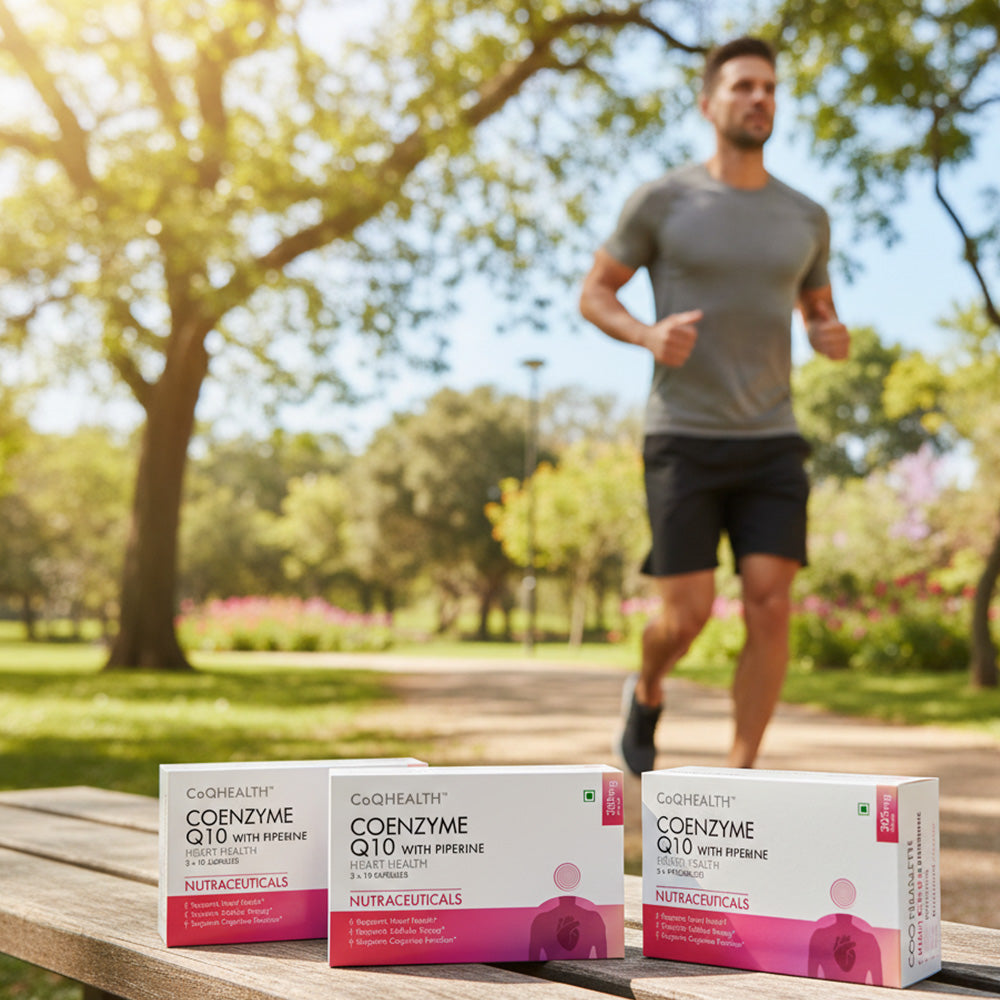
CoQHealth provides 300 mg coenzyme Q10 (ubiquinone) with 5 mg piperine per plant-based capsule. Trials in statin users have used a range of doses. CoQ10 is poorly absorbed, and in one small, unreplicated study piperine modestly raised blood CoQ10 levels over three weeks (Badmaev et al., 2000). Take one capsule daily with a meal containing healthy fats, in the morning or at lunch.
The best-known CoQ10 heart trial, Q-SYMBIO, studied 300 mg CoQ10 a day in people with chronic heart failure, not statin muscle symptoms (Mortensen et al., 2014). It does not show that CoQ10 improves heart outcomes in statin users.
Practical Consumer Implications: Should Statin Users Consider CoQ10?

If you take a statin and are interested in CoQ10, talk to your doctor first. Statins are an important medicine and should be continued as prescribed. Muscle symptoms have many possible causes and need medical assessment; your doctor may check your blood tests, adjust the dose or try a different statin.
There is also an interaction point to discuss. Piperine has been shown in laboratory studies to inhibit CYP3A4 and P-glycoprotein (Bhardwaj et al., 2002), and some statins are processed by CYP3A4. Your doctor or pharmacist can advise whether a piperine-containing supplement is suitable alongside your medicine.
Safety and Interactions
CoQ10 is generally well tolerated, although mild digestive upset and trouble sleeping have been reported. CoQ10 may interact with the blood thinner warfarin and with insulin. Piperine can change how the body metabolises some medicines.
Consumer Takeaway
Statins lower the body's CoQ10 levels, and research on whether CoQ10 supplements help statin muscle symptoms is mixed. CoQHealth provides CoQ10, a compound the body uses in normal cellular energy production. If you take a statin, use it only with your doctor's agreement, and never as a reason to stop or reduce your prescribed medicine.
References
- Qu H, Meng YY, Chai H, et al. The effect of statin treatment on circulating coenzyme Q10 concentrations: an updated meta-analysis of randomized controlled trials. European Journal of Medical Research. 2018;23:57. doi:10.1186/s40001-018-0353-6
- Banach M, Serban C, Sahebkar A, et al. Effects of coenzyme Q10 on statin-induced myopathy: a meta-analysis of randomized controlled trials. Mayo Clinic Proceedings. 2015;90(1):24–34. doi:10.1016/j.mayocp.2014.08.021
- Qu H, Guo M, Chai H, et al. Effects of coenzyme Q10 on statin-induced myopathy: an updated meta-analysis of randomized controlled trials. Journal of the American Heart Association. 2018;7(19):e009835. doi:10.1161/JAHA.118.009835
- National Center for Complementary and Integrative Health. Coenzyme Q10. nccih.nih.gov/health/coenzyme-q10
- Badmaev V, Majeed M, Prakash L. Piperine derived from black pepper increases the plasma levels of coenzyme Q10 following oral supplementation. Journal of Nutritional Biochemistry. 2000;11(2):109–113. doi:10.1016/S0955-2863(99)00074-1
- Mortensen SA, Rosenfeldt F, Kumar A, et al. The effect of coenzyme Q10 on morbidity and mortality in chronic heart failure: results from Q-SYMBIO. JACC: Heart Failure. 2014;2(6):641–649. doi:10.1016/j.jchf.2014.06.008
- Bhardwaj RK, Glaeser H, Becquemont L, et al. Piperine, a major constituent of black pepper, inhibits human P-glycoprotein and CYP3A4. Journal of Pharmacology and Experimental Therapeutics. 2002;302(2):645–650. doi:10.1124/jpet.102.034728
This article is for general education and is not medical advice. Food supplements are not intended to diagnose, treat, cure or prevent any disease. Consult a qualified healthcare professional before starting any supplement, particularly if you are pregnant, breastfeeding, have a medical condition or take medication.