

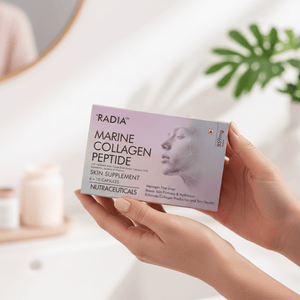
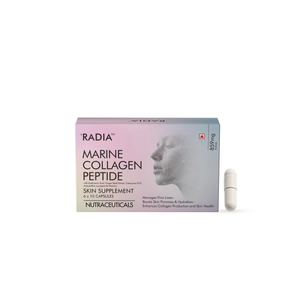

Radia Marine Collagen + Hyaluronic Acid for Skin
Marine Collagen with Hyaluronic Acid, Vitamin C & Antioxidants
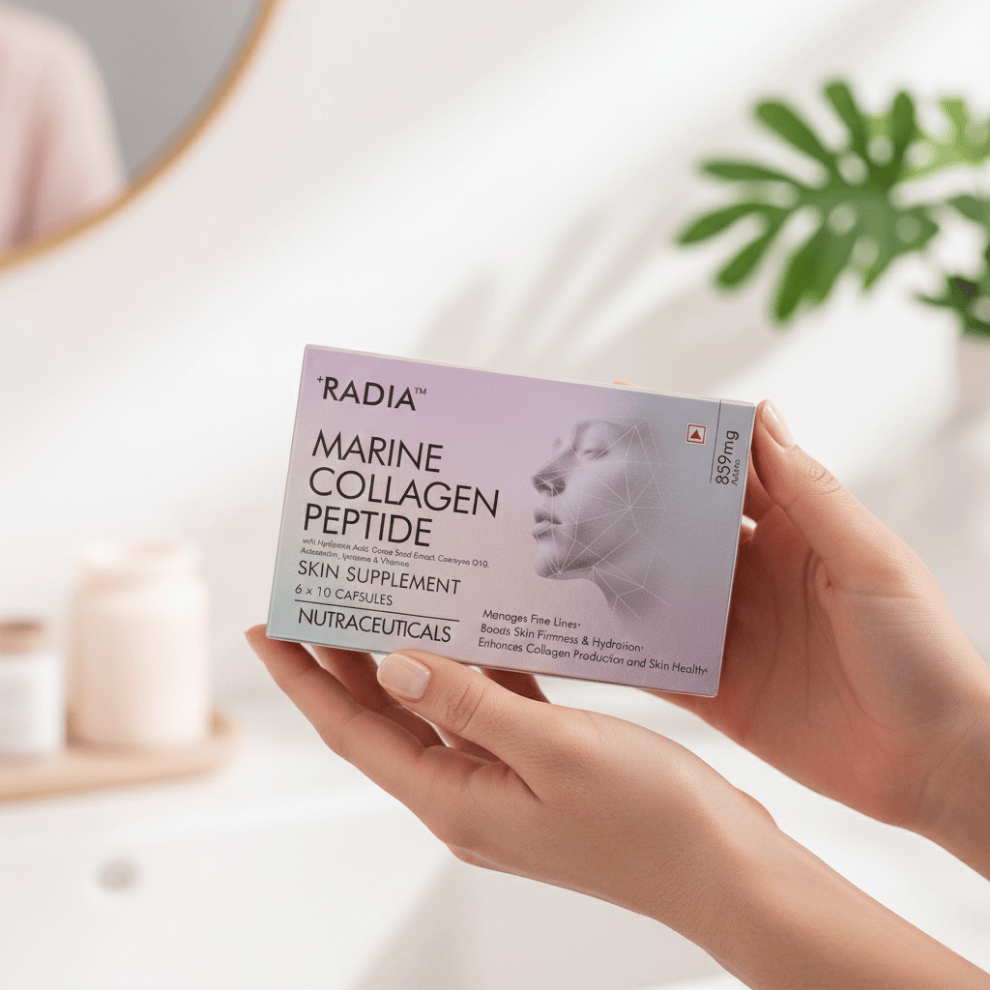
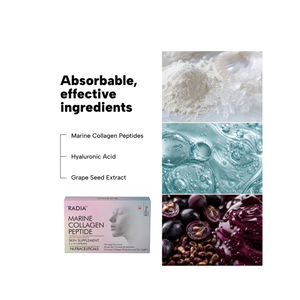
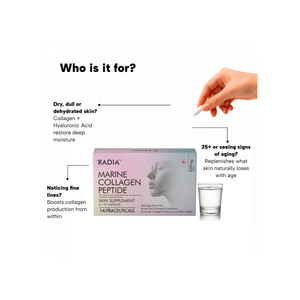
Collagen is the main structural protein in skin, and the body makes less of it with age. Radia combines 500 mg of marine collagen peptides (type I and III) with 100 mg of low-molecular-weight hyaluronic acid and a blend of antioxidants in a 2-capsule daily serving. Vitamin C (65 mg) contributes to normal collagen formation for the normal function of skin, zinc contributes to the maintenance of normal skin, and vitamins C and E contribute to the protection of cells from oxidative stress.
Good to know: Radia is made from fish and is not suitable for vegetarians or anyone with a fish allergy. It also contains CoQ10 and black pepper extract (piperine), which can affect how some medicines work or are absorbed, so speak to your doctor first if you take regular medication, especially blood thinners such as warfarin or diabetes medicines such as insulin, or if you are pregnant or breastfeeding. Food supplements are not intended to diagnose, treat, cure or prevent any disease.
New to collagen? Read our doctor-reviewed Marine Collagen Supplements Guide.
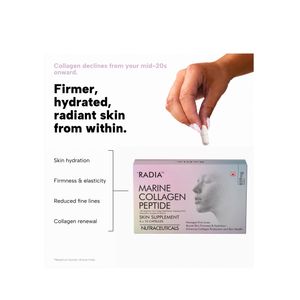
KEY BENEFITS

500 mg Marine Collagen Peptides

With 100 mg Hyaluronic Acid

Vitamin C For Normal Collagen Formation

Zinc For The Maintenance Of Normal Skin

Antioxidant Vitamins C & E

With Astaxanthin, Lycopene & Grape Seed
Goes well with
- Omegaco Flaxseed Oil Omega-3 Capsules (Vegetarian ALA)
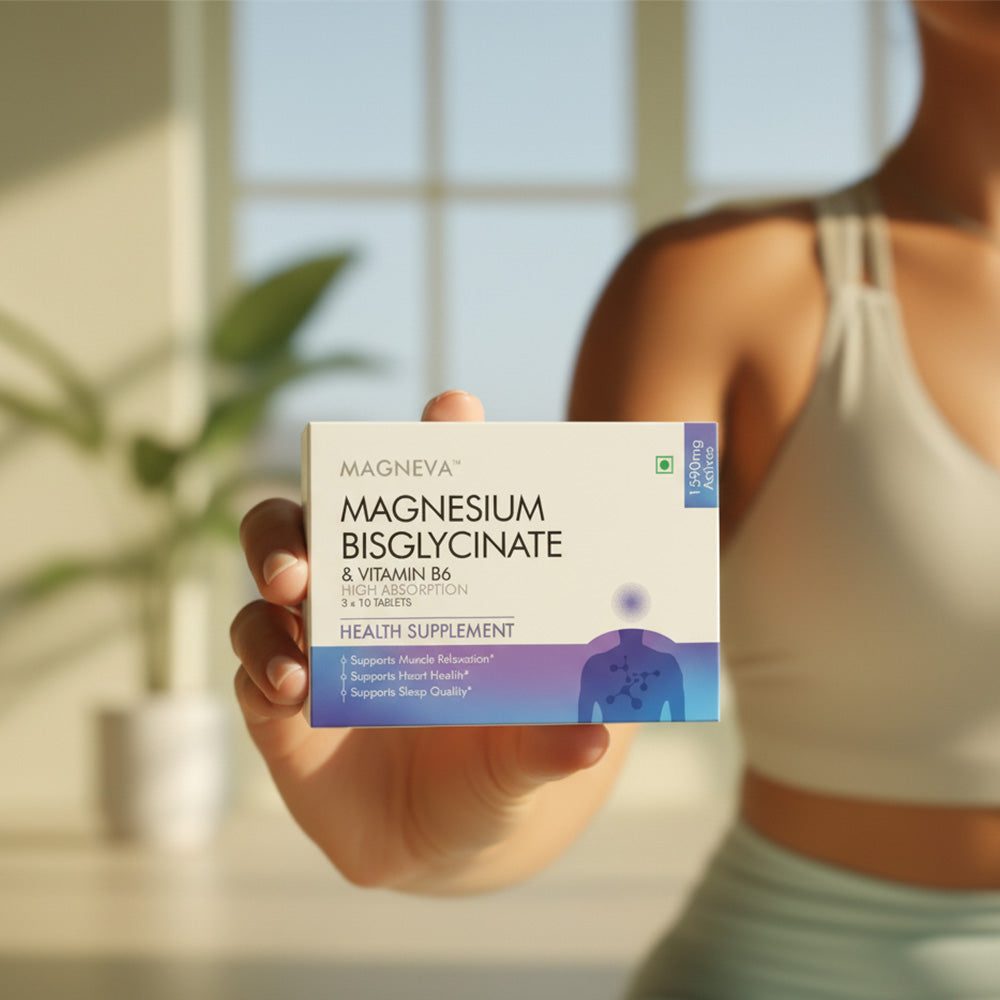
Regular price Rs. 1,198.00 Sale priceFrom Rs. 599.00 - Magneva Magnesium Bisglycinate 350mg + Vitamin B6
Regular price Rs. 1,900.00 Sale priceFrom Rs. 950.00

Radia Marine Collagen + Hyaluronic Acid for Skin

FSSAI Licensed

Third Party Tested

Non GMO

GMP Certified

Gluten Free

ISO Certified
FSSAI Licensed
Third Party Tested
Non GMO
GMP Certified
Gluten Free
ISO Certified


What Makes Up The Formula
Multi-Ingredient Formula
Collagen peptides, hyaluronic acid and antioxidants in one daily serving.
Marine Collagen Peptides
Type I & III collagen peptides from fish.
Antioxidant Blend
Features CoQ10, Astaxanthin, Lycopene, Grape Seed Extract, and Vitamin E.
Vitamin C + Piperine
Vitamin C contributes to normal collagen formation; piperine is included as an absorption aid.


28%
20%
*Based on published clinical studies evaluating marine collagen peptides and hyaluronic acid supplementation for skin health.
Week 1–2
Week 3–4
Week 5–7
Week 8–10
*General guidance on consistent use, not a promise of results. Individual experience varies.
OUR INGREDIENTS
What's Inside Each Serving
FAQs
Marine collagen supplement for skin: what to know before you buy
Medically reviewed by Dr. Reina Punj, MBBS, PG Diploma in Endocrinology (University of South Wales), Lead Physician, Excelgenics Clinical Panel.
Marine collagen suits people who prefer not to take beef or pork collagen. Here is what is in each serving of Radia, how a capsule compares with a powder, and who should be careful.
At a glance
| Form | Capsules |
|---|---|
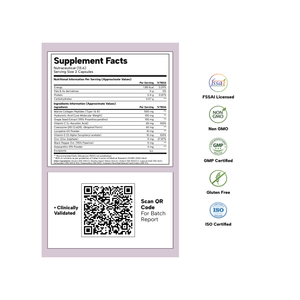
| Serving size | 2 capsules a day |
| Collagen per serving | 500 mg marine collagen peptides (type I & III) |
| Also per serving | Low-molecular-weight hyaluronic acid 100 mg, grape seed extract (95% OPC) 100 mg, vitamin C 65 mg, CoQ10 60 mg, lycopene 10 mg, vitamin E 10 mg, zinc 5 mg, black pepper extract 5 mg, astaxanthin 4 mg |
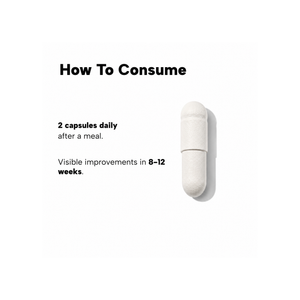
| How to take | 2 capsules daily after a meal |
| Suitable for | Non-vegetarian: fish-derived. Not suitable for vegetarians, vegans or anyone with a fish allergy |
| Licence | Made under an FSSAI licence |
Vitamin C contributes to normal collagen formation for the normal function of skin, and zinc contributes to the maintenance of normal skin.
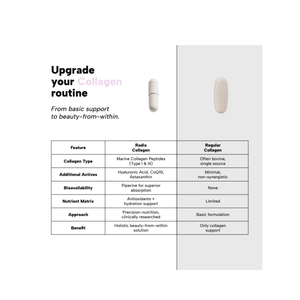
How it compares: marine collagen vs bovine collagen
| Feature | Marine collagen | Bovine collagen | "Vegan collagen" |
|---|---|---|---|
| Source | Fish skin or scales | Cattle hide or bone | Plant ingredients |
| Collagen type | Mainly type I | Mainly type I | Contains no collagen |
| Who it suits | People who avoid beef or pork | People who eat beef; not suitable for those who avoid it for religious or dietary reasons | Vegetarians and vegans, as a source of nutrients the body uses to make its own collagen |
| Allergy note | Avoid with a fish allergy | Avoid with a beef or bovine gelatin allergy | Check each ingredient |
Neither marine nor bovine collagen has been clearly shown to be better for skin. Choose the source that fits your diet.
How much collagen is in Radia, honestly
Radia provides 500 mg of collagen peptides per day. Most skin trials of hydrolysed collagen used 2.5–10 g a day, which is 5 to 20 times more. Radia is a capsule formula that pairs a smaller amount of collagen with hyaluronic acid, vitamin C and antioxidants; it is not designed to match the collagen dose of a powder. If a high collagen dose is your priority, a powder is the more practical format.
The research itself is mixed. A 2025 meta-analysis of 23 trials found improvements in skin hydration, elasticity and wrinkles overall, but trials without industry funding, and higher-quality trials, showed no significant effect. Sun protection, sleep, a balanced diet and not smoking remain the foundations of skin care.
How to take it and when
- Dose: 2 capsules a day after a meal. Do not exceed the recommended daily dose.
- Time of day: there is no proven best time to take a collagen supplement. After breakfast or lunch is easy to remember.
- How long: collagen trials for skin ran for 8 to 24 weeks. Give any routine at least that long before judging it, and remember results vary from person to person.
Collagen supplement side effects: who should check with a doctor first
Collagen supplements are generally well tolerated, and a 2019 review of 11 trials reported no adverse events. Some people notice mild stomach upset, bloating or a feeling of fullness. Be careful if any of these apply:
- Fish allergy: do not take Radia. Fish collagen is itself a recognised fish allergen.
- Blood thinners or diabetes medicines: Radia contains CoQ10, which may interact with warfarin and insulin. Speak to your doctor first.
- Any regular medicine: Radia contains black pepper extract (piperine), which in laboratory studies inhibits enzymes and transporters that process many medicines. Check with your doctor or pharmacist.
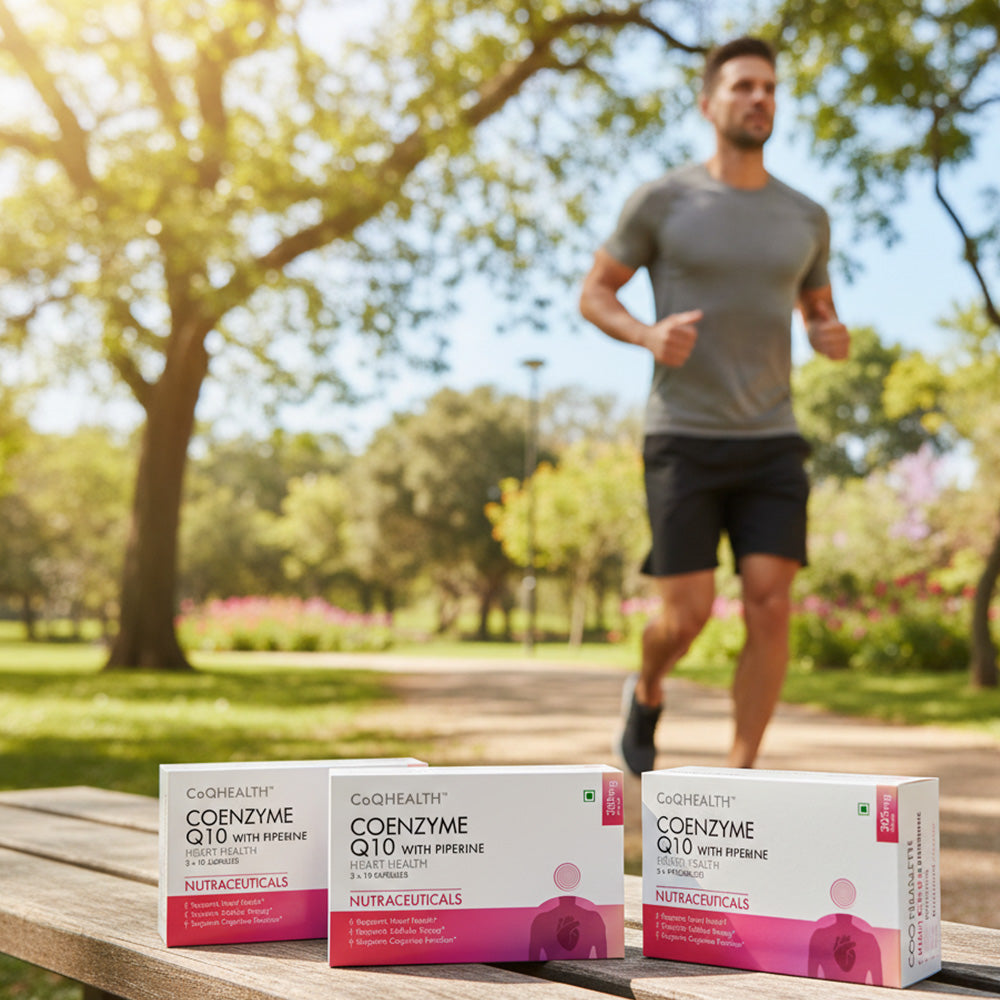
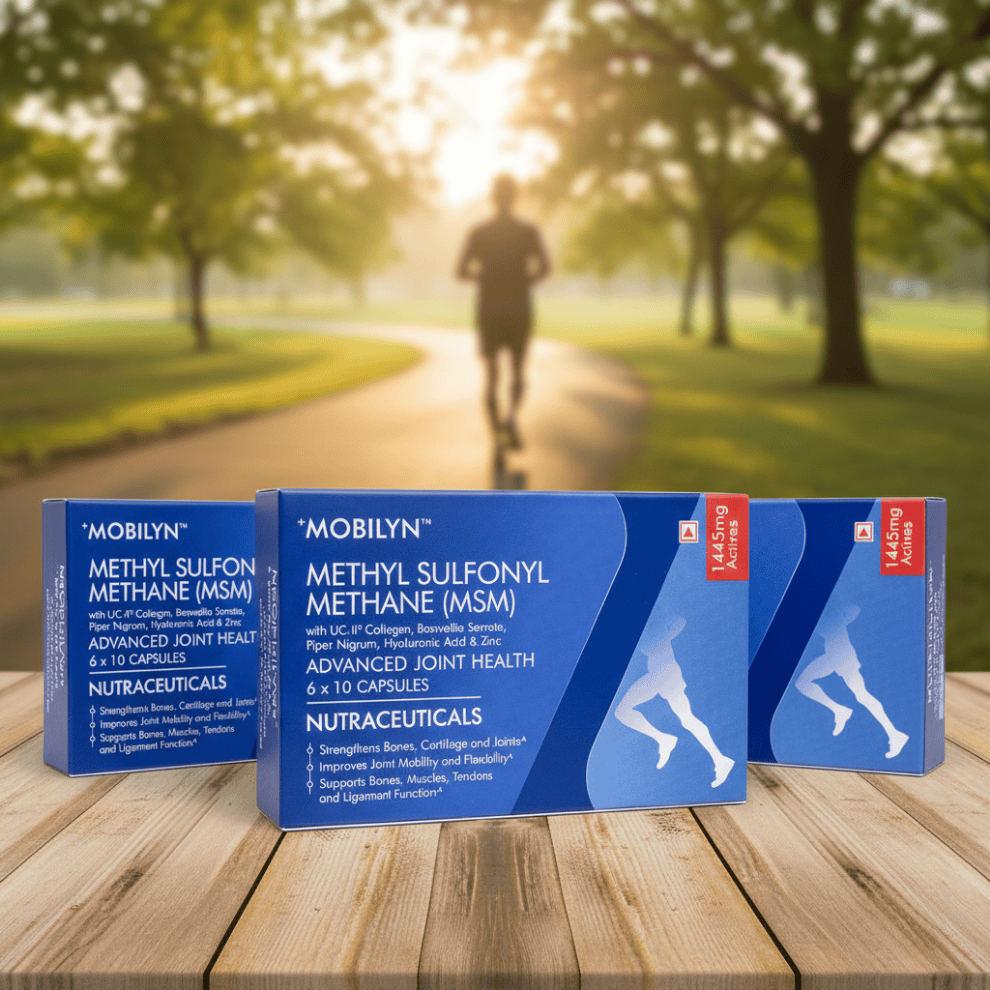
- Other supplements: check labels so you do not double up on vitamin C, zinc, CoQ10 or piperine. CoQHealth and Mobilyn also contain piperine.
- Pregnancy or breastfeeding: consult your doctor before use.
Questions buyers ask
What is the best time to take a collagen supplement?
No study has shown that one time of day works better than another. Take Radia after a meal, at the time you are most likely to remember every day.
Is 500 mg of marine collagen enough?
It is less than the 2.5–10 g used in most skin trials, so do not expect Radia to reproduce those study results on collagen alone. Radia is designed as a combined formula, with vitamin C, which contributes to normal collagen formation for the normal function of skin.
Collagen powder or capsules: which is better?
Powders make it easy to take several grams of collagen at once; capsules are tasteless, portable and suit combined formulas. Choose the format you will take every day.
Do I still need sunscreen if I take a collagen supplement?
Yes. Daily sun protection is a cornerstone of skin care, and a supplement does not replace it. A collagen supplement is, at most, one part of a skin routine.
Read more
- Marine Collagen Supplements Guide: the research in more depth
- Marine collagen benefits: what the research shows
- Marine collagen side effects and marine vs bovine collagen
- Collagen-rich foods for skin
- Browse the skin and beauty collection
Sources
- Myung SK, Park Y. Effects of collagen supplements on skin aging: a systematic review and meta-analysis of randomized controlled trials. Am J Med. 2025;138(9):1264–1277. doi:10.1016/j.amjmed.2025.04.034
- Choi FD, et al. Oral collagen supplementation: a systematic review of dermatological applications. J Drugs Dermatol. 2019;18(1):9–16. jddonline.com
- Lim YS, et al. Marine collagen as a promising biomaterial for biomedical applications. Mar Drugs. 2019;17(8):467. doi:10.3390/md17080467
- Hamada Y, Nagashima Y, Shiomi K. Identification of collagen as a new fish allergen. Biosci Biotechnol Biochem. 2001;65(2):285–291. doi:10.1271/bbb.65.285
- NIH National Center for Complementary and Integrative Health. Coenzyme Q10.
- Bhardwaj RK, et al. Piperine, a major constituent of black pepper, inhibits human P-glycoprotein and CYP3A4. J Pharmacol Exp Ther. 2002;302(2):645–650. doi:10.1124/jpet.102.034728
This section is for general information and is not medical advice. Food supplements are not intended to diagnose, treat, cure or prevent any disease.