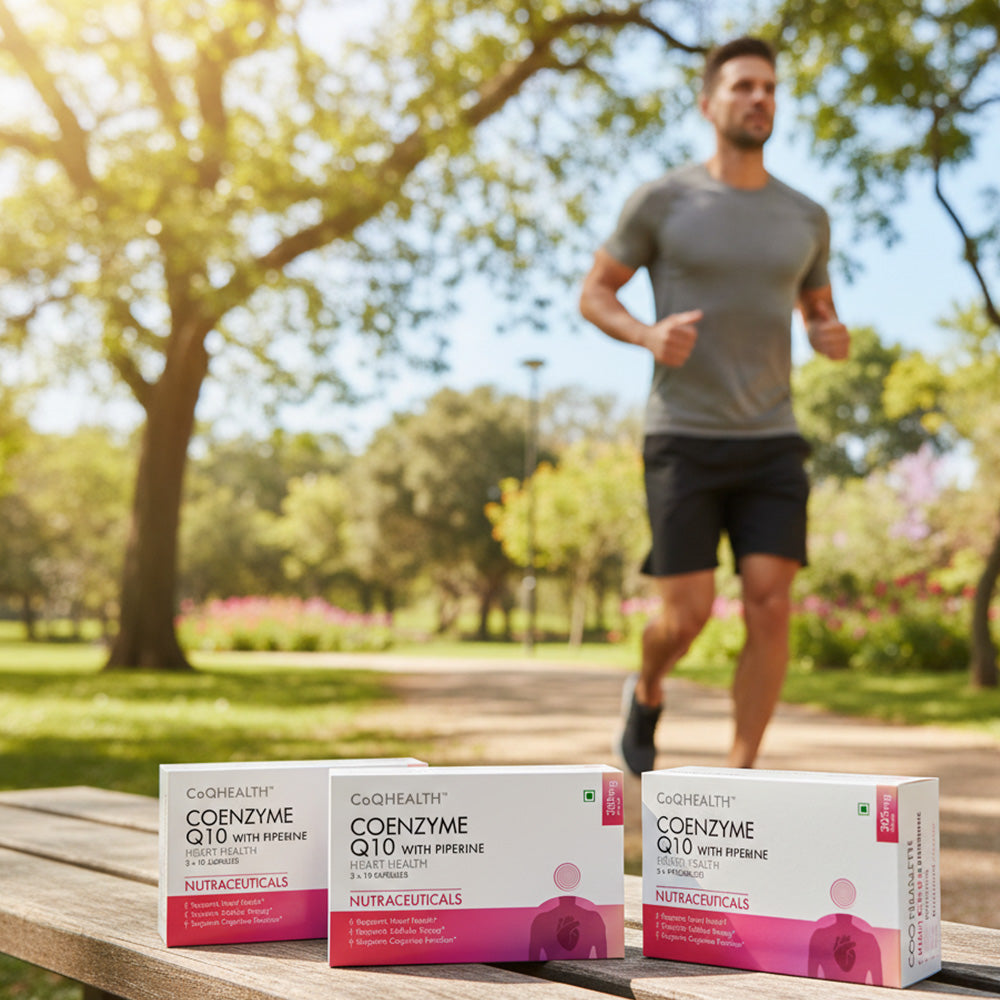
Three boxes of CoQHealth Coenzyme Q10 with Piperine on a wooden park bench, with a man jogging in the blurred background.
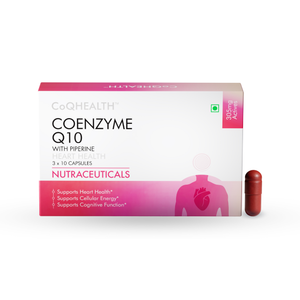
CoQHealth Coenzyme Q10 with Piperine box with a single red capsule beside it on a white background.
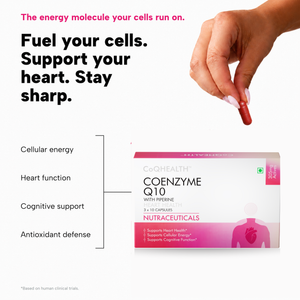
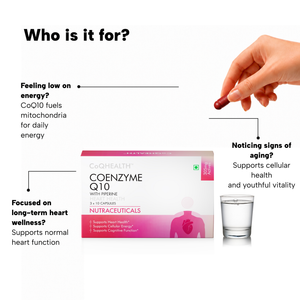
CoQHealth CoQ10 with Piperine box on a white background, with a hand holding a red capsule and text callouts.
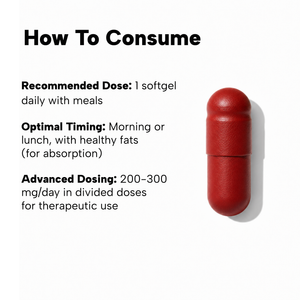
CoQHealth CoQ10 red capsule with how-to-take instructions on a white background.
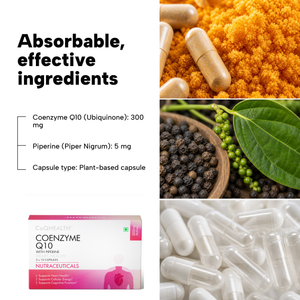
CoQHealth ingredients collage: Coenzyme Q10 and piperine (black pepper extract) shown with the product box.
CoQHealth Coenzyme Q10 box on a white background with a hand holding a red capsule, a glass of water and text callouts.
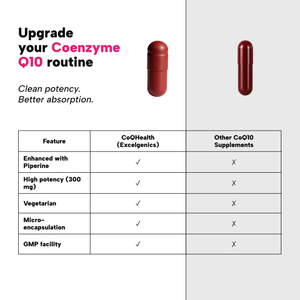
Promotional graphic for CoQHealth CoQ10 supplements showing a comparison table and two red capsule pills on a light gray background.
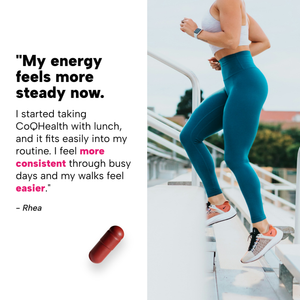
A promotional fitness graphic with a woman jogging outdoors on the right and a quote on the left that says, "My energy feels more steady now. I started taking CoQHealth with lunch, and it fits easily into my routine.
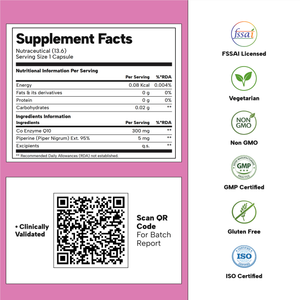
Supplement facts label for CoQHealth Coenzyme Q10 with Piperine, with a QR code for the batch report and certification icons, on a pink border.
1 of 9

CoQHealth CoQ10 300mg with Piperine

300 mg CoQ10 (Ubiquinone) with Piperine in One Plant-Based Capsule

CoQ10 (coenzyme Q10) is found in almost every cell, where it is involved in normal cellular energy production and acts as a fat-soluble antioxidant. The body makes its own CoQ10, and food provides only small amounts, mainly from meat and fish.

CoQHealth provides 300 mg of CoQ10 (as ubiquinone) with 5 mg of piperine from black pepper extract in one plant-based capsule a day. CoQ10 is fat-soluble, so take it with a meal that contains some healthy fat, in the morning or at lunch.

Good to know: Speak to your doctor before use if you take warfarin or another blood thinner, insulin or other diabetes medicines, a statin or any regular medicine (piperine can change how some medicines are processed), or if you are pregnant. Avoid while breastfeeding. Food supplements are not intended to diagnose, treat, cure or prevent any disease.

New to CoQ10? Read our doctor-reviewed CoQ10 Supplements Guide.

KEY BENEFITS

300 mg CoQ10 In One Daily Capsule

Involved In Cellular Energy Production

CoQ10 Is A Fat-Soluble Antioxidant

With 5 mg Piperine (Black Pepper)

Plant-Based Capsule

Take With A Meal Containing Fat

Coenzyme Q10 (Ubiquinone): 300 mg
Piperine (Piper Nigrum): 5 mg
Capsule type: Plant-based capsule

Recommended Dose: 1 capsule daily with a meal.
Optimal Timing: Morning or lunch, with a meal containing healthy fats.
Important: Do not exceed the recommended daily dose. Consult your doctor before use if you take warfarin or another blood thinner, insulin or diabetes medicines, a statin or any regular medicine (piperine can change how some medicines are processed), or if you are pregnant. Avoid while breastfeeding.

300 mg CoQ10 + 5 mg Piperine Per Capsule
Sale price From Rs. 2,200.00
Oral vegan Tablet: (Pack of 1) 30 Softgels
Add to Wishlist

Goes well with

Three boxes of CoQHealth Coenzyme Q10 with Piperine on a wooden park bench, with a man jogging in the blurred background.

CoQHealth CoQ10 300mg with Piperine

FSSAI Licensed

FSSAI Licensed

Vegetarian

Vegetarian

Third Party Tested

Third Party Tested

Non GMO

Non GMO

GMP Certified

GMP Certified

Gluten Free

Gluten Free

ISO Certified

ISO Certified

FSSAI Licensed

FSSAI Licensed

Vegetarian

Vegetarian

Third Party Tested

Third Party Tested

Non GMO

Non GMO

GMP Certified

GMP Certified

Gluten Free

Gluten Free

ISO Certified

ISO Certified

Your Cells Need Energy To Perform At Their Best

CoQ10 helps your cells turn food into usable energy. The body makes its own, and studies have found lower CoQ10 levels in several organs in older age groups.

People running outdoors, next to a panel on factors that may affect CoQ10 levels: age, certain medicines, stress and energy needs
The Formula Advantage

The Formula At A Glance

High Potency Formula

300 mg CoQ10 in every capsule.

With Piperine

Black pepper extract, studied as an absorption aid for CoQ10.

Take It With Food

CoQ10 is fat-soluble; take it with a meal containing some fat.

Plant-Based Capsule

One plant-based capsule a day.

One Capsule. 300 mg CoQ10 + Piperine.

CoQ10 is involved in normal cellular energy production in the mitochondria and acts as a fat-soluble antioxidant. Piperine from black pepper is included as an absorption aid.

CoQHealth CoQ10 300mg with Piperine
Backed By Science*

30%

Increase In CoQ10 Absorption When Combined With Piperine

42%

Reduction In Major Cardiovascular Events Reported In Clinical Research Evaluating CoQ10 Supplementation

*Based on published studies evaluating CoQ10, mitochondrial function, cardiovascular health, and bioavailability enhancement with piperine.

How To Get The Most From Daily Use

1

Week 1–2

  • Build the habit
  • Take 1 capsule daily with a meal
  • Choose a meal with some healthy fat
2

Week 3–4

  • Keep the timing steady
  • Morning or lunch suits most people
  • Keep to the label dose
3

Week 5–7

  • Give it time
  • CoQ10 is not a quick-acting product
  • Keep up activity, sleep and a balanced diet
4

Week 8–10

  • Review how it suits you
  • Check in with your doctor if on medicines
  • Decide whether to continue

*General guidance on consistent use, not a promise of results. Individual experience varies.

OUR INGREDIENTS

What's Inside Each Capsule

Coenzyme Q10 (Ubiquinone) – 300 mg

CoQ10 is a compound the body makes itself and uses in normal cellular energy production in the mitochondria. It also acts as a fat-soluble antioxidant in cell membranes and is found in higher amounts in tissues with high energy needs, such as the heart and muscles. CoQHealth contains the ubiquinone form. CoQ10 can interact with warfarin and insulin, so check with your doctor if you take them.

Piperine (Black Pepper Extract) – 5 mg

Piperine, the main active compound in black pepper, has been studied as an absorption aid for CoQ10, which is poorly absorbed on its own. Piperine can also change how the body processes some medicines, so check with your doctor if you take any regular medicine.

FAQs

CoQHealth provides 300 mg of coenzyme Q10 (as ubiquinone) with 5 mg of piperine from black pepper extract in one plant-based capsule a day. CoQ10 is involved in normal cellular energy production. CoQHealth is made under an FSSAI licence.

CoQ10 is found in almost every cell. Inside the mitochondria it carries electrons along the chain of reactions that produces ATP, the body's energy currency, and it acts as a fat-soluble antioxidant in cell membranes. Because the body makes it, CoQ10 is not classed as a vitamin and has no official recommended intake.

Studies have found lower CoQ10 levels in several human organs in older age groups, and statin medicines lower the amount of CoQ10 circulating in the blood. Whether a supplement makes a noticeable difference for healthy people is less certain, and deficiency has not been described in the general population.

The best-known trial, Q-SYMBIO, gave 420 people with moderate to severe chronic heart failure 300 mg CoQ10 a day or placebo, alongside their usual treatment, for two years; major cardiac events occurred in 15% of the CoQ10 group and 26% of the placebo group. A 2021 Cochrane review of 11 trials found moderate-quality evidence that CoQ10 probably reduces deaths and hospital admissions in heart failure, but called for more trials. These are findings in patients under specialist care. CoQHealth is not a treatment for any heart condition, and nobody should change heart medicines because of these findings.

CoQ10 is involved in mitochondrial energy production, but it is not a stimulant, and whether a supplement makes a noticeable difference to energy in healthy people is uncertain. Experiences vary.

CoQ10 is poorly absorbed. In one small study in healthy men, 5 mg piperine with 120 mg CoQ10 daily for 21 days raised blood CoQ10 by about 30% more than CoQ10 alone; the study was run by a company that sells piperine and has not been independently repeated. Piperine can also change how the body processes some medicines.

CoQHealth is intended for adults. Many people over 40 choose CoQ10, but the body makes its own and a supplement is a personal choice, not a necessity. Check with your doctor first if you take any regular medicine.

Yes. CoQ10 is involved in normal cellular energy production. Take 1 capsule a day with a meal containing some fat, and do not exceed the label dose.

Yes. CoQHealth is formulated using plant-based capsules.

Take 1 capsule daily with a meal containing some healthy fat, in the morning or at lunch. CoQ10 has occasionally been linked to trouble sleeping, so an evening dose may not suit everyone. Do not exceed the label dose.

CoQ10 is not a quick-acting product. Most people take it daily for several weeks before judging whether it suits them. Experiences vary.

No serious side effects of CoQ10 have been reported in research. Mild digestive upset is the most common complaint, especially at 200 mg a day or more, and some people notice trouble sleeping. Speak to your doctor before use if you take warfarin or another blood thinner (CoQ10 has been reported to reduce its effect), use insulin or other diabetes medicines, are having cancer treatment, or are pregnant. Avoid while breastfeeding. Do not exceed the label dose.

Many people do, but only with their doctor's agreement. Statins lower blood CoQ10 levels, but research on CoQ10 for statin-related muscle symptoms is mixed, and the US NCCIH concludes that overall the evidence does not support it. The piperine in CoQHealth may also affect how some statins are processed. Keep taking your statin as prescribed, and report unexplained muscle pain, weakness or dark urine to your doctor promptly.

CoQ10 tablets and capsules: what to know before you buy

Medically reviewed by Dr. Reina Punj, MBBS, PG Diploma in Endocrinology (University of South Wales), Lead Physician, Excelgenics Clinical Panel.

Comparing CoQ10 supplements? This section covers what is in each CoQHealth capsule, how ubiquinone compares with ubiquinol, how to take CoQ10 and who should check with a doctor first.

At a glance

FormCoenzyme Q10 as ubiquinone, in a capsule
Amount per servingCoenzyme Q10 (ubiquinone) 300 mg; piperine 5 mg
Serving size1 capsule a day
How to takeWith a meal containing healthy fats, in the morning or at lunch
Capsule typePlant-based capsule
ManufacturingMade under an FSSAI licence

What is ubiquinone CoQ10?

CoQ10 exists in two forms that the body switches between as it works. Ubiquinone is the oxidised form, and it is the form in CoQHealth. Labels that simply say "coenzyme Q10" usually mean ubiquinone. Ubiquinol is the reduced form. After absorption, the body converts ubiquinone to ubiquinol, and most CoQ10 in the blood is ubiquinol.

How it compares: ubiquinone vs ubiquinol

FeatureUbiquinoneUbiquinol
What it isThe oxidised form of CoQ10The reduced form of CoQ10
In the bodyConverted to ubiquinol after absorptionCan be converted back to ubiquinone as CoQ10 does its job
Absorption evidenceA 2020 review argued formulation matters more than form; its authors worked for a company that sells ubiquinoneA study in 12 healthy volunteers found higher blood levels with ubiquinol than ubiquinone at 200 mg a day for 4 weeks
On the labelOften listed simply as "coenzyme Q10"Usually named as ubiquinol

Neither study settles the question. For most people the dose, taking it with fat and taking it consistently matter more than the form. The same goes for CoQ10 tablets vs capsules: CoQ10 is fat-soluble and poorly absorbed, so whatever the format, take it with a meal that contains fat.

How to take it and when

  • Dose: 1 capsule (300 mg CoQ10) a day. Do not exceed the label dose.
  • With fat: take it with a meal that contains some healthy fat, such as food cooked in oil or with nuts, seeds, curd or eggs.
  • Timing: morning or lunch. CoQ10 has occasionally been linked to trouble sleeping, so an evening dose may not suit everyone.
  • Giving it time: CoQ10 is not a stimulant or a quick-acting product. Trials in statin users gave 100–400 mg a day for one to three months, so most people take it daily for several weeks before judging whether it suits them.

Who should check with a doctor first

  • Anyone taking warfarin or another blood thinner: CoQ10 has been reported to reduce warfarin's effect, so blood tests may need closer monitoring.
  • Anyone using insulin or other diabetes medicines.
  • Anyone having cancer treatment, as CoQ10 may not be compatible with some treatments.
  • Anyone taking a statin or any regular medicine: piperine can change how the body processes some medicines.
  • Anyone who is pregnant.
  • Children: do not give CoQHealth to children unless a doctor advises it.

Avoid CoQ10 supplements while breastfeeding, as there is too little reliable safety information. Never stop or reduce a prescribed medicine because you are taking CoQ10.

Questions buyers ask

What are the benefits of CoQ10?

CoQ10 is involved in normal cellular energy production and acts as a fat-soluble antioxidant in cell membranes. The body makes its own CoQ10, and whether a supplement makes a noticeable difference for healthy people is uncertain. The most-studied groups are people taking statins and people with heart failure under specialist care, and the results there are mixed: the US NCCIH describes the heart-failure research as inconclusive and says the overall evidence does not support CoQ10 for statin-related muscle pain. None of this means CoQ10 treats or prevents any condition.

Are there CoQ10 benefits for men specifically?

CoQ10 does the same job in men and women. It has been studied in male infertility, but the US NCCIH says that research is too limited for any conclusions. Men with fertility concerns should see a doctor.

Is 300 mg of CoQ10 a high dose?

It is higher than many supplements, which typically provide 30–100 mg. Doses of 300 mg a day have been used in clinical trials, and research rates the safety evidence as strong at up to 1,200 mg a day. Mild stomach upset is more common at 200 mg a day or more. Do not take more than one capsule a day.

Is a CoQ10 capsule better than a CoQ10 tablet?

There is no good evidence that one format is reliably better. Absorption depends far more on taking CoQ10 with a meal containing fat. CoQHealth is a capsule.

Can I take CoQHealth with other supplements?

Check other labels for CoQ10 and black pepper extract. Radia, for example, contains 60 mg CoQ10 and 5 mg black pepper extract per daily serving and is fish-derived. If you take medicines, ask your doctor or pharmacist before combining products.

Read more

Sources

  • Linus Pauling Institute, Oregon State University. Coenzyme Q10
  • NCCIH. Coenzyme Q10
  • Langsjoen PH, Langsjoen AM. Comparison study of plasma coenzyme Q10 levels in healthy subjects supplemented with ubiquinol versus ubiquinone. Clin Pharmacol Drug Dev. 2014;3(1):13–17. doi:10.1002/cpdd.73
  • Mantle D, Dybring A. Bioavailability of coenzyme Q10: an overview of the absorption process and subsequent metabolism. Antioxidants. 2020;9(5):386. doi:10.3390/antiox9050386
  • Bhardwaj RK, Glaeser H, Becquemont L, et al. Piperine, a major constituent of black pepper, inhibits human P-glycoprotein and CYP3A4. J Pharmacol Exp Ther. 2002;302(2):645–650. doi:10.1124/jpet.102.034728

This section is for general information and is not medical advice. Food supplements are not intended to diagnose, treat, cure or prevent any disease.