

Medically reviewed by Dr. Reina Punj, MBBS, PG Diploma in Endocrinology (University of South Wales), Lead Physician, Excelgenics Clinical Panel.
Coenzyme Q10 (CoQ10) is a key nutrient in cellular energy production. As interest in CoQ10 supplements grows, one question comes up again and again: should you choose ubiquinone or ubiquinol?
This guide sets out the science clearly, including where it is still uncertain.
What Is Coenzyme Q10?
Coenzyme Q10 is a fat-soluble compound made by the body and found in almost every cell. It has two main roles:
- Energy production: CoQ10 is part of the mitochondrial machinery that generates ATP
- Antioxidant activity: it helps protect cell membranes from oxidative damage
Organs with high energy needs, such as the heart, kidneys, liver and muscles, contain relatively high levels of CoQ10. Post-mortem studies have found lower CoQ10 levels in several human organs in older age groups. Statins act on the same pathway the body uses to make CoQ10.
Ubiquinone vs Ubiquinol: The Core Difference
Ubiquinone is the oxidised form of CoQ10, and ubiquinol is the reduced form, which acts as the antioxidant. The body continually converts one form into the other. Most of the CoQ10 circulating in the blood is in the ubiquinol form.
Ubiquinone: The Classic and Clinically Studied Form
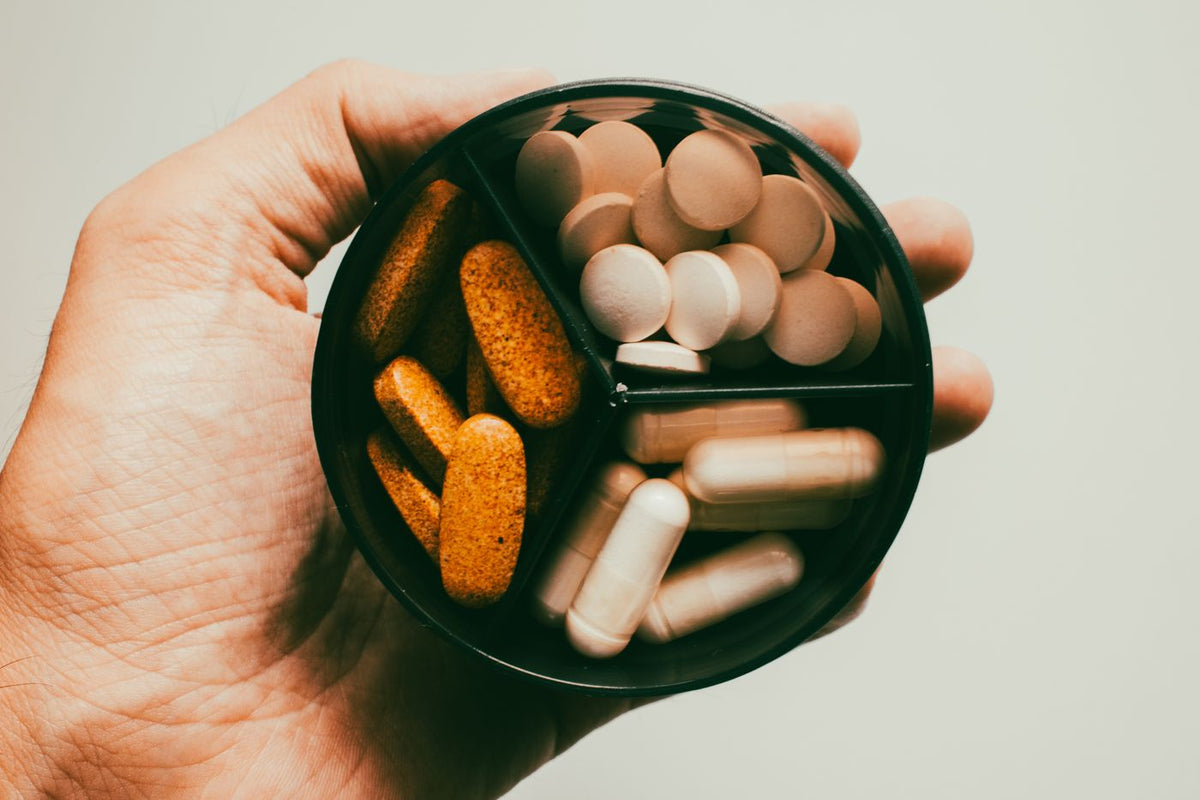
Ubiquinone is the most extensively researched form of CoQ10. Most randomised controlled trials of CoQ10, including the Q-SYMBIO heart failure trial, have used ubiquinone. Dietary CoQ10 comes mainly from meat and fish, but the amounts from food are small compared with supplement doses.
Key Characteristics of Ubiquinone
- Stable and well researched
- Converted to ubiquinol in the body after absorption
- The form used in most clinical trials
- Commonly used in coenzyme Q10 capsules
- Generally less expensive at the doses used in research
After absorption, ubiquinone is reduced to ubiquinol. A 2020 review suggests this happens mainly after it leaves the gut, probably in the lymph, rather than being a step that limits absorption (Mantle and Dybring, 2020).
Ubiquinol: The Reduced, Antioxidant Form
Ubiquinol is the reduced, antioxidant form of CoQ10 and the main form found in the blood.
Key Characteristics of Ubiquinol
- Already in the reduced, antioxidant state
- Proposed for people who may convert ubiquinone less efficiently, though evidence for this is limited
- Less stable and more prone to oxidation
- Typically more expensive
- Less long-term clinical trial data than ubiquinone
Ubiquinol is sometimes suggested for older adults. Once absorbed, however, both forms exist in a dynamic balance in the body.
Does One Form Absorb Better Than the Other?
The evidence is mixed. Some studies have reported higher blood levels with ubiquinol. A 2020 review argued that this comparison often depends on how the ubiquinone was formulated, and that claims of ubiquinol's superiority "would appear to be mistaken". Both authors of that review worked for a company that sells ubiquinone supplements.
What is reasonably clear is that CoQ10 absorption is influenced by:
- Taking it with a meal containing fat
- The oil or carrier the CoQ10 is dissolved in
- Whether the CoQ10 crystals are properly dispersed
- Possibly, absorption aids such as piperine (one small, unreplicated study)
Formulation and how you take a CoQ10 supplement may matter as much as which form it contains.
Ubiquinone vs Ubiquinol in Heart Research
Most cardiovascular trials have used ubiquinone. The best-known, Q-SYMBIO, gave 420 people with moderate to severe chronic heart failure 300 mg of ubiquinone a day or placebo, alongside their usual treatment, for two years. Major adverse cardiovascular events occurred in 15% of the CoQ10 group versus 26% on placebo. Cardiovascular deaths were 9% versus 16%, and deaths from any cause 10% versus 18%.
This single, relatively small trial has not been replicated. A 2021 Cochrane review of 11 trials (1,573 people with heart failure) found moderate-quality evidence that CoQ10 probably reduces deaths and hospital admissions, but rated other outcomes as uncertain and concluded there was still no convincing evidence to support or refute its use in heart failure. These are findings in patients under medical care. They do not mean that any supplement prevents or treats heart disease.
CoQ10 and Energy: What Matters Most?
If your interest is in normal cellular energy production, practical priorities are:
- A sensible dose (studies commonly use 100–300 mg a day)
- Taking it with a fat-containing meal
- Consistent daily intake
CoQ10 is not a stimulant. It is part of the body's normal energy-production machinery rather than a short-term pick-me-up.
Choosing the Right CoQ10 Supplement
When choosing coenzyme Q10 capsules, consider:
- Is the dose in the range used in research?
- Does the label clearly state the form (ubiquinone or ubiquinol)?
- Does it tell you to take it with food?
- Does it include an absorption aid, and do you understand its interactions?
- Are the ingredients and amounts clearly listed?
Why Many Brands Choose Ubiquinone

Ubiquinone offers some practical advantages:
- Greater stability in storage
- The form used in most clinical trials
- Generally lower cost per milligram
For example, CoQHealth provides 300 mg coenzyme Q10 (ubiquinone) with 5 mg piperine per plant-based capsule. Take one capsule daily with a meal containing healthy fats, in the morning or at lunch.
Safety and Interactions
CoQ10 is generally well tolerated, although mild digestive upset and trouble sleeping have been reported. Either form may interact with the blood thinner warfarin and with insulin. Piperine can change how the body metabolises some medicines. Speak to your doctor before use if you take any regular medication.
Final Verdict: Ubiquinone or Ubiquinol?
For most healthy adults, a ubiquinone-based CoQ10 supplement taken with food is a reasonable, well-studied choice. Ubiquinol is an alternative, and your doctor can advise whether it suits your circumstances.
Key Takeaway
CoQ10 is a compound the body uses in normal energy production and antioxidant defence. Choosing the right form matters, but choosing the right formulation and taking it correctly may matter more.
References
- Mantle D, Dybring A. Bioavailability of coenzyme Q10: an overview of the absorption process and subsequent metabolism. Antioxidants. 2020;9(5):386. doi:10.3390/antiox9050386
- Bhagavan HN, Chopra RK. Coenzyme Q10: absorption, tissue uptake, metabolism and pharmacokinetics. Free Radical Research. 2006;40(5):445–453. doi:10.1080/10715760600617843
- Kalén A, Appelkvist EL, Dallner G. Age-related changes in the lipid compositions of rat and human tissues. Lipids. 1989;24(7):579–584. doi:10.1007/BF02535072
- Mortensen SA, Rosenfeldt F, Kumar A, et al. The effect of coenzyme Q10 on morbidity and mortality in chronic heart failure: results from Q-SYMBIO. JACC: Heart Failure. 2014;2(6):641–649. doi:10.1016/j.jchf.2014.06.008
- Al Saadi T, Assaf Y, Farwati M, et al. Coenzyme Q10 for heart failure. Cochrane Database of Systematic Reviews. 2021;2:CD008684. doi:10.1002/14651858.CD008684.pub3
This article is for general education and is not medical advice. Food supplements are not intended to diagnose, treat, cure or prevent any disease. Consult a qualified healthcare professional before starting any supplement, particularly if you are pregnant, breastfeeding, have a medical condition or take medication.






