Medically reviewed by Dr. Reina Punj, MBBS, PG Diploma in Endocrinology (University of South Wales), Lead Physician, Excelgenics Clinical Panel.
Joint pain is often associated with ageing or injury, but for many people discomfort begins much earlier and builds quietly over time. Stiff knees after waking, cracking sounds during movement, shoulder tightness after work or reduced flexibility during workouts are common. They can be early signs that joint structures are under stress.
Understanding what causes everyday joint pain is the first step towards long-term joint health. Rather than only masking symptoms, it helps to understand the factors that affect cartilage, synovial fluid, connective tissue and inflammation.
What Is Everyday Joint Pain?
Everyday joint pain refers to recurring stiffness, discomfort or reduced mobility during normal activities such as walking, climbing stairs, exercising, or even sitting for long periods. Unlike an acute injury, it usually develops gradually and can worsen if ignored.
Many people reach for short-term relief without looking at the bigger picture: movement, muscle strength, body weight, sleep and nutrition. A joint health supplement or joint support supplement can be one part of that picture, alongside, not instead of, those foundations.
The Core Biological Causes of Joint Pain

1. Cartilage Wear
Cartilage acts as a cushion between bones, allowing smooth movement. Over time, load, ageing, repetitive motion and previous injuries can wear it down.
When cartilage thins or loses resilience, joints can become stiff and uncomfortable, and in some people this progresses to osteoarthritis, which needs medical assessment.
Some people search for a cartilage repair supplement, but no supplement has been shown to rebuild cartilage. Nutrients such as vitamin C, which contributes to normal collagen formation for the normal function of cartilage, play a supporting role.
2. Chronic Low-Grade Inflammation
Inflammation is an important contributor to joint discomfort. Poor sleep, stress, excess body weight and inactivity are all linked with higher levels of low-grade inflammation.
Boswellia serrata, a resin used in Ayurveda, has been studied in people with knee osteoarthritis. A 2020 meta-analysis of 7 trials (545 patients) reported improvements in pain, stiffness and function compared with controls, while noting the evidence base is small. A boswellia serrata supplement is not a substitute for medical treatment of arthritis.
3. Loss of Joint Lubrication
Synovial fluid is the natural lubricant inside joints, and hyaluronic acid is one of its main components. Its quality can change with age and joint disease, which may contribute to stiffness and reduced range of motion.
Low-molecular-weight hyaluronic acid is used in oral supplements, although evidence that swallowed hyaluronic acid improves joint lubrication is limited.
4. Sulphur and Connective Tissue
Sulphur is part of the structure of connective tissues. MSM (methylsulfonylmethane) is a source of sulphur that has been studied for joint comfort. In one pilot trial in people with knee osteoarthritis, 6 g a day of MSM for 12 weeks led to modest improvements in pain and function compared with placebo.
A MSM joint supplement is often used by active people and older adults, but note that most trials used several grams a day.
5. Oxidative Stress and Micronutrient Gaps
Vitamin C contributes to normal collagen formation for the normal function of cartilage and bones, and zinc contributes to normal bone maintenance and protects cells from oxidative stress. A diet low in these nutrients does not support joint tissues well.
This is why many joint health capsules combine several nutrients rather than relying on one.
Who Is Most at Risk of Joint Pain?
Everyday joint pain is not limited to older people. Common at-risk groups include:
- Professionals with sedentary or repetitive work routines
- Fitness enthusiasts with high joint load
- Adults over 35, as cartilage wear becomes more common with age
- Women around menopause, when hormonal changes affect joints and bones
- People carrying extra body weight or living with metabolic or inflammatory conditions
If you are looking for the best supplement for joint pain, the honest answer is that it depends on the cause. Persistent, worsening, swollen, hot or red joints, or pain after an injury, should be checked by a doctor first.
Single-Ingredient vs Combination Joint Supplements

Many joint supplements contain a single ingredient, and some single ingredients, such as UC-II undenatured type II collagen, have their own clinical trials. Combination formulas aim to cover several areas at once: cartilage, inflammation, lubrication and micronutrients. Whether a product is labelled "best joint supplement for men" or "best joint supplement for women", check each ingredient's dose against the doses used in research.
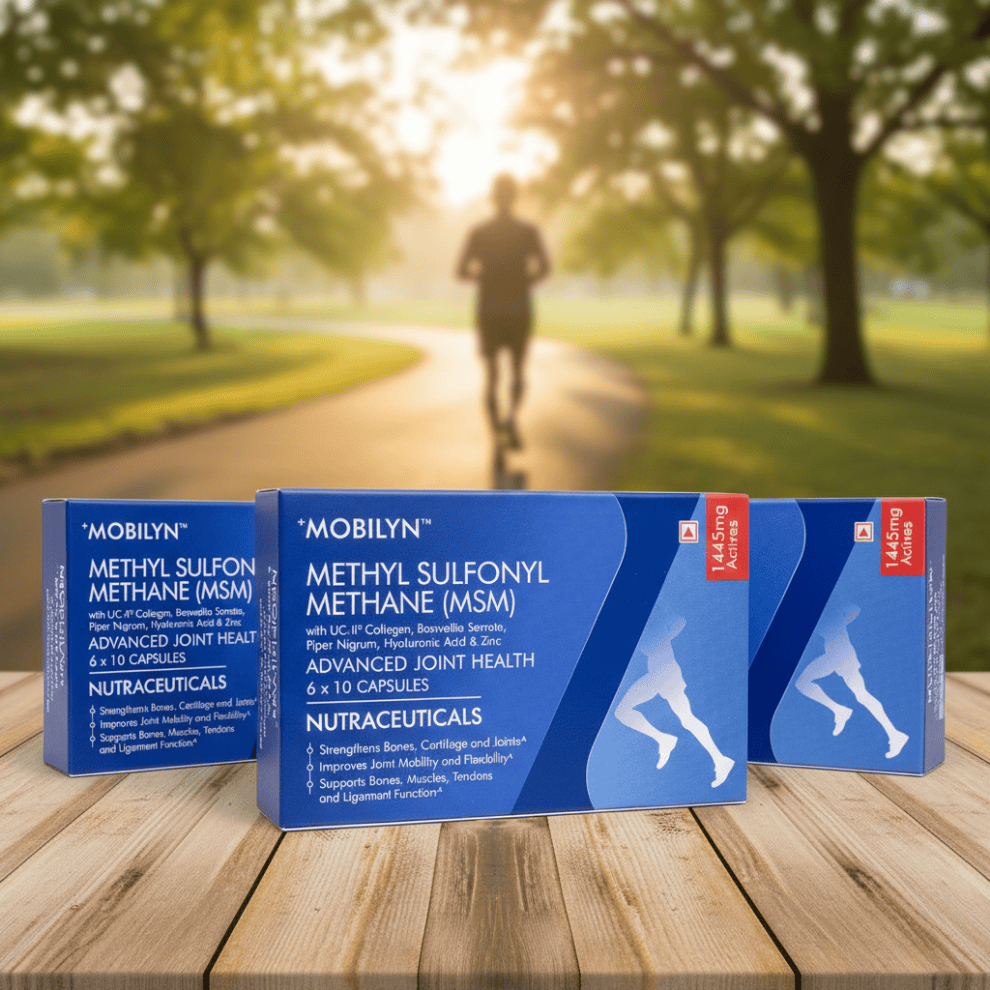
What Is in MOBILYN
Per 2-capsule daily serving, MOBILYN provides MSM 1,000 mg, Boswellia serrata extract (65% AKBA) 250 mg, low-molecular-weight hyaluronic acid 80 mg, vitamin C 65 mg, UC-II undenatured type II collagen 40 mg, zinc 5 mg and black pepper extract (piperine) 5 mg. Take 2 capsules daily with water after meals (after breakfast or lunch). Piperine can change how some medicines are processed, so check with your doctor or pharmacist if you take regular medication, and seek advice before use if you are pregnant or breastfeeding.
Supporting Joint Health the Right Way
Long-term joint health needs a structured approach:
- Keep moving and include regular strength training
- Maintain a healthy body weight
- Eat a balanced diet and prioritise sleep and stress management
- Fill nutrient gaps sensibly, choosing supplements with research-backed ingredients at meaningful doses
A well-formulated joint support supplement can be part of this routine, alongside regular movement and the other habits above.
The Takeaway
Everyday joint pain is common but not something to simply accept. It reflects cumulative load, inflammation and changes in joint tissues. Understanding the causes helps you act early, starting with movement, weight and strength, and getting medical advice when pain persists.
Excelgenics approaches joint health through research-informed formulations with clearly labelled doses. Looking after your joints early can help preserve mobility and comfort for years to come.
References
- Yu G, Xiang W, Zhang T, et al. Effectiveness of Boswellia and Boswellia extract for osteoarthritis patients: a systematic review and meta-analysis. BMC Complement Med Ther. 2020;20:225. doi:10.1186/s12906-020-02985-6
- Kim LS, Axelrod LJ, Howard P, Buratovich N, Waters RF. Efficacy of methylsulfonylmethane (MSM) in osteoarthritis pain of the knee: a pilot clinical trial. Osteoarthritis Cartilage. 2006;14(3):286–294. doi:10.1016/j.joca.2005.10.003
- Lugo JP, Saiyed ZM, Lane NE. Efficacy and tolerability of an undenatured type II collagen supplement in modulating knee osteoarthritis symptoms: a multicenter randomized, double-blind, placebo-controlled study. Nutr J. 2016;15:14. doi:10.1186/s12937-016-0130-8
This article is for general education and is not medical advice. Food supplements are not intended to diagnose, treat, cure or prevent any disease. Consult a qualified healthcare professional before starting any supplement, particularly if you are pregnant, breastfeeding, have a medical condition or take medication.