Medically reviewed by Dr. Reina Punj, MBBS, PG Diploma in Endocrinology (University of South Wales), Lead Physician, Excelgenics Clinical Panel.
A good GLP-1 diet, or Mounjaro diet, puts protein first, then fibre, fluids and small, plain meals that are easy on the stomach. Semaglutide and tirzepatide make you feel full sooner, so every meal has to count. This guide covers what to eat on Mounjaro or semaglutide, how much protein on GLP-1 medicines expert groups suggest, Indian vegetarian portions and a sample day.
A quick note on names: semaglutide is the medicine in Ozempic and Wegovy, and tirzepatide, which acts on both the GIP and GLP-1 receptors, is the medicine in Mounjaro. Never change, stop or adjust your dose on your own; talk to the prescribing doctor.
Why a GLP-1 diet matters: smaller appetite, and muscle as well as fat
These medicines reduce appetite, which makes it easier to fall short on protein, fibre and micronutrients, and to lose muscle along with fat. The large trials measured body composition with DXA scans in a subgroup:
- STEP 1 (semaglutide 2.4 mg, 68 weeks): average weight change was −14.9% with semaglutide and −2.4% with placebo. In 140 scanned people, fat and lean mass both fell in kilograms, while the proportion of lean mass rose. A 2025 joint advisory from four US nutrition and obesity societies summarised it: of an average 13.6 kg weight reduction, 8.3 kg (62%) was fat and 5.3 kg (38%) was lean body mass, which includes muscle and other non-fat tissue.
- SURMOUNT-1 (tirzepatide, 72 weeks): in the DXA subgroup, total fat mass fell by 33.9% with tirzepatide against 8.2% with placebo, and the percentage reduction in fat mass was about three times the reduction in lean mass. A later analysis of this subgroup found that about three-quarters of the weight lost was fat and about a quarter was lean mass.
The advisory notes that muscle is roughly half of lean mass, so muscle loss may be around a fifth of the weight lost. It stresses that protein alone is unlikely to be enough to preserve muscle without structured strength training. For the wider picture, see weight management: why it's hard and how to do it right.
How much protein on GLP-1 medicines?
The ICMR-NIN 2020 recommended dietary allowance for healthy Indian adults is 0.83 g of protein per kg of body weight a day, about 50 g for a 60 kg adult.
The 2025 joint advisory from the American College of Lifestyle Medicine, the American Society for Nutrition, the Obesity Medicine Association and The Obesity Society notes that higher targets of 1.2–1.6 g/kg a day have been proposed during active weight loss, and that an absolute target of 80–120 g a day may be simpler to follow. It adds that it is unclear which body weight to use, since actual weight can overestimate needs in obesity. Your doctor or dietitian may advise more than the RDA and can set your number. If you have kidney disease, do not increase protein without their advice.
Protein contributes to the maintenance of muscle mass. With a small appetite, eat the protein part of each meal first, before the roti or rice.
To see both numbers for your own weight, with one way to reach them in Indian portions, try our protein calculator.
What to eat on Mounjaro or semaglutide: Indian vegetarian protein
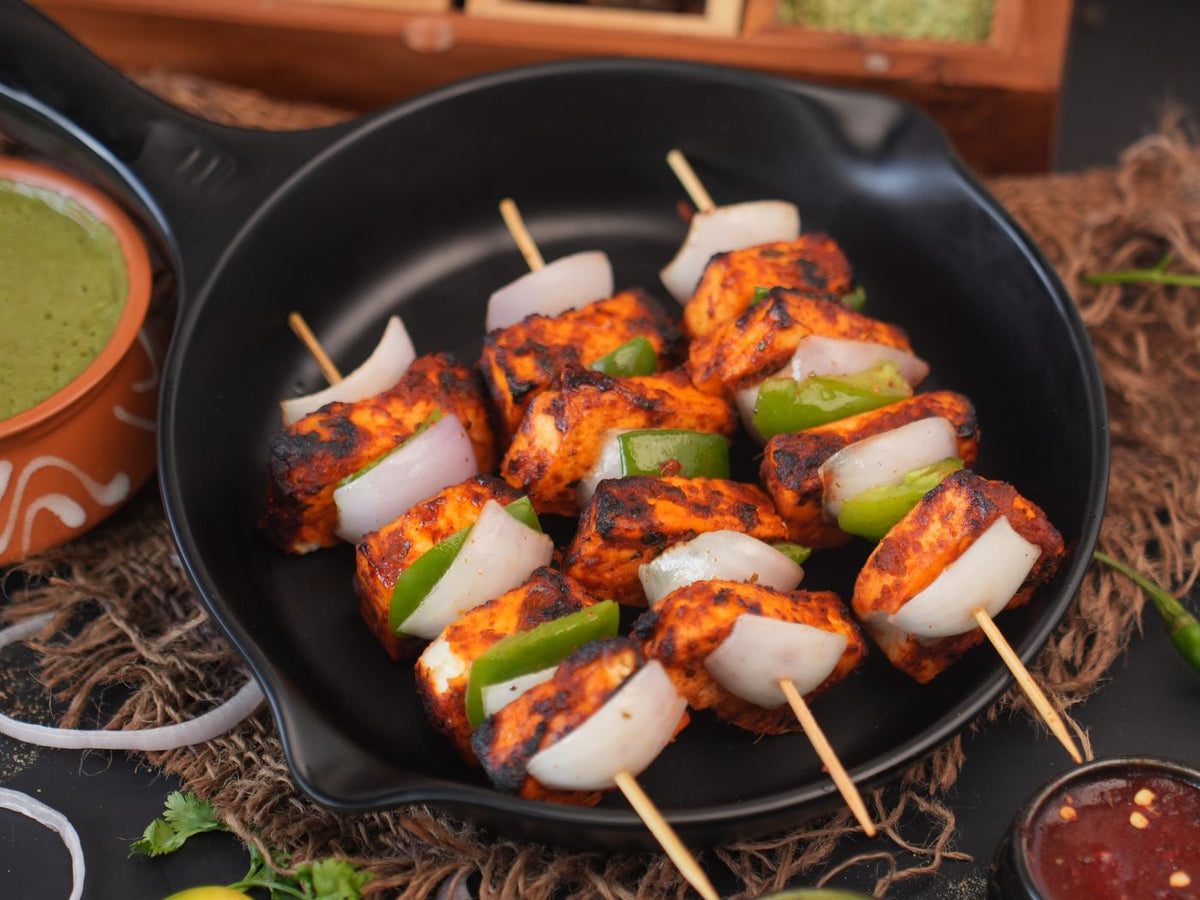
Figures match our protein rich foods guide (USDA FoodData Central; Indian Food Composition Tables 2017).
| Food | Typical portion | Protein (g) |
|---|---|---|
| Soybeans, cooked | 1 katori (about 150 g) | 27.3 |
| Tofu, firm | 100 g | 17.3 |
| Whole masoor (lentils), cooked | 1 katori (about 150 g) | 13.5 |
| Kabuli chana (chickpeas), cooked | 1 katori (about 150 g) | 13.3 |
| Rajma (red kidney beans), cooked | 1 katori (about 150 g) | 13.0 |
| Paneer | 50 g | 9.4 |
| Dal: moong, masoor, toor, chana or urad (split) | 30 g raw (about ½ katori cooked and drained) | 6.5–7.3 |
| Peanuts (moongphali) | A small handful (30 g) | 7.1 |
| Milk (doodh), cow or buffalo | 1 glass (200 ml) | 6.5–7.4 |
| Pumpkin seeds (kaddu ke beej) | 2 tbsp (about 20 g) | 6.0 |
| Curd (dahi), whole milk | 1 katori (about 150 g) | 5.2 |
A katori of thin, watery dal has less protein than a katori of drained whole pulses. If you eat eggs, two eggs give about 12.6 g, and 100 g of roasted chicken breast about 31 g.
Fibre and fluids on a GLP-1 diet
Constipation is common on these medicines. The advisory recommends adequate fluids and fibre from foods, increased gradually. The WHO advises adults to eat at least 400 g of vegetables and fruit and at least 25 g of naturally occurring dietary fibre a day. Pulses, whole grains, millets, vegetables, fruit and seeds all help; see fiber rich foods.
Drink regularly through the day. Nausea, vomiting or diarrhoea can lead to dehydration, which in turn can harm the kidneys, and the UK patient leaflet for semaglutide tablets says it is important to drink enough fluids to prevent dehydration. Water, chaas (buttermilk), nimbu pani without much sugar and clear soups all count.
Eating to ease nausea and fullness
Stomach side effects are the most common problem. In STEP 1, nausea was reported by 44.2% of people on semaglutide against 17.4% on placebo; in SURMOUNT-1, by 24.6–33.3% on tirzepatide (depending on dose) against 9.5% on placebo. Stomach side effects are more likely when the medicine is started or the dose is increased. The joint advisory and NHS patient guidance suggest:
- Small, frequent meals: a small breakfast, then small meals every 3–4 hours, rather than two or three large ones. Vomiting is more likely after a large meal.
- Less fried and fatty food: avoid large or high-fat meals, such as pakoras, puris and rich gravies, especially in the first few days of treatment.
- Eat slowly, in small portions: an NHS diabetes service advises eating more slowly, stopping when you feel comfortably satisfied and skipping second helpings.
- Avoid alcohol: the NHS advises against drinking, as it can increase nausea and vomiting.
- Ginger or peppermint tea may help some people, according to the advisory.
If you cannot keep fluids down, or you have severe or persistent stomach pain, seek medical help promptly. Tell the prescribing doctor about side effects that bother you; do not change the dose yourself.
Strength training: the other half of keeping muscle
The advisory links protein with a structured strength-training programme, aiming for strength training at least three times a week plus at least 150 minutes of moderate aerobic exercise weekly. For all adults, the WHO advises muscle-strengthening activities involving the major muscle groups on 2 or more days a week. Chair squats, wall push-ups and resistance bands are simple starting points; check with your doctor first if you have heart, joint or other health problems.
Micronutrients to watch
Eating much less food means fewer vitamins and minerals. The advisory lists iron, calcium, magnesium, zinc and vitamins A, D, E, K, B1, B12 and C as examples of nutrients of concern. Ask your doctor whether you need blood tests, and take supplements only if they advise them for your situation. For food sources, see zinc rich foods and vitamin C rich foods.
Skin and hair while losing weight
Rapid weight loss can change how the face and skin look, and some people notice more hair shedding. We cover these in Ozempic face and loose skin after weight loss. Protein and a varied diet come first. Vitamin C contributes to normal collagen formation for the normal function of skin, zinc contributes to the maintenance of normal skin, and zinc contributes to the maintenance of normal hair.
No supplement has been tested in people on GLP-1 medicines, and none restores facial volume or tightens skin. Our Radia Marine Collagen + Hyaluronic Acid provides 500 mg marine collagen peptides, 100 mg low-molecular-weight hyaluronic acid, 65 mg vitamin C and 5 mg zinc per 2-capsule serving, among other ingredients. Its 500 mg of collagen is well below the 2.5–10 g a day used in most collagen skin trials. It is fish-derived, so avoid it if you have a fish or seafood allergy. It contains piperine, which can affect how some medicines are processed, and CoQ10, which can interact with warfarin. Check with your doctor before using it if you take any medication (including a GLP-1 or diabetes medicine), or are pregnant or breastfeeding.
A sample Indian day on a GLP-1 diet
Five small vegetarian meals, using the portions above. Adjust to your appetite and to the target your doctor or dietitian gives you.
- Breakfast: moong dal chilla (30 g dal) with a katori of curd, about 12 g
- Mid-morning: a glass of milk, about 7 g
- Lunch: a katori of rajma with 2 atta rotis and salad, about 19 g
- Evening: a small handful of roasted peanuts and a glass of chaas, about 7 g plus a little from the chaas
- Dinner: 100 g tofu or 50 g paneer with vegetables, plus a katori of whole masoor dal, about 23–31 g
That comes to roughly 68–77 g of protein. If it feels like too much, keep the protein portions and cut the extra roti or rice.
Frequently asked questions
What should I eat first on Mounjaro or semaglutide?
Start each meal with the protein part, such as dal, chana, paneer, tofu, curd or eggs, then vegetables, then grains. When fullness comes early, the protein is already eaten.
Do I need protein powder?
Not necessarily. Many people can reach their target with food. The advisory notes that some people use high-protein shakes or fortified foods when appetite is very low; discuss it with your doctor or dietitian first.
Can I stop the medicine if I feel sick?
Do not stop or change the dose on your own. Tell the prescribing doctor, who can advise on side effects and dosing.
References
- Mozaffarian D, Agarwal M, Aggarwal M, et al. Nutritional priorities to support GLP-1 therapy for obesity: a joint advisory from the American College of Lifestyle Medicine, the American Society for Nutrition, the Obesity Medicine Association, and The Obesity Society. The American Journal of Clinical Nutrition. 2025;122:344–367. doi:10.1016/j.ajcnut.2025.04.023. Also published in Obesity. 2025;33(8):1475–1503.
- Wilding JPH, Batterham RL, Calanna S, et al. Once-weekly semaglutide in adults with overweight or obesity (STEP 1). New England Journal of Medicine. 2021;384(11):989–1002. doi:10.1056/NEJMoa2032183
- Jastreboff AM, Aronne LJ, Ahmad NN, et al. Tirzepatide once weekly for the treatment of obesity (SURMOUNT-1). New England Journal of Medicine. 2022;387:205–216. doi:10.1056/NEJMoa2206038
- Look M, Dunn JP, Kushner RF, et al. Body composition changes during weight reduction with tirzepatide in the SURMOUNT-1 study of adults with obesity or overweight. Diabetes, Obesity and Metabolism. 2025. doi:10.1111/dom.16275
- ICMR-National Institute of Nutrition. A brief note on nutrient requirements for Indians, the Recommended Dietary Allowances (RDA) and the Estimated Average Requirements (EAR). 2020. nin.res.in
- Longvah T, Ananthan R, Bhaskarachary K, Venkaiah K. Indian Food Composition Tables 2017. ICMR-National Institute of Nutrition, Hyderabad. nin.res.in
- U.S. Department of Agriculture, Agricultural Research Service. FoodData Central (SR Legacy). fdc.nal.usda.gov
- World Health Organization. Carbohydrate intake for adults and children: WHO guideline. 2023. who.int
- World Health Organization. Physical activity. who.int
- Novo Nordisk. Wegovy tablets: patient information leaflet. Electronic Medicines Compendium, revised June 2026. medicines.org.uk
- NHS. Semaglutide. nhs.uk
- Leeds Community Healthcare NHS Trust. GLP-1 or GIP diabetes treatment. leedscommunityhealthcare.nhs.uk
- Choi FD, Sung CT, Juhasz MLW, Mesinkovska NA. Oral collagen supplementation: a systematic review of dermatological applications. Journal of Drugs in Dermatology. 2019;18(1):9–16. jddonline.com
- European Commission. Commission Regulation (EU) No 432/2012 establishing a list of permitted health claims made on foods. eur-lex.europa.eu
This article is for general education and is not medical advice. Food supplements are not intended to diagnose, treat, cure or prevent any disease. Consult a qualified healthcare professional before starting any supplement, particularly if you are pregnant, breastfeeding, have a medical condition or take medication.