Medically reviewed by Dr. Reina Punj, MBBS, PG Diploma in Endocrinology (University of South Wales), Lead Physician, Excelgenics Clinical Panel.
Protein rich foods in India include soybeans and tofu, dals such as moong and masoor, rajma, chana, paneer, curd and milk, peanuts and seeds, and millets such as bajra and rajgira. Eggs, chicken and fish are the main non-vegetarian sources. A katori of cooked chana, rajma or whole masoor gives about 13 g of protein, 50 g of paneer about 9 g and two eggs about 12.6 g. ICMR-NIN puts the adult requirement at 0.83 g of protein per kg of body weight a day.
This guide gives a protein rich foods chart for Indian vegetarians, with grams per realistic portion, followed by eggs, chicken and fish. It also explains protein quality and why dal-chawal works, and covers needs in pregnancy and protein rich foods for breakfast.
How much protein do you need?
The ICMR-NIN 2020 recommended dietary allowance (RDA) for healthy Indian adults is 0.83 g of protein per kg of body weight a day, with an estimated average requirement (EAR) of 0.66 g/kg. For ICMR-NIN's reference adults (65 kg for men and 55 kg for women) that works out to about 54 g a day for men and 45.7 g a day for women. A 60 kg adult needs about 50 g.
ICMR-NIN adds that people whose diet is mainly cereal-based, with lower-quality protein, need about 1 g/kg a day. Needs also rise in childhood, pregnancy and breastfeeding. Under EU-authorised wording, protein contributes to the maintenance of normal bones.
Protein rich foods chart: vegetarian sources in India
Amounts are per typical portion. Cooked whole pulses, tofu, curd, oats and pumpkin seeds are calculated from USDA FoodData Central per 100 g. Dals, paneer, milk, peanuts, almonds, til and millets come from the Indian Food Composition Tables (IFCT 2017, raw weight). Chia and flax match our seed articles.
| Food | Typical portion | Protein (g) |
|---|---|---|
| Soybeans, cooked | 1 katori (about 150 g) | 27.3 |
| Tofu, firm | 100 g | 17.3 |
| Whole masoor (lentils), cooked | 1 katori (about 150 g) | 13.5 |
| Kabuli chana (chickpeas), cooked | 1 katori (about 150 g) | 13.3 |
| Rajma (red kidney beans), cooked | 1 katori (about 150 g) | 13.0 |
| Paneer | 50 g | 9.4 |
| Dal: moong, masoor, toor, chana or urad (split) | 30 g raw (about ½ katori cooked and drained) | 6.5–7.3 |
| Peanuts (moongphali) | A small handful (30 g) | 7.1 |
| Milk (doodh), cow or buffalo | 1 glass (200 ml) | 6.5–7.4 |
| Bajra (pearl millet) flour | 2 rotis (about 60 g flour) | 6.6 |
| Whole wheat atta | 2 rotis (about 60 g atta) | 6.3 |
| Pumpkin seeds (kaddu ke beej) | 2 tbsp (about 20 g) | 6.0 |
| Jowar (sorghum) flour | 2 rotis (about 60 g flour) | 6.0 |
| Oats, dry | 40 g (about ½ cup) | 5.3 |
| Curd (dahi), whole milk | 1 katori (about 150 g) | 5.2 |
| Rajgira (amaranth seeds) | 30 g | 4.0–4.4 |
| Almonds (badam) | 20 g (about 15 nuts) | 3.7 |
| Chia seeds | 1 tbsp (about 14 g) | 2.3 |
| Sesame seeds (til) | 1 tbsp (about 10 g) | 1.9–2.2 |
| Ragi (finger millet) flour | 30 g (about 1 roti) | 2.1 |
| Flax seeds (alsi), whole | 1 tbsp (about 10 g) | 1.9 |
30 g of dry dal or whole pulses weighs only about 70–80 g once cooked and drained, roughly half a 150 g katori; cooked as a thin dal, the same amount is simply spread through more liquid. A katori of watery dal therefore contains less protein than a katori of the drained whole pulses above. Nuts and seeds add useful protein but are energy-dense, so a small handful or a spoonful is a sensible portion. Many of these foods also supply iron and zinc; see iron rich foods and zinc rich foods.
Protein rich foods vegan in India
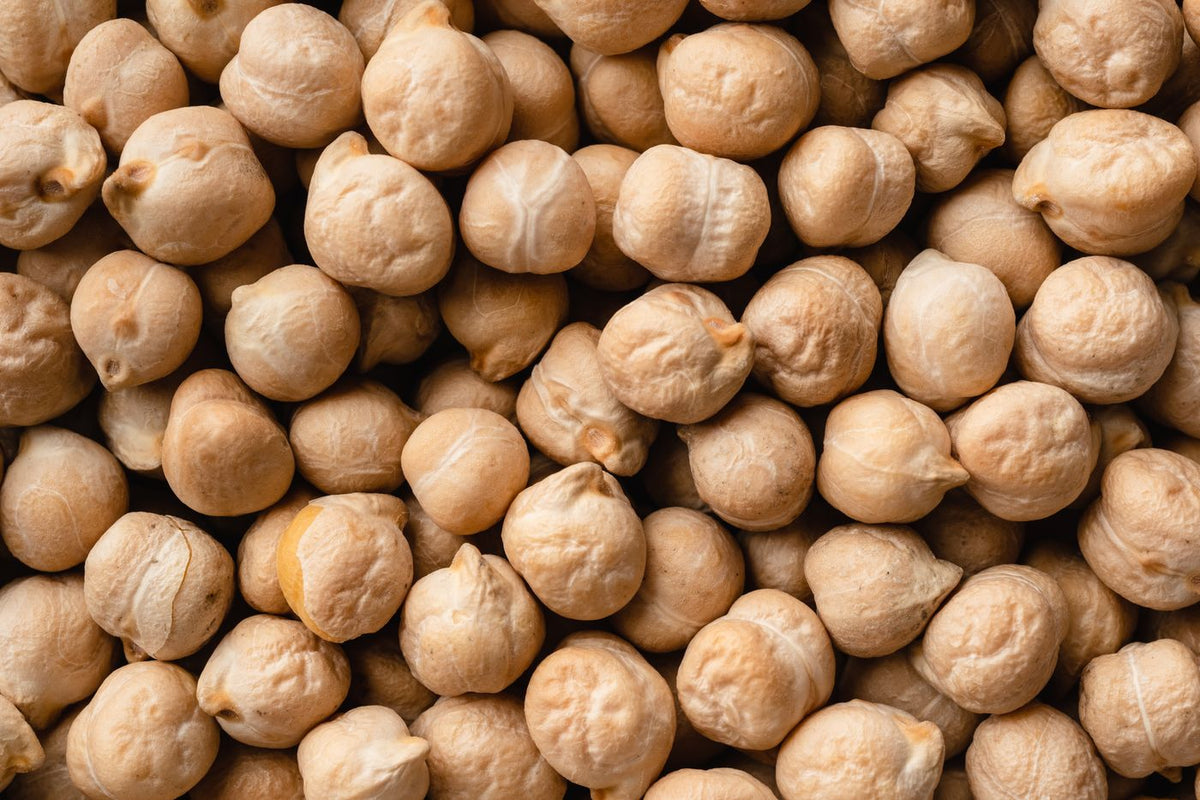
Without dairy, the main protein rich foods are soybeans and tofu, dals, chana, rajma, peanuts, seeds and millets. A 2019 review in Nutrients concluded that classic vegetarian diets supply more than adequate protein and amino acids. It noted that a small share of vegans may fall short, mainly when total food intake is low or when legumes, nuts and seeds are avoided. So a pulse at most meals is the simplest habit.
Protein rich foods in vegetables: an honest look
Most vegetables are low in protein. Per 100 g raw, IFCT 2017 gives fresh green peas (matar) 7.3 g, drumstick leaves (sahjan patta) 6.4 g, button mushrooms 3.7 g, cauliflower 2.2 g and palak 2.1 g. Peas and greens help, especially in dishes like matar paneer or palak dal, but pulses, soy and dairy do most of the work.
Non-veg protein rich foods: eggs, chicken and fish
| Food | Typical portion | Protein (g) |
|---|---|---|
| Chicken breast, roasted | 100 g | 31.0 |
| Rohu fish, raw | 100 g | 19.7 |
| Eggs (anda), whole | 2 eggs (about 100 g) | 12.6 |
Chicken and eggs are USDA values (eggs raw); rohu is IFCT 2017, raw weight. ICMR-NIN describes animal proteins as high quality because they are well absorbed and supply all the essential amino acids. Its guidelines suggest that non-vegetarians can replace part of the day's pulses with meat, fish or eggs.
Protein quality and combining: why dal-chawal works
Proteins are built from amino acids, and nine of them are essential, meaning they must come from food. Grains are relatively low in the amino acid lysine, while pulses are slightly lower in the sulphur amino acids methionine and cysteine. Eaten together, cereals, millets and pulses complement each other, which is why ICMR-NIN recommends that cereal-based diets include enough pulses.
ICMR-NIN 2020 suggests a cereal : pulse : milk ratio of about 3 : 1 : 2.5 for good protein quality, a big shift from the earlier 11 : 1 : 3. In practice, that means more dal and dairy relative to rice and roti. Dal-chawal, rajma-chawal, khichdi, idli-sambar and roti with dal or chana are all cereal-pulse pairings.
The two do not have to be on the same plate. The 2019 review found no evidence that plant proteins must be combined within one meal; a reasonable variety over the day appears to be enough.
ICMR-NIN's 2024 guidelines put it simply: get good-quality protein and essential amino acids through the right combination of foods, and avoid protein supplements to build muscle mass.
Protein rich foods for pregnant women
ICMR-NIN 2020 adds 9.5 g of protein a day in the second trimester and 22 g a day in the third trimester to a woman's usual RDA. Using the reference RDA of 45.7 g, that is about 55 g and 68 g a day. During breastfeeding, it adds 16.9 g a day for the first six months and 13.2 g a day for the next six.
ICMR-NIN advises including milk, eggs and meat, particularly for pregnant and breastfeeding women, and getting the extra protein from nutrient-dense foods. As a rough guide, an extra katori of chana (about 13 g), a glass of milk (about 6.5 g) and a katori of curd (about 5 g) together cover the third-trimester addition. Follow your doctor's or dietitian's advice, and do not start protein powders in pregnancy without it.
Protein rich foods for breakfast
Indian breakfasts are often cereal-heavy, so adding a pulse, dairy or eggs makes the biggest difference. Approximate protein, using the figures above:
- Moong dal chilla (30 g dal) with a katori of curd: about 12 g
- Oats (40 g) cooked in a glass of milk, with 1 tbsp chia: about 14 g
- Poha (40 g) with 15 g peanuts and a glass of milk: about 13 g
- Paneer bhurji (50 g paneer) with 1 atta roti: about 13 g
- Two-egg omelette or bhurji with 2 atta rotis: about 19 g
Frequently asked questions
Which Indian food has the most protein?
Per 100 g raw, soybeans are highest among common vegetarian foods, at about 36–38 g in IFCT 2017, followed by dals (about 22–24 g) and peanuts (about 24 g). Per portion, a katori of cooked soybeans gives about 27 g.
How can a vegetarian get 50 g of protein a day?
One example: moong dal chilla with curd (about 12 g), lunch of 2 rotis, a katori of rajma and a katori of curd (about 24.5 g), a small handful of peanuts (about 7 g), and dal with rice for dinner (about 12 g). That adds up to about 56 g.
Is paneer or dal better for protein?
Both are useful. Fifty grams of paneer gives about 9.4 g, while a katori of cooked whole masoor gives about 13.5 g along with fibre and iron. Dairy also supplies calcium; see calcium rich foods. Pulses are also among the fiber rich foods.
Should people with kidney disease eat more protein?
Not without advice. If you have kidney disease or another medical condition, ask your doctor or a dietitian how much protein is right for you.
References
- ICMR-National Institute of Nutrition. A brief note on nutrient requirements for Indians, the Recommended Dietary Allowances (RDA) and the Estimated Average Requirements (EAR). 2020. nin.res.in
- ICMR-National Institute of Nutrition. Dietary Guidelines for Indians. 2024. nin.res.in
- Longvah T, Ananthan R, Bhaskarachary K, Venkaiah K. Indian Food Composition Tables 2017. ICMR-National Institute of Nutrition, Hyderabad. nin.res.in
- U.S. Department of Agriculture, Agricultural Research Service. FoodData Central (SR Legacy). fdc.nal.usda.gov
- Mariotti F, Gardner CD. Dietary protein and amino acids in vegetarian diets: a review. Nutrients. 2019;11(11):2661. doi:10.3390/nu11112661
- European Commission. Commission Regulation (EU) No 432/2012 establishing a list of permitted health claims made on foods. eur-lex.europa.eu
This article is for general education and is not medical advice. Food supplements are not intended to diagnose, treat, cure or prevent any disease. Consult a qualified healthcare professional before starting any supplement, particularly if you are pregnant, breastfeeding, have a medical condition or take medication.