

Medically reviewed by Dr. Reina Punj, MBBS, PG Diploma in Endocrinology (University of South Wales), Lead Physician, Excelgenics Clinical Panel.
Fiber rich foods in India include whole pulses such as rajma, chana and whole masoor, whole grains and millets such as bajra, jowar, ragi, oats and atta, fruits such as guava and pear, seeds such as flax, chia and methi, and vegetables such as drumstick, peas, gavar and bhindi. A katori of cooked chana, rajma or whole masoor gives about 11–12 g of fibre, 100 g of guava about 7–9 g and two bajra rotis about 7 g. The WHO advises adults to eat at least 25 g of naturally occurring dietary fibre a day.
We use the British spelling "fibre" on this site; "fiber" is the American spelling of the same thing. This guide explains soluble and insoluble fibre, gives an Indian table of fibre rich foods with grams per realistic portion, sets out ICMR-NIN guidance and explains how to increase fibre comfortably.
Soluble and insoluble fibre: what is the difference?
Dietary fibre is the part of plant foods that the body does not digest. The ICMR-NIN Dietary Guidelines for Indians (2024) describe it as the indigestible part of vegetables, fruits, whole grains, pulses, nuts and seeds, and note that it increases the bulk of the stools. There are two broad types, and most plant foods contain both:
- Soluble fibre attracts water and turns into a gel during digestion, which slows digestion. MedlinePlus lists oat bran, barley, nuts, seeds, beans, lentils, peas and some fruits and vegetables as sources.
- Insoluble fibre does not dissolve in water. It adds bulk to the stool and appears to help food pass more quickly through the stomach and intestines. Wheat bran, vegetables and whole grains are the main sources.
Soluble fiber rich foods
IFCT 2017 measures soluble and insoluble fibre separately. Per 100 g raw, the richest everyday sources of soluble fibre are methi seeds (19.9 g), barley or jau (5.7 g), soybeans (5.0–5.6 g), whole urad (4.9 g), flax seeds (4.3 g), whole toor (3.2 g) and rajma (2.6–2.7 g). Oats are known for a soluble fibre called beta-glucan. Chia and sabja seeds form a gel in water because their outer layer contains mucilage, a soluble fibre.
Fiber rich foods in India: an Indian table
Amounts are per typical portion. Cooked whole pulses and oats are calculated from USDA FoodData Central per 100 g. Raw pulses, dals, millets, fruits and vegetables come from the Indian Food Composition Tables (IFCT 2017, raw weight). Flax, chia and methi seeds match our seed articles.
| Food | Typical portion | Fibre (g) |
|---|---|---|
| Pulses | ||
| Whole masoor (lentils), cooked | 1 katori (about 150 g) | 11.9 |
| Kabuli chana (chickpeas), cooked | 1 katori (about 150 g) | 11.4 |
| Rajma (red kidney beans), cooked | 1 katori (about 150 g) | 11.1 |
| Soybeans, cooked | 1 katori (about 150 g) | 9.0 |
| Kala chana (whole Bengal gram) | 30 g raw | 7.6 |
| Sabut moong (whole green gram) | 30 g raw | 5.1 |
| Dal: moong, masoor, toor, urad or chana (split) | 30 g raw (about ½ katori cooked and drained) | 2.7–4.5 |
| Grains and millets | ||
| Bajra (pearl millet) flour | 2 rotis (about 60 g flour) | 6.9 |
| Whole wheat atta | 2 rotis (about 60 g atta) | 6.8 |
| Jowar (sorghum) flour | 2 rotis (about 60 g flour) | 6.1 |
| Barley (jau) | 30 g raw | 4.7 |
| Oats, dry | 40 g (about ½ cup) | 4.0 |
| Ragi (finger millet) flour | 30 g (about 1 roti) | 3.4 |
| Fruits | ||
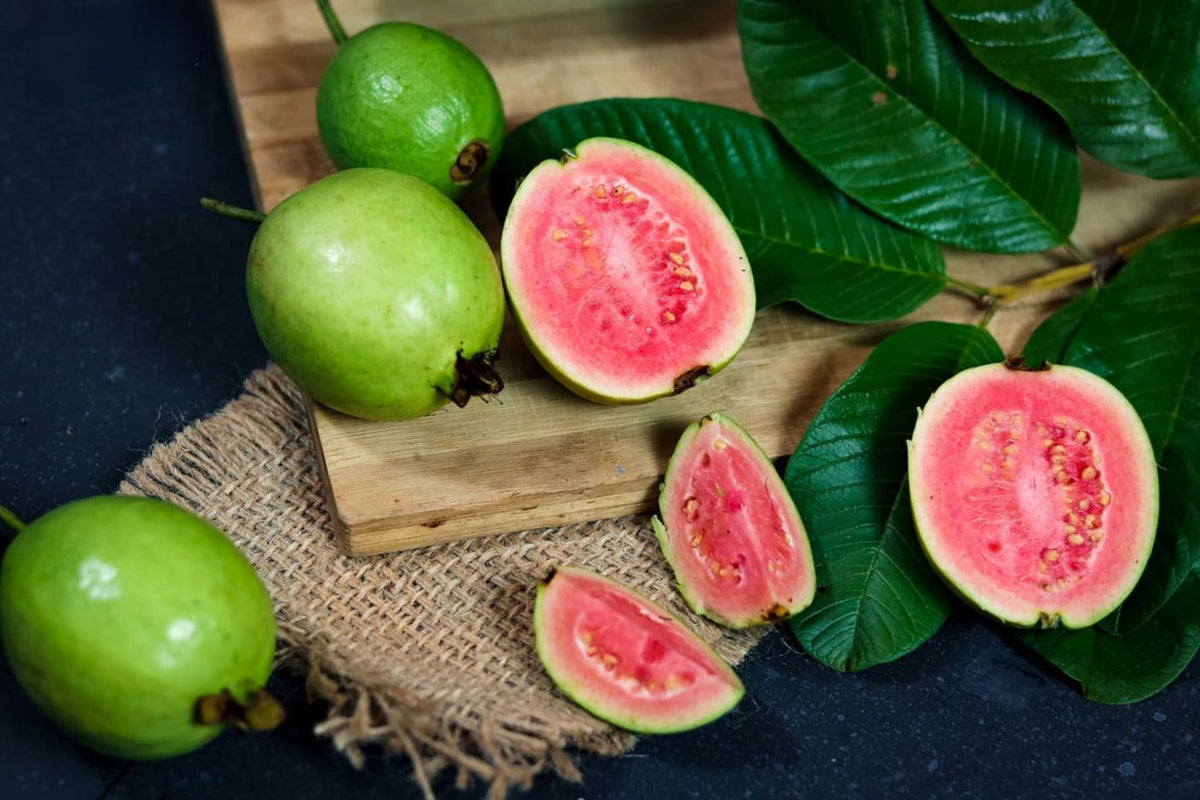
| Guava (amrood) | 100 g | 7.4–8.6 |
| Custard apple (sitaphal) | 100 g | 5.1 |
| Pear (nashpati) | 100 g | 4.5 |
| Papaya (papita), ripe | 100 g | 2.8 |
| Apple (seb) | 100 g | 2.1–2.6 |
| Banana (kela), ripe | 100 g | 1.9–2.3 |
| Seeds and nuts | ||
| Chia seeds | 1 tbsp (about 14 g) | 4.8 |
| Peanuts (moongphali) | A small handful (30 g) | 3.1 |
| Flax seeds (alsi), whole | 1 tbsp (about 10 g) | 2.8 |
| Almonds (badam) | 20 g (about 15 nuts) | 2.6 |
| Methi seeds (methi dana) | 1 tsp (about 3.7 g) | 0.9–1.8 (databases differ) |
| Sabja seeds (tukmaria) | 1 tbsp | No reliable figure |
| Vegetables | ||
| Drumstick (sahjan ki phali) | 100 g | 6.8 |
| Green peas (matar), fresh | 100 g | 6.3 |
| Methi leaves | 100 g | 4.9 |
| Gavar (cluster beans) | 100 g | 4.8 |
| Carrot (gajar) | 100 g | 4.2–4.5 |
| Bhindi (okra) | 100 g | 4.1 |
| Baingan (brinjal) | 100 g | 4.0 |
| Shakarkandi (sweet potato) | 100 g | 3.9–4.0 |
| Phool gobhi (cauliflower) | 100 g | 3.7 |
| Palak (spinach) | 100 g | 2.4 |
Fruit and vegetable values are for raw weight. 30 g of dry dal weighs only about 70–80 g once cooked and drained, roughly half a 150 g katori. Methi seeds are eaten by the teaspoon, so even though they are very high in fibre per 100 g, a typical portion adds only a little. Sabja has no entry in IFCT 2017 or USDA FoodData Central, and published analyses vary widely, so we give no figure; see sabja seeds vs chia seeds.
Whole grains make the difference
Refining removes much of the fibre. Per 100 g, IFCT 2017 gives whole wheat atta 11.4 g of fibre and maida 2.8 g, and brown rice 4.4 g against 2.8 g for polished white rice. ICMR-NIN advises eating at least half of your cereals as whole grains or minimally polished grains, and pairing cereals and millets with enough pulses or beans.
Fiber rich foods and fruits, vegetables and seeds
Among fruits, guava stands out at 7.4–8.6 g per 100 g, mostly insoluble fibre, followed by custard apple and pear. Eat fruit whole rather than as juice. Among vegetables, drumstick, fresh peas, methi leaves and gavar give the most per 100 g.
Seeds are an easy top-up. A tablespoon of chia gives about 4.8 g and a tablespoon of whole flax about 2.8 g. Flax is better ground, as whole seeds may pass through undigested; see flax seeds benefits. Soak chia and sabja before eating rather than eating them dry. Methi seeds are usually soaked or tempered; see methi seeds benefits.
How much fibre do you need?
ICMR-NIN's 2020 report on nutrient requirements for Indians considers about 40 g of dietary fibre per 2,000 kcal a safe intake. Its Dietary Guidelines for Indians (2024) put this into food terms: at least half of cereals as whole grains, and adequate pulses or beans with every cereal- or millet-based diet. For pregnant women, they advise choosing fibre-rich foods (around 25 g per 1,000 kcal) and drinking more than 2 litres of fluid a day.
The WHO's 2023 guideline recommends that adults eat at least 400 g of vegetables and fruit and 25 g of naturally occurring dietary fibre a day. Its figures for children are at least 15 g a day at 2–5 years, 21 g at 6–9 years and 25 g from 10 years.
A day with 2 bajra rotis, a katori of rajma, 100 g of guava, a bhindi sabzi and a tablespoon of flax provides about 32–33 g.
Protein and fiber rich foods
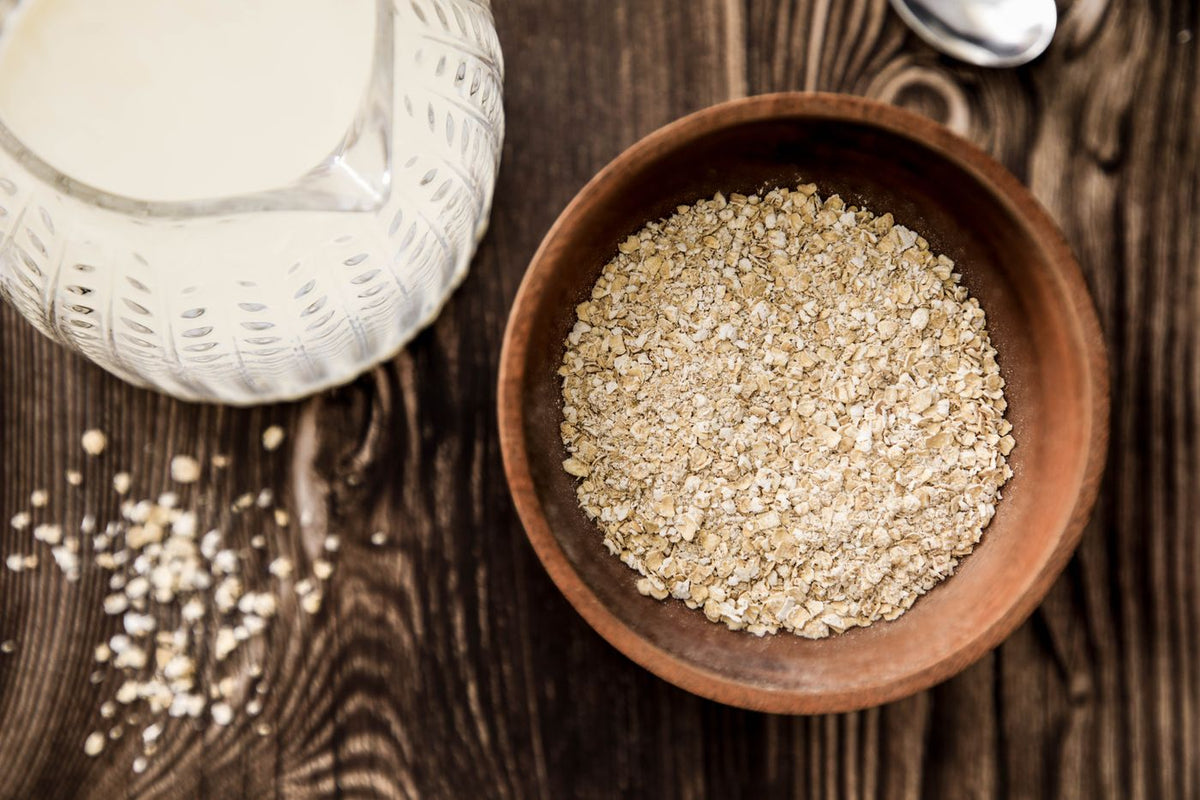
Whole pulses give both. Per cooked katori, whole masoor provides about 13.5 g of protein and 11.9 g of fibre, kabuli chana 13.3 g and 11.4 g, rajma 13.0 g and 11.1 g, and soybeans 27.3 g and 9.0 g. Peanuts, chia and oats also supply both. For the protein side, see protein rich foods.
How to increase fibre comfortably
- Go slowly: add fibre over a few weeks. Adding too much too quickly can cause gas, bloating and cramping, and a gradual change lets the bacteria in your gut adjust.
- Drink enough water: fibre absorbs water, so increase fluids as you increase fibre.
- Prefer foods to fibre supplements: whole foods also bring vitamins, minerals and other nutrients. Check with a healthcare professional before taking a fibre supplement.
- Swap step by step: part atta for maida, a millet roti a few times a week, a whole pulse instead of a thin dal, a whole fruit instead of juice.
Fibre adds bulk to stools, and ICMR-NIN's advice for pregnancy pairs fibre-rich foods with enough fluids to help avoid constipation. Under EU-authorised wording, oat grain fibre contributes to an increase in faecal bulk and barley grain fibre contributes to an increase in faecal bulk. If constipation is new, persistent or comes with pain or bleeding, or if you are losing weight without trying, see a doctor. People with a bowel condition or swallowing difficulty should ask their doctor before making large changes.
Frequently asked questions
Which Indian food is highest in fibre?
Per 100 g raw, IFCT 2017 lists methi seeds (47.6 g), flax seeds (26.2 g), kala chana (25.2 g), whole toor (22.8 g) and soybeans (21.6–22.6 g) among the highest. Per portion, a katori of cooked whole pulses gives the most, about 9–12 g.
Which fruit has the most fibre?
Among common Indian fruits, guava, at 7.4–8.6 g per 100 g in IFCT 2017. Custard apple (5.1 g) and pear (4.5 g) follow.
Can too much fibre cause bloating?
Yes, especially if you increase it quickly. Build up over a few weeks and drink more water.
Is "fibre" different from "fiber"?
No. "Fibre" is the British spelling and "fiber" the American spelling of the same nutrient.
References
- ICMR-National Institute of Nutrition. Nutrient Requirements for Indians: Recommended Dietary Allowances and Estimated Average Requirements. 2020. nin.res.in
- ICMR-National Institute of Nutrition. Dietary Guidelines for Indians. 2024. nin.res.in
- Longvah T, Ananthan R, Bhaskarachary K, Venkaiah K. Indian Food Composition Tables 2017. ICMR-National Institute of Nutrition, Hyderabad. nin.res.in
- U.S. Department of Agriculture, Agricultural Research Service. FoodData Central (SR Legacy). fdc.nal.usda.gov
- World Health Organization. WHO updates guidelines on fats and carbohydrates. 17 July 2023. who.int
- MedlinePlus Medical Encyclopedia. Soluble vs. insoluble fiber. U.S. National Library of Medicine. medlineplus.gov
- Mayo Clinic. Dietary fiber: essential for a healthy diet. mayoclinic.org
- European Commission. Commission Regulation (EU) No 432/2012 establishing a list of permitted health claims made on foods. eur-lex.europa.eu
This article is for general education and is not medical advice. Food supplements are not intended to diagnose, treat, cure or prevent any disease. Consult a qualified healthcare professional before starting any supplement, particularly if you are pregnant, breastfeeding, have a medical condition or take medication.






