Medically reviewed by Dr. Reina Punj, MBBS, PG Diploma in Endocrinology (University of South Wales), Lead Physician, Excelgenics Clinical Panel.
The main methi seeds benefits are nutritional: methi dana (fenugreek seeds) is a spice rich in fibre, with useful amounts of plant protein and iron, and it adds flavour to everyday Indian cooking. Most research on methi seeds has been in people with diabetes, using 5 g or more of seed powder a day in trials that were mostly of low quality, so it does not show what everyday cooking amounts do. Eating methi seeds in normal food amounts is considered safe for most people, but larger amounts are not safe in pregnancy and can interact with diabetes medicines.
This guide covers methi seed nutrition, what the research really shows (including methi seeds benefits for men), soaked methi seeds, how to use them, and who should be careful.
Methi seeds nutrition

| Nutrient | 1 tsp methi seeds (about 3.7 g) | 1 tbsp methi seeds (about 11 g) |
|---|---|---|
| Energy | 12 kcal | 36 kcal |
| Dietary fibre | 0.9 g | 2.7 g |
| Protein | 0.9 g | 2.6 g |
| Iron | 1.2 mg | 3.7 mg |
| Magnesium | 7 mg | 21 mg |
| Calcium | 7 mg | 20 mg |
Figures are calculated from USDA FoodData Central (fenugreek seed, per 100 g). Fibre values for fenugreek vary between databases and testing methods.
For context, the ICMR-NIN (2020) recommended dietary allowance for iron is 19 mg a day for men and 29 mg for women, so a tablespoon of methi seeds supplies roughly an eighth of a woman's daily iron. Plant (non-haem) iron is not absorbed as well as iron from meat, and phytates in grains and beans reduce absorption, while vitamin C improves it. A squeeze of lemon or a side of amla or tomato with your methi dal or sabzi helps.
Much of methi's fibre is a gum-like soluble fibre, which is why soaked seeds turn slippery. Researchers have mainly linked fenugreek's effects in studies to this fibre and to natural compounds called saponins.
Methi seeds benefits: what the research shows
Blood sugar
The NCCIH says research suggests fenugreek may help lower blood sugar in people with type 2 diabetes, but many of the studies were not of high quality. A 2014 meta-analysis of 10 clinical trials found that fenugreek seed lowered fasting blood glucose by about 0.96 mmol/L (roughly 17 mg/dL) on average, and HbA1c by 0.85 percentage points in the three trials that measured it. Two points matter:
- significant effects were seen only in people with diabetes taking medium to high doses, 5 g or more a day of fenugreek seed powder. Trials of low doses (under 2 g) of extracts showed no significant effect;
- most trials were of low methodological quality, and the authors called for better trials.
So the research is not conclusive. Methi seeds are a food, not a treatment, and they are not a replacement for diabetes medicines or medical care. For a fuller picture of blood sugar and diet, read our guide to healthy blood sugar for Indians.
Cholesterol
The NIH LactMed database notes that, in dosages of about 25 g or more a day, fenugreek may lower cholesterol and blood sugar. That is far more than most people eat, and good-quality trials are lacking.
Hair, weight and breast milk
Methi is widely recommended for hair, weight and breastfeeding. The NCCIH says studies on breast milk supply have had mixed results, and evidence for other uses is too limited to draw conclusions. There is no reliable evidence that eating methi seeds grows hair or causes weight loss.
Methi seeds benefits for men
Fenugreek extracts are often sold to men as "testosterone boosters". A 2026 systematic review of randomised, placebo-controlled trials in adult men found a small change in total testosterone, no stable effect on free testosterone, and rated the certainty of the evidence as very low. The trials used concentrated extracts (mostly 500–600 mg a day), many were industry-sponsored, and the authors concluded that current evidence does not support testosterone-boosting claims. None of this research tested methi seeds eaten as food. For men, the realistic benefit is the same as for everyone: fibre, plant protein and flavour.
Soaked methi seeds benefits
Soaking a teaspoon of methi dana overnight and eating the seeds (or drinking the water) in the morning is a popular habit. There is no good research comparing soaked with dry methi seeds, so claims for soaked seeds in particular go beyond the evidence. Soaking does make the seeds softer and easier to chew and swallow, and many people find it the easiest way to eat them whole. If you like the habit, one teaspoon is a sensible food amount.
Eating methi seeds: kitchen uses and how much

- Tadka: a pinch of methi seeds in hot oil flavours dals, kadhi, sambar and sabzis. Cook gently, as burnt methi turns very bitter.
- Batters: a spoon of methi in idli and dosa batter is a traditional South Indian addition.
- Spice blends and pickles: methi is part of panch phoron and many achar masalas.
- Sprouted: methi seeds can be sprouted and added to salads or sabzi.
In food, 1 teaspoon to 1 tablespoon a day is a reasonable range for most adults. The 5 g a day used in the blood sugar trials is about 1⅓ level teaspoons of whole seeds, but trial doses should not be copied without medical advice, especially if you take diabetes medicines.
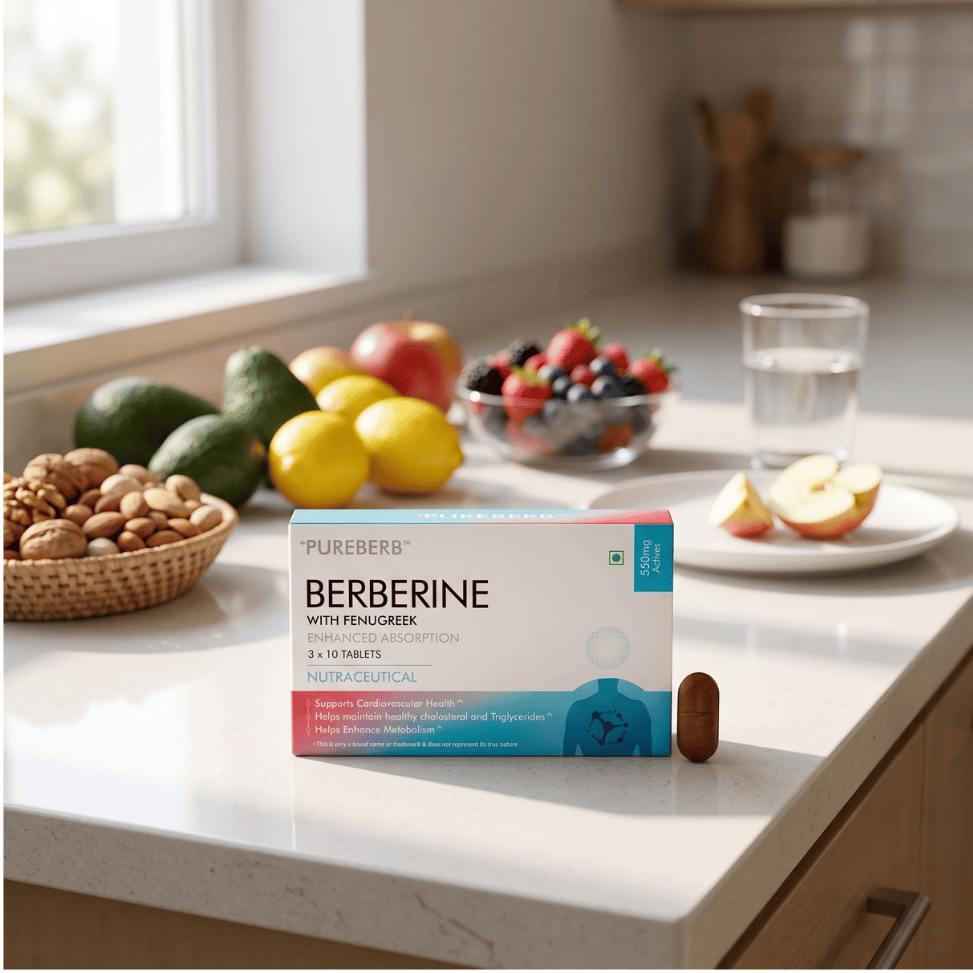
Fenugreek also appears in supplements. Pureberb, for example, combines 500 mg berberine HCl with 50 mg of fenugreek seed extract per tablet (100 mg of extract a day). That is a much smaller amount than the 5 g or more of seed powder in the research above, so those findings do not apply to it. Our Berberine Supplements Guide covers the research and safety in detail.
Methi seeds side effects and who should be careful
- Pregnancy: the NCCIH says fenugreek is not safe in pregnancy in amounts greater than those found in food. Normal cooking amounts are fine, but avoid soaked-seed routines, methi water or supplements unless your doctor advises them.
- Breastfeeding: little is known about the safety of amounts larger than food amounts.
- Diabetes medicines: large doses may cause a harmful drop in blood sugar. If you take insulin or other diabetes medicines, speak to your doctor before eating methi in larger amounts.
- Blood thinners: LactMed notes that fenugreek can interact with warfarin to cause bleeding.
- Allergy: fenugreek can cause allergic reactions, sometimes serious, and cross-reactions with chickpeas, peanuts and other legumes are possible. If you are allergic to peanuts or chickpeas, be cautious.
- Maple syrup odour: larger amounts can give urine and sweat a maple syrup smell. This is harmless, but it is worth knowing about.
- Digestive effects: diarrhoea, wind and nausea can occur.
- Children: food amounts are considered safe, but there is not enough information on larger amounts.
Frequently asked questions
Is it good to eat methi seeds every day?
For most adults, methi seeds in normal food amounts every day are considered safe. If you are pregnant, take diabetes medicines or blood thinners, or have a legume allergy, speak to your doctor before eating larger amounts.
Do methi seeds help with hair growth?
There is no reliable evidence that eating methi seeds makes hair grow. Hair loss has many causes, and a doctor or dermatologist can help find yours.
Why does my sweat smell of maple syrup after methi?
Fenugreek contains compounds that smell like maple syrup and can pass into urine and sweat. It is harmless and fades once you eat less.
Are methi seeds safe in pregnancy?
Small amounts used in cooking are considered safe. Larger amounts, such as daily soaked seeds, methi water or supplements, are not, so avoid them unless your doctor advises otherwise.
References
- U.S. Department of Agriculture. FoodData Central, SR Legacy: Spices, fenugreek seed (FDC 171324). fdc.nal.usda.gov
- ICMR-National Institute of Nutrition. A brief note on nutrient requirements for Indians, the Recommended Dietary Allowances (RDA) and the Estimated Average Requirements (EAR). 2020. nin.res.in
- National Institutes of Health, Office of Dietary Supplements. Iron: Fact Sheet for Health Professionals. ods.od.nih.gov
- National Center for Complementary and Integrative Health (NIH). Fenugreek. nccih.nih.gov
- Neelakantan N, Narayanan M, de Souza RJ, van Dam RM. Effect of fenugreek (Trigonella foenum-graecum L.) intake on glycemia: a meta-analysis of clinical trials. Nutrition Journal. 2014;13:7. doi:10.1186/1475-2891-13-7
- Drugs and Lactation Database (LactMed). Fenugreek. National Institute of Child Health and Human Development; last revised 2026. ncbi.nlm.nih.gov
- Yang P, Niu Z, Guo J, Huang T, Chang D, Huang X. Effects of oral fenugreek-derived preparations on testosterone-related outcomes in adult men: a systematic review and meta-analysis of randomized placebo-controlled trials. Frontiers in Nutrition. 2026;13:1903508. doi:10.3389/fnut.2026.1903508
This article is for general education and is not medical advice. Food supplements are not intended to diagnose, treat, cure or prevent any disease. Consult a qualified healthcare professional before starting any supplement, particularly if you are pregnant, breastfeeding, have a medical condition or take medication.