Medically reviewed by Dr. Reina Punj, MBBS, PG Diploma in Endocrinology (University of South Wales), Lead Physician, Excelgenics Clinical Panel.
When Hormones, Weight and Energy Collide
Many women notice a cluster of changes that don't always seem connected: irregular cycles, mood swings, weight gain around the middle, sugar cravings, fatigue and brain fog. Researchers have linked several of these to one common thread: insulin resistance.
Insulin resistance is closely associated with polycystic ovary syndrome (PCOS) and abdominal fat. Two plant ingredients, berberine and fenugreek, have been studied in this area. Here is what that research found, and where its limits are.
Insulin Resistance: The Hidden Hormonal Factor

Insulin helps glucose enter your cells. In insulin resistance, the body responds less well to it, which is associated with:
- Higher blood glucose and insulin levels
- Higher androgen levels in some women
- More visceral (abdominal) fat
- Irregular cycles in some women with PCOS
PCOS is a medical condition that needs diagnosis and care from a doctor.
Berberine, PCOS and Belly Fat: What the Studies Found
Berberine has been studied in women with PCOS, mostly in small, short trials
In one Chinese trial, 89 women with PCOS completed three months of berberine (1,500 mg a day), metformin or placebo; all were also taking a hormonal contraceptive. Fasting insulin and insulin resistance fell in every group, including placebo; berberine and metformin both improved insulin sensitivity more than placebo and did not differ significantly from each other. Waist measurements fell further with berberine. (Wei W et al., Eur J Endocrinol, 2012)
A 2019 meta-analysis of 12 trials, all from mainland China, concluded there was "no solid evidence" that berberine improves live birth or other clinical outcomes in PCOS (Xie L et al., 2019). These are research findings, not effects Pureberb can be expected to reproduce, and berberine is not a treatment for PCOS.
Fenugreek: A Traditional Indian Ingredient
Studies of fenugreek and blood glucose have mostly used 5 g or more of seed powder a day, and most were low quality. Research on fenugreek and female hormones is at an early stage. Pureberb provides 100 mg of fenugreek extract a day, far below those doses.
Cognitive Symptoms: The Brain Fog Connection
People with blood sugar swings often describe:
- Mental fatigue and poor focus
- Cravings and irritability
- Uneven energy through the day
Regular meals with protein and fibre, good sleep and activity are the best-supported ways to keep energy steady. There is no good human evidence that berberine or fenugreek improves brain fog.
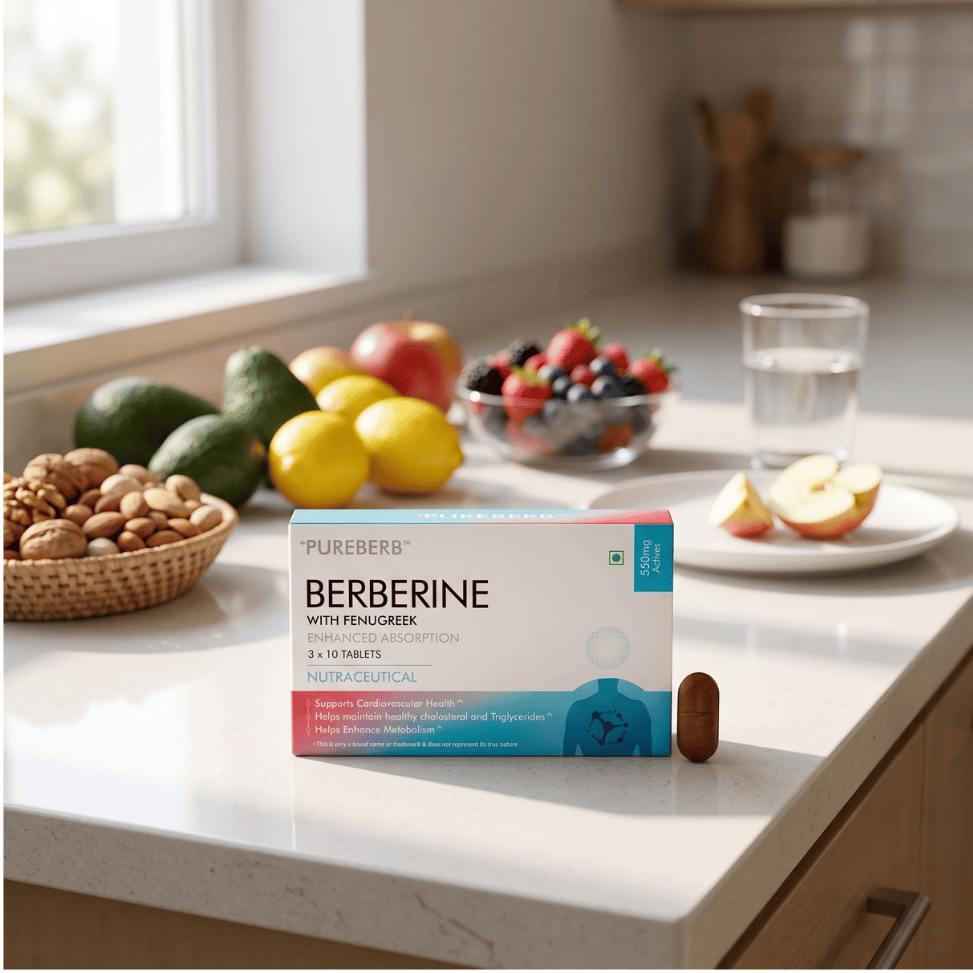
Pureberb: What Is in It
Each Pureberb tablet provides:
- 500 mg berberine HCl
- 50 mg fenugreek seed extract (50% saponins)
Take 1 tablet twice daily, 15–30 minutes before meals, with water. Pureberb is a food supplement to support normal metabolism alongside a balanced diet.
Safety First
Digestive side effects (constipation, diarrhoea, nausea, bloating) are the most common. Berberine interacts with many medicines via CYP liver enzymes and may add to the effect of diabetes and blood-pressure medicines. Not for pregnancy, breastfeeding or infants.
Support Beyond the Symptom
Weight, mood and hormones are connected, and food, movement, sleep and good medical care remain the foundations. If you have, or think you may have, PCOS, see a doctor before trying any supplement.
References
- Wei W, Zhao H, Wang A, et al. A clinical study on the short-term effect of berberine in comparison to metformin on the metabolic characteristics of women with polycystic ovary syndrome. Eur J Endocrinol. 2012;166(1):99–105. doi:10.1530/EJE-11-0616
- Xie L, Zhang D, Ma H, et al. The effect of berberine on reproduction and metabolism in women with polycystic ovary syndrome: a systematic review and meta-analysis of randomized control trials. Evid Based Complement Alternat Med. 2019;2019:7918631. doi:10.1155/2019/7918631
- Neelakantan N, Narayanan M, de Souza RJ, van Dam RM. Effect of fenugreek (Trigonella foenum-graecum L.) intake on glycemia: a meta-analysis of clinical trials. Nutr J. 2014;13:7. doi:10.1186/1475-2891-13-7
This article is for general education and is not medical advice. Food supplements are not intended to diagnose, treat, cure or prevent any disease. Consult a qualified healthcare professional before starting any supplement, particularly if you are pregnant, breastfeeding, have a medical condition or take medication.