Medically reviewed by Dr. Reina Punj, MBBS, PG Diploma in Endocrinology (University of South Wales), Lead Physician, Excelgenics Clinical Panel.
Metabolic Balance in a Modern Indian Lifestyle
Irregular meal timing, refined-carbohydrate-heavy diets, long sedentary hours and chronic stress all place demands on how the body processes glucose and fats. Many adults are looking at plant-based ingredients as one part of a broader approach to everyday metabolic wellness.
One of the most studied is berberine, an alkaloid found in plants such as Berberis aristata (Daruharidra), used for centuries in Ayurvedic and traditional Chinese practice.
What the Research Looks At

In laboratory studies, berberine activates AMP-activated protein kinase (AMPK), often described as the cell's energy sensor.
AMPK is involved in:
- How cells take up and use glucose
- How the liver manages glucose output
- How the body uses fat for energy
Berberine has also been studied in relation to:
- Carbohydrate digestion in the intestine
- Gut microbiota composition
- Lipid metabolism
What the Human Studies Actually Show
Most human trials are small and in people with type 2 diabetes or metabolic syndrome, not healthy adults:
- A 2012 meta-analysis of 14 trials (1,068 participants) found berberine was not significantly different from standard diabetes tablets (metformin, glipizide or rosiglitazone) for blood glucose; the authors rated the trials as generally low quality.
- A Mexican placebo-controlled trial in metabolic syndrome reported better insulin sensitivity, but had only 12 people per group.
- A 2022 trial of a berberine–fenugreek supplement in 50 people with type 2 diabetes reported lower HbA1c and fasting insulin within the supplement group, but compared with placebo the differences in fasting insulin, fasting glucose and insulin resistance were described only as "clinically" significant. It used different doses from Pureberb.
These findings do not mean Pureberb will produce the same results.
Why Pureberb Combines Berberine with Fenugreek
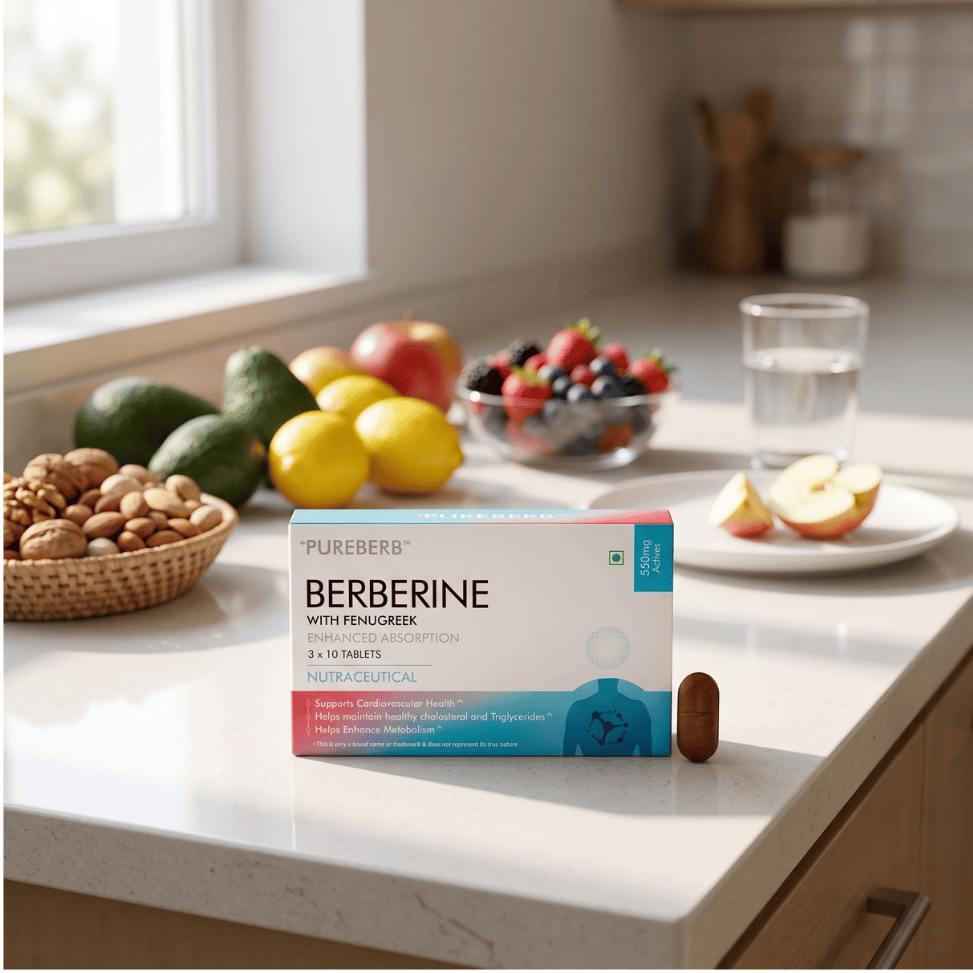
Pureberb pairs berberine with fenugreek seed extract (50% saponins), a botanical long used in Indian practice and cooking.
What to know about fenugreek:
- Whole fenugreek seed contains galactomannan, a soluble fibre that slows carbohydrate digestion
- Glucose studies mostly used 5 g or more of seed a day; Pureberb provides 100 mg of extract a day, so it should not be expected to match them
Who Might Consider Pureberb?

- Adults wanting to support normal metabolism alongside diet and activity
- People working on carbohydrate-heavy eating habits
- Adults wanting to help maintain cholesterol and triglyceride levels already within the normal range
If you have a diagnosed health condition or take prescription medication, consult a healthcare professional before use.
Dosage and Tolerance
- 1 tablet (500 mg berberine HCl + 50 mg fenugreek extract) twice daily, 15–30 minutes before meals, with water
- Do not exceed the recommended daily dose
- Constipation, diarrhoea, nausea and bloating are the most commonly reported side effects
Berberine interacts with many medicines via CYP liver enzymes and may add to the effect of diabetes and blood-pressure medicines. Not for pregnancy, breastfeeding or infants.
Traditional Botanicals, Modern Formulation
Berberine has a substantial, if mostly small-scale, body of research. Pureberb pairs it with fenugreek, rooted in India's own wellness tradition, as a food supplement to support normal metabolism. It is made under an FSSAI licence.
References
- Dong H, Wang N, Zhao L, Lu F. Berberine in the treatment of type 2 diabetes mellitus: a systemic review and meta-analysis. Evid Based Complement Alternat Med. 2012;2012:591654. doi:10.1155/2012/591654
- Pérez-Rubio KG, González-Ortiz M, Martínez-Abundis E, et al. Effect of berberine administration on metabolic syndrome, insulin sensitivity, and insulin secretion. Metab Syndr Relat Disord. 2013;11(5):366–369. doi:10.1089/met.2012.0183
- Nematollahi S, Pishdad GR, Zakerkish M, et al. The effect of berberine and fenugreek seed co-supplementation on inflammatory factor, lipid and glycemic profile in patients with type 2 diabetes mellitus: a double-blind controlled randomized clinical trial. Diabetol Metab Syndr. 2022;14:120. doi:10.1186/s13098-022-00888-9
- Neelakantan N, Narayanan M, de Souza RJ, van Dam RM. Effect of fenugreek (Trigonella foenum-graecum L.) intake on glycemia: a meta-analysis of clinical trials. Nutr J. 2014;13:7. doi:10.1186/1475-2891-13-7
This article is for general education and is not medical advice. Food supplements are not intended to diagnose, treat, cure or prevent any disease. Consult a qualified healthcare professional before starting any supplement, particularly if you are pregnant, breastfeeding, have a medical condition or take medication.