Medically reviewed by Dr. Reina Punj, MBBS, PG Diploma in Endocrinology (University of South Wales), Lead Physician, Excelgenics Clinical Panel.
Antioxidant rich foods are mainly fruits, vegetables, nuts, seeds, legumes and tea. In India, good everyday choices include amla, guava, oranges, papaya, capsicum, tomatoes, carrots, dark leafy greens, jamun, pomegranate, almonds, peanuts, rajma and chai or green tea. They supply vitamin C, vitamin E, carotenoids and plant compounds called polyphenols. Diets rich in fruit and vegetables are linked with better long-term health in observational studies, but high-dose antioxidant supplements have not shown the same benefit in trials.
This guide explains what "antioxidant" really means, lists antioxidant rich foods in India with amounts per typical portion where reliable data exist, and covers antioxidant rich foods for skin.
What are antioxidants?
During normal activity, your cells produce highly reactive oxygen-containing substances. When too many of these build up, the result is called oxidative stress. Antioxidants are substances that can counter this. The main antioxidants in food are:
- Vitamin C, found in fruits and vegetables. Under EU-authorised wording, vitamin C contributes to the protection of cells from oxidative stress.
- Vitamin E, a group of fat-soluble compounds found in nuts, seeds and vegetable oils. Vitamin E contributes to the protection of cells from oxidative stress.
- Carotenoids, the yellow, orange and red pigments in carrots, tomatoes, papaya and leafy greens, such as beta-carotene, lutein and lycopene.
- Polyphenols, including flavonoids, found in tea, fruits, legumes and cocoa.
Your body also makes its own antioxidants. One example is coenzyme Q10, which is found in almost every cell and acts as an antioxidant in cell membranes; see CoQ10 foods for how little of it comes from diet.
Why there is no reliable "antioxidant score"
You may see foods ranked by an "ORAC" antioxidant score. The US Department of Agriculture (USDA) removed its ORAC database in 2012, citing evidence that antioxidant capacity values have no relevance to the effects of specific bioactive compounds in the body, and noting that the values were "routinely misused" to promote products. A test-tube score does not show what happens in the body.
Flavonoids are a good example. The Linus Pauling Institute notes that they are poorly absorbed and quickly broken down, and that levels in blood are 100 to 1,000 times lower than those of other antioxidants such as vitamin C. Their direct antioxidant role in the body is therefore likely to be very small. This is why it makes more sense to eat a variety of plant foods than to chase one "superfood".
Antioxidant rich foods in India: what each one provides
Amounts are for typical portions. Vitamin C values are calculated from USDA FoodData Central (raw foods) and match our vitamin C rich foods guide; vitamin E values are from the NIH Office of Dietary Supplements. Where no reliable per-portion figure exists, the table names the main antioxidants only.
| Food | Typical portion | Main antioxidants (amount per portion) |
|---|---|---|
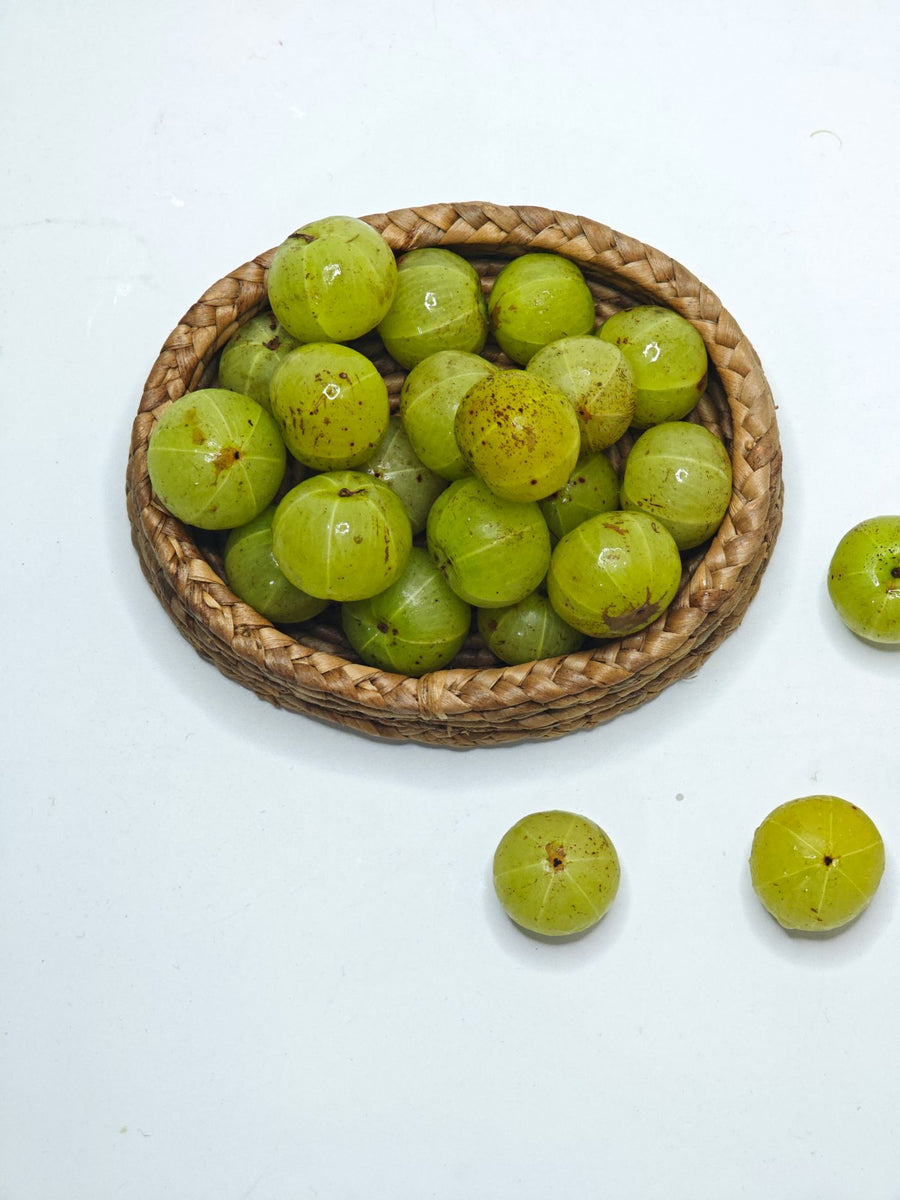
| Amla (Indian gooseberry) | 50 g (about 2 small fruits) | Vitamin C, about 100–360 mg depending on variety |
| Guava (amrood) | 100 g (1 small–medium fruit) | Vitamin C, 228 mg |
| Papaya (papita) | 1 katori (about 150 g) | Vitamin C, 91 mg; carotenoids |
| Orange (santra) | 1 medium (about 130 g) | Vitamin C, 70 mg; flavonoids |
| Red capsicum (lal shimla mirch) | ½ medium (about 50 g) | Vitamin C, 64 mg; carotenoids |
| Drumstick leaves (sahjan / moringa) | 50 g | Vitamin C, 26 mg |
| Tomato (tamatar) | 1 medium (about 100 g) | Vitamin C, 14 mg; lycopene, about 3 mg |
| Carrot (gajar), spinach (palak) and other dark greens | — | Beta-carotene; lutein in leafy greens |
| Sunflower seeds (surajmukhi ke beej), roasted | About 28 g (a small handful) | Vitamin E, 7.4 mg |
| Almonds (badam), roasted | About 28 g (a small handful) | Vitamin E, 6.8 mg |
| Sunflower oil | 1 tbsp | Vitamin E, 5.6 mg |
| Peanuts (moongphali), roasted | About 28 g (a small handful) | Vitamin E, 2.2 mg |
| Spinach (palak), boiled | ½ cup | Vitamin E, 1.9 mg; carotenoids |
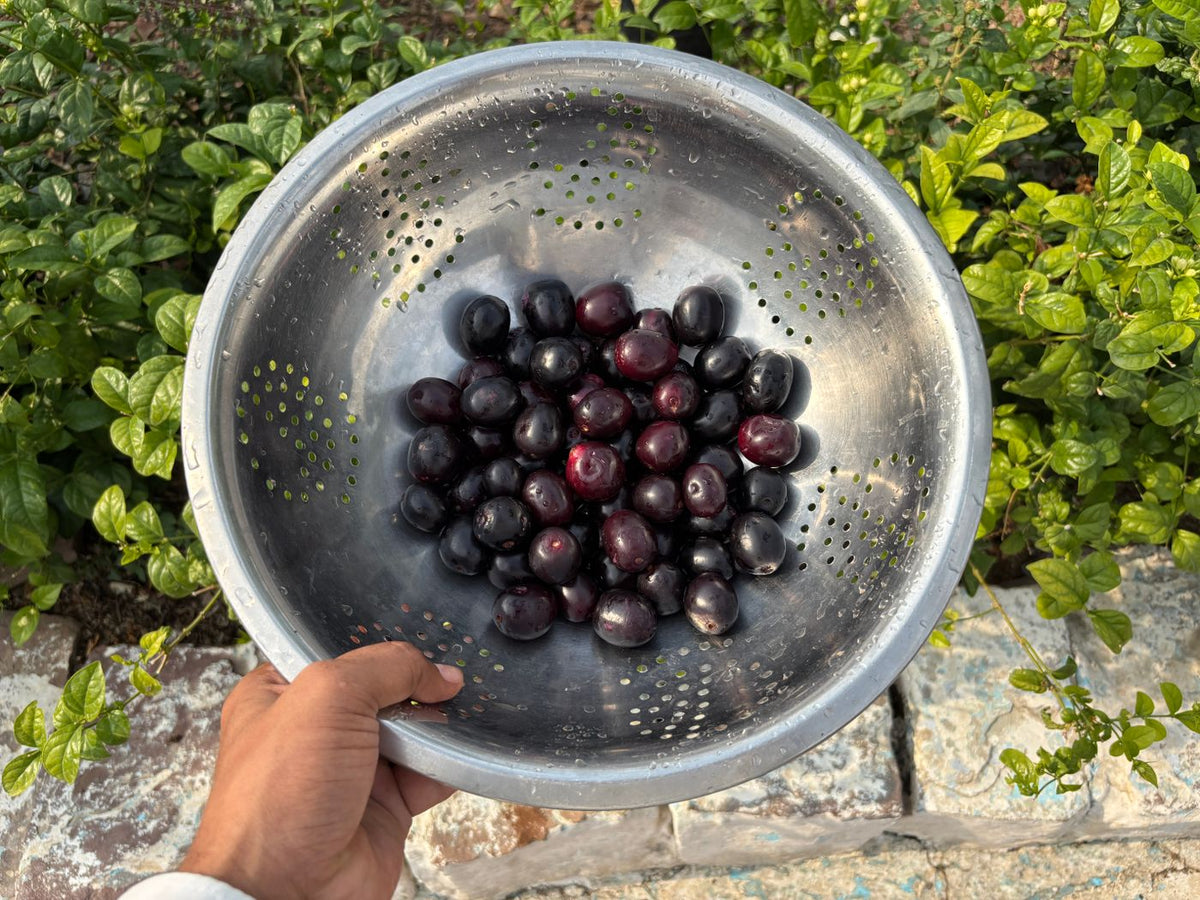
| Jamun (Indian blackberry) | — | Anthocyanins (purple pigments), which rise as the fruit ripens |
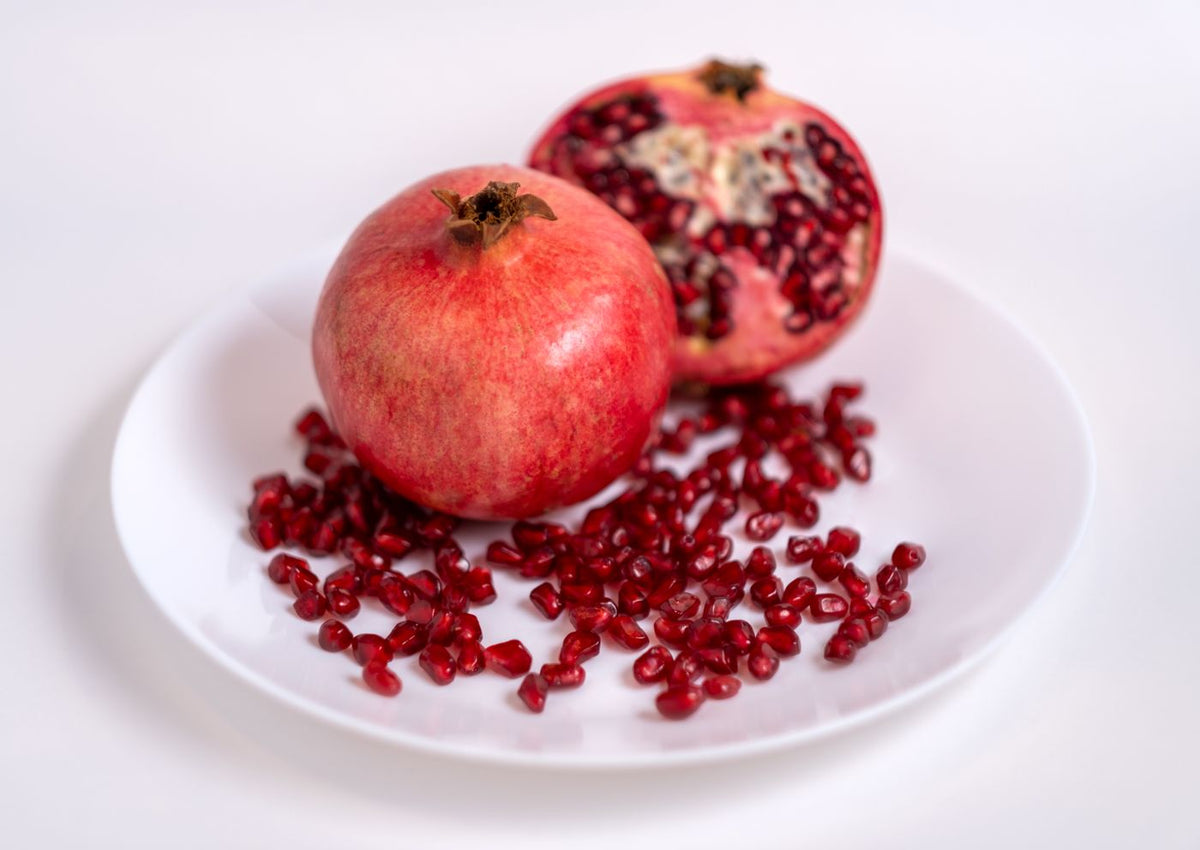
| Pomegranate (anar) | — | Polyphenols called ellagitannins, including punicalagin; anthocyanins |
| Tea (chai, green tea) | — | Flavonoids (flavan-3-ols) |
| Rajma, soybeans and other legumes | — | Flavonoids; isoflavones in soy |
The ICMR-NIN 2020 recommended dietary allowance for vitamin C is 80 mg a day for men and 65 mg for women, so one guava or a couple of amla more than covers it. For vitamin E, the US recommended amount for adults is 15 mg a day; a handful of almonds or sunflower seeds provides about half.
A note on haldi (turmeric)
Turmeric contains curcumin, which is widely studied, but the US National Center for Complementary and Integrative Health (NCCIH) says there is not enough evidence to conclude that turmeric or curcumin is beneficial for any health purpose. Using haldi in cooking is part of normal Indian food. Concentrated curcumin supplements are different: liver injury has been reported in some people taking formulations designed for higher absorption.
Antioxidant rich foods for skin
People searching for antioxidant rich foods for glowing skin are usually looking for foods that help the skin look healthy. No food can promise a "glow", but a few nutrients have clear roles:
- Vitamin C contributes to normal collagen formation for the normal function of skin (EU-authorised wording). Amla, guava, oranges and capsicum are rich sources; see collagen-rich foods for skin.
- Carotenoids such as lycopene are being studied for skin. In a small UK trial, 20 women who ate 55 g of tomato paste (16 mg lycopene) with olive oil daily for 12 weeks showed some markers of reduced skin damage after UV exposure compared with olive oil alone. This was a small study and is not a substitute for sunscreen.
Sun protection, not smoking and enough sleep matter at least as much as diet. For skincare that helps skin hold moisture, see hyaluronic acid benefits for skin.
How to get more from antioxidant rich foods
- Eat some vitamin C foods raw. Vitamin C is easily destroyed by heat, air and drying. A daily fruit or kachumber salad helps.
- Add a little fat to carotenoid foods. Carotenoids need fat to be absorbed; 3–5 g of fat in a meal appears to be enough. Cooking tomatoes in oil, as in a tadka or gravy, makes their lycopene easier to absorb.
- Choose a range of colours: red, orange, yellow, green and purple foods supply different compounds.
- Have tea between meals, not with them. ICMR-NIN advises avoiding tea before, during or soon after meals because it binds dietary iron.
Antioxidant foods vs antioxidant supplements
NCCIH notes that the current evidence does not support antioxidant supplements for preventing cancer or heart disease, and that antioxidants taken as purified chemicals may act differently from those in food. Some concentrated products also carry safety cautions:
- Green tea extracts: green tea as a drink has no reported safety concerns for adults, but liver injury, although uncommon, has been reported with green tea products such as extracts.
If you are thinking of taking an antioxidant supplement, especially if you smoke, take blood thinners or have a medical condition, speak to your doctor first.
Frequently asked questions
Which Indian food has the most antioxidants?
There is no reliable single score. Amla is one of the richest foods in vitamin C, with 193–720 mg per 100 g depending on variety, while almonds and sunflower seeds are good sources of vitamin E.
Is green tea better than regular chai?
Both green and black tea contain flavonoids. Whichever you prefer, have it between meals rather than with them, and remember that tea contains caffeine.
Do antioxidant rich foods give glowing skin?
No food guarantees a particular skin result. Vitamin C supports normal collagen formation for skin, and a varied diet with plenty of fruit and vegetables, together with sun protection, is the practical approach.
Should I take antioxidant supplements?
Most people do not need them. NCCIH says the current evidence does not support antioxidant supplements for preventing disease, so a varied diet is the practical source.
References
- National Center for Complementary and Integrative Health (NIH). Antioxidant Supplements: What You Need To Know. nccih.nih.gov
- NIH Office of Dietary Supplements. Vitamin A and Carotenoids: Fact Sheet for Health Professionals. ods.od.nih.gov
- NIH Office of Dietary Supplements. Vitamin E: Fact Sheet for Health Professionals. ods.od.nih.gov
- Linus Pauling Institute, Oregon State University. Flavonoids; Carotenoids. Micronutrient Information Center. lpi.oregonstate.edu
- ICMR-National Institute of Nutrition. A brief note on nutrient requirements for Indians, the Recommended Dietary Allowances (RDA) and the Estimated Average Requirements (EAR). 2020. nin.res.in
- ICMR-National Institute of Nutrition. Dietary Guidelines for Indians. 2024. nin.res.in
- U.S. Department of Agriculture, Agricultural Research Service. FoodData Central (SR Legacy). fdc.nal.usda.gov
- Gul M, Liu ZW, Iahtisham-Ul-Haq, et al. Functional and nutraceutical significance of amla (Phyllanthus emblica L.): a review. Antioxidants. 2022;11(5):816. doi:10.3390/antiox11050816
- do Nascimento-Silva NRR, Bastos RP, da Silva FA. Jambolan (Syzygium cumini (L.) Skeels): a review on its nutrients, bioactive compounds and health benefits. Journal of Food Composition and Analysis. 2022;109:104491. doi:10.1016/j.jfca.2022.104491
- Heber D. Pomegranate ellagitannins. In: Benzie IFF, Wachtel-Galor S, eds. Herbal Medicine: Biomolecular and Clinical Aspects. 2nd ed. CRC Press; 2011. Chapter 10. ncbi.nlm.nih.gov
- Rizwan M, Rodriguez-Blanco I, Harbottle A, et al. Tomato paste rich in lycopene protects against cutaneous photodamage in humans in vivo: a randomized controlled trial. British Journal of Dermatology. 2011;164(1):154–162. doi:10.1111/j.1365-2133.2010.10057.x
- National Center for Complementary and Integrative Health (NIH). Turmeric; Green Tea. nccih.nih.gov
- European Commission. Commission Regulation (EU) No 432/2012 establishing a list of permitted health claims made on foods. eur-lex.europa.eu
This article is for general education and is not medical advice. Food supplements are not intended to diagnose, treat, cure or prevent any disease. Consult a qualified healthcare professional before starting any supplement, particularly if you are pregnant, breastfeeding, have a medical condition or take medication.