Medically reviewed by Dr. Reina Punj, MBBS, PG Diploma in Endocrinology (University of South Wales), Lead Physician, Excelgenics Clinical Panel.
Omega 3 rich foods for vegetarians in India include flax seeds (alsi), chia seeds, walnuts (akhrot), garden cress seeds (halim), mustard and soybean oil, soybeans, rajma, urad and green leafy vegetables such as methi. These plant foods provide an omega-3 called ALA. For non-vegetarians, oily fish such as hilsa (ilish), Indian oil sardine (mathi, tarli), pomfret and mackerel (bangda) provide EPA and DHA, the omega-3s the body makes only in small amounts from ALA.
This omega 3 rich foods list gives amounts per realistic Indian portion: first vegetarian and vegan omega 3 rich foods, then omega 3 rich foods from fish and eggs, followed by how much you need and easy ways to eat more.
ALA, EPA and DHA: three kinds of omega-3
"Omega-3" covers several fatty acids. Three matter most for food:
- ALA (alpha-linolenic acid) comes from plant foods. It is essential: the body cannot make it, so it must come from the diet.
- EPA (eicosapentaenoic acid) and DHA (docosahexaenoic acid) come mainly from fish, seafood and algae. DHA is a major structural fat in the brain and the retina of the eye.
The body can turn some ALA into EPA and then DHA, but only to a small extent, at reported rates of under 15%. In small studies, young men converted about 8% of ALA to EPA and 0–4% to DHA, while women converted more. The US National Institutes of Health (NIH) concludes that eating EPA and DHA directly is the only practical way to raise their levels in the body. ICMR-NIN's 2024 dietary guidelines make the same point for India: vegetarians should make sure they eat omega-3-rich foods such as flax seeds, chia seeds, walnuts and greens, because only a small amount is converted to EPA and DHA.
So plant foods and fish are not interchangeable. Vegetarian foods supply ALA; fish supplies EPA and DHA.
Omega 3 rich foods for vegetarians and vegans: an Indian list
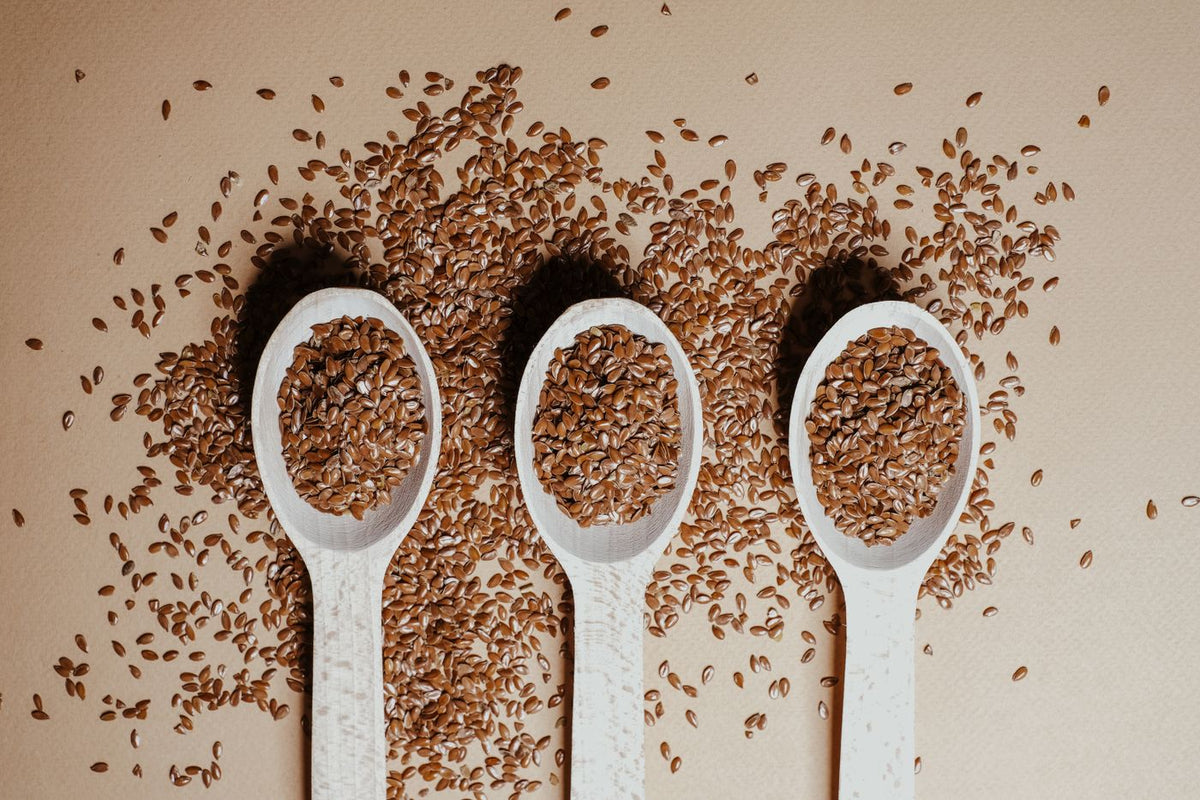
All the foods in this table are plant foods, so they suit both vegetarian and vegan diets.
| Food and portion | ALA (omega-3) | Source |
|---|---|---|
| Flaxseed oil (alsi tel), 1 tbsp | 7.3 g | USDA |
| Chia seeds, 1 tbsp (about 14 g) | 2.5 g | USDA |
| Walnuts (akhrot), 28 g (about 14 halves) | 2.6 g | USDA |
| Flax seeds (alsi), whole, 1 tbsp (about 10 g) | 2.35 g | USDA |
| Soybean oil, 1 tbsp | 0.9 g | USDA |
| Mustard oil (sarson ka tel), 1 tbsp | 0.8 g | USDA |
| Garden cress seeds (halim, aliv), 10 g | 0.75 g | IFCT |
| Soybeans (whole), 30 g dry (about half a katori cooked) | 0.4 g | IFCT |
| Methi leaves (methi saag), 100 g raw | 0.36 g | IFCT |
| Sarson saag (mustard leaves), 100 g raw | 0.24 g | IFCT |
| Palak (spinach), 100 g raw | 0.22 g | IFCT |
| Whole urad (sabut urad), 30 g dry (about half a katori cooked) | 0.18 g | IFCT |
| Rajma (red), 30 g dry (about half a katori cooked) | 0.17 g | IFCT |
IFCT = ICMR-NIN Indian Food Composition Tables 2017; USDA = USDA FoodData Central, as summarised by the NIH. Figures are rounded and natural foods vary. Indian mustard oil samples in the IFCT contained about twice the USDA value (around 1.6 g per tablespoon). Chana and most other dals contain much less ALA than rajma or urad.
A few practical points:
- Grind alsi before eating it. Whole flax seeds can pass through the gut unbroken. Our guide to flax seeds benefits covers sensible daily amounts and side effects.
- Soak chia in water, milk or curd before eating. Compare the two seeds in chia seeds vs flax seeds.
- Cooking oil adds up, but use it within limits. Mustard and soybean oil contribute some ALA, while sunflower, safflower and rice bran oil contain little. ICMR-NIN advises keeping visible fat (oil and ghee) to about 20–50 g a day, depending on energy needs. More oil is not a good way to get omega-3. See omega 3 vs omega 6 for a table of cooking oils. Traditional mustard oil is also naturally high in erucic acid, for which the European Food Safety Authority has set a tolerable daily intake, so it is sensible to use it as one of several cooking oils rather than the only one.
Omega 3 rich foods: fish and eggs
Fish is the main food source of EPA and DHA. The table uses Indian fish analysed for the IFCT 2017, per 100 g of raw edible fish.
| Fish or food, per 100 g edible portion | EPA + DHA |
|---|---|
| Salmon (Atlantic, mostly imported) | about 1,600 mg |
| Hilsa (ilish, palla) | about 1,160 mg |
| Black pomfret (halwa) | about 810 mg |
| Indian oil sardine (mathi, tarli) | about 610 mg |
| White or silver pomfret (paplet, saranga) | about 590 mg |
| Catla (katla) | about 370 mg |
| Indian mackerel (bangda, ayala) | about 330 mg |
| Bombay duck (bombil) | about 200 mg |
| Prawns (jhinga), various | about 50–120 mg |
| Rohu (rui) | about 70 mg |
| Hen's egg, whole, boiled (about 2 eggs) | about 65 mg (DHA) |
Source: IFCT 2017. Amounts are for raw fish and differ between catches, sizes and cooking methods. Chicken and mutton (goat) meat contain almost no EPA or DHA in the IFCT.
A 2016 analysis of 39 Indian food fishes by Indian fisheries scientists also identified hilsa and Indian oil sardine, along with threadfin bream and climbing perch, as rich sources of EPA and DHA. The popular freshwater carp rohu is a much smaller source, so if you eat fish for omega-3, include sea fish such as sardines, mackerel or pomfret, or hilsa, regularly.
The US National Center for Complementary and Integrative Health (NCCIH) advises that women who are pregnant or breastfeeding choose seafood that is lower in methylmercury. Ask your doctor which fish suit you.
How much omega-3 do you need?
- ICMR-NIN (India): about 2.2 g of omega-3 fats a day as part of its 2020 nutrient requirements for Indians.
- ALA (US adequate intake): 1.1 g a day for adult women and 1.6 g for adult men (1.4 g in pregnancy and 1.3 g when breastfeeding).
- EPA + DHA: India and the US have not set an amount. The European Food Safety Authority (EFSA) sets an adequate intake of 250 mg a day for adults. One 100 g portion of sardine, pomfret or hilsa provides more than this, while rohu provides much less.
On the plant side, a tablespoon of alsi or chia, or 28 g of walnuts, provides more than the ALA adequate intake on its own.
Easy ways to add omega 3 rich foods to Indian meals
- Breakfast: stir ground alsi or soaked chia into curd, oats, poha or a smoothie.
- Rotis and parathas: mix a spoon of ground alsi into the atta, or make alsi chutney powder.
- Snacks: a few walnuts instead of fried namkeen.
- Greens: methi, sarson or palak saag a few times a week.
- Pulses: rajma, sabut urad and soybean curry in your weekly rotation.
- If you eat fish: sardines, mackerel, pomfret or hilsa, steamed, grilled or in curry.
As an illustration, a vegetarian day with 1 tbsp of whole alsi (about 10 g, ground before use) in the atta, 30 g of dry rajma (about half a katori cooked), 100 g of methi sabzi and 1 tbsp of mustard oil for cooking provides roughly 3.7 g of ALA, above ICMR-NIN's 2.2 g. It still provides no EPA or DHA.
Vegan omega 3 rich foods and DHA
Plant foods give vegetarians and vegans plenty of ALA, but no plant food in the table contains EPA or DHA. Vegetarians and vegans have substantially lower blood DHA levels than people who eat fish and meat, although no harm to health from this has been shown. Algae oil is the vegetarian source of DHA; products usually provide about 100–300 mg of DHA. Our Vegan Omega-3 Supplements Guide compares the options, and benefits of omega 3 capsules explains what the research on supplements shows.
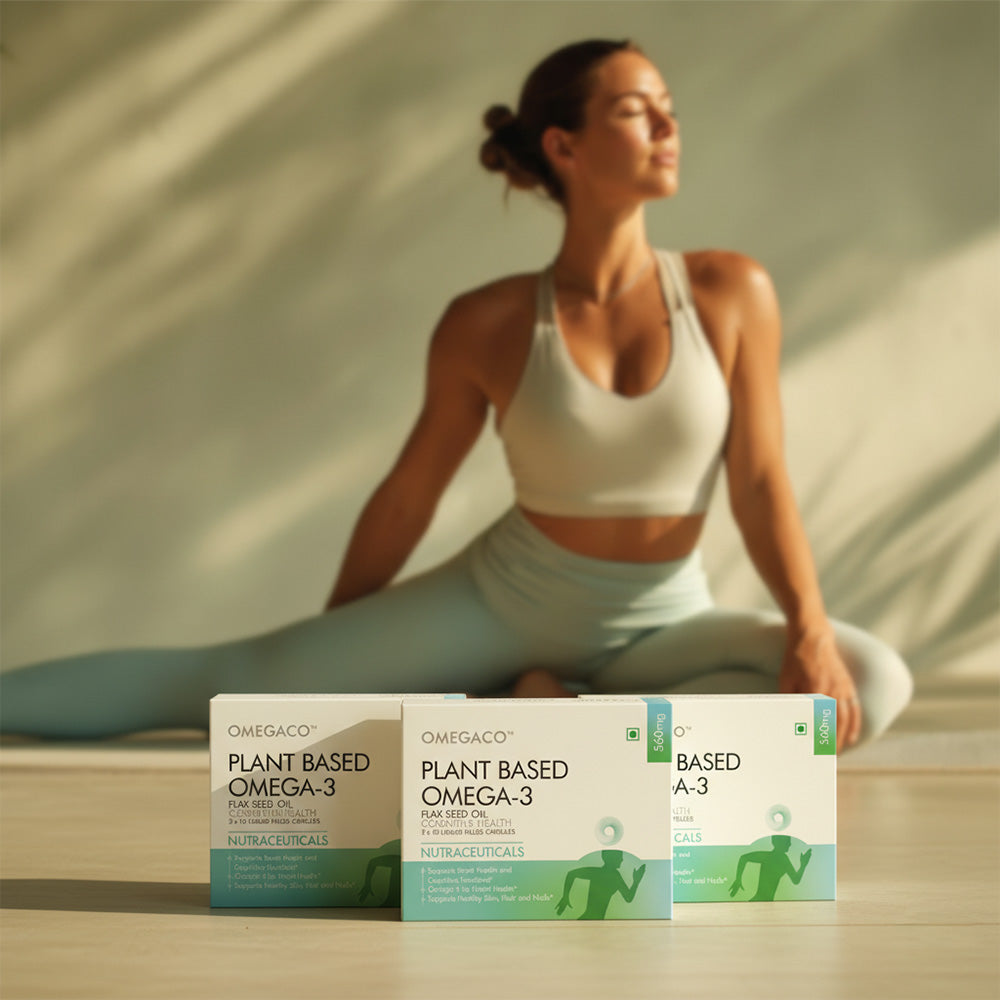
Food should come first. If you find it hard to eat ALA foods regularly, a flaxseed oil capsule is one convenient option: Omegaco provides 560 mg of cold-pressed flaxseed oil per capsule (an estimated ~300 mg ALA) in a plant-based capsule. It contains ALA only, with no EPA or DHA. Speak to your doctor first if you take blood-thinning medicines or are pregnant or breastfeeding.
Frequently asked questions
Which food is highest in omega-3?
Among everyday foods, flaxseed oil is the richest source of ALA, at about 7.3 g per tablespoon, followed by chia, walnuts and flax seeds. For EPA and DHA, oily fish lead: in the IFCT, salmon and hilsa have the most, followed by pomfret and Indian oil sardine.
Which Indian vegetarian foods are rich in omega-3?
Alsi, chia, walnuts, halim seeds, mustard and soybean oil, soybeans, rajma, sabut urad and greens such as methi and sarson. These all provide ALA.
Is rohu rich in omega-3?
Not especially. Rohu provides about 70 mg of EPA and DHA per 100 g in the IFCT, compared with roughly 600 mg in Indian oil sardine and over 1,000 mg in hilsa.
Is ghee a good source of omega-3?
No. One tablespoon of ghee provides only about 0.2 g of ALA, and ghee is high in saturated fat. Alsi, chia or walnuts are far richer sources.
Do eggs contain omega-3?
A little. Two boiled eggs (about 100 g) provide roughly 65 mg of DHA in the IFCT, much less than a portion of oily fish.
References
- Longvah T, Ananthan R, Bhaskarachary K, Venkaiah K. Indian Food Composition Tables 2017. National Institute of Nutrition (ICMR), Hyderabad. nin.res.in
- National Institutes of Health, Office of Dietary Supplements. Omega-3 Fatty Acids: Fact Sheet for Health Professionals. ods.od.nih.gov
- Linus Pauling Institute, Oregon State University. Essential Fatty Acids. lpi.oregonstate.edu
- ICMR-National Institute of Nutrition. Nutrient Requirements for Indians, 2020 (brief note). nin.res.in
- ICMR-National Institute of Nutrition. Dietary Guidelines for Indians, 2024. nin.res.in
- European Food Safety Authority. Scientific Opinion on Dietary Reference Values for fats. EFSA Journal. 2010;8(3):1461. doi:10.2903/j.efsa.2010.1461
- Mohanty BP, Ganguly S, Mahanty A, et al. DHA and EPA content and fatty acid profile of 39 food fishes from India. BioMed Research International. 2016;2016:4027437. PubMed 27579313
- Sanders TA. DHA status of vegetarians. Prostaglandins, Leukotrienes and Essential Fatty Acids. 2009;81(2–3):137–141. doi:10.1016/j.plefa.2009.05.013
- National Center for Complementary and Integrative Health. Omega-3 Supplements: What You Need To Know. nccih.nih.gov
This article is for general education and is not medical advice. Food supplements are not intended to diagnose, treat, cure or prevent any disease. Consult a qualified healthcare professional before starting any supplement, particularly if you are pregnant, breastfeeding, have a medical condition or take medication.